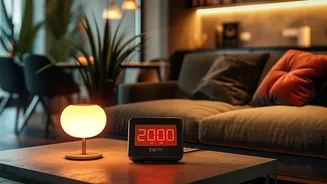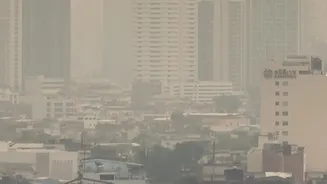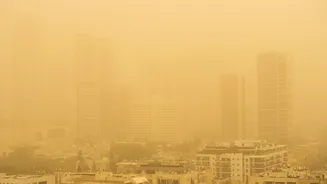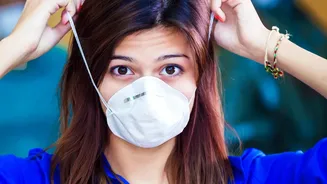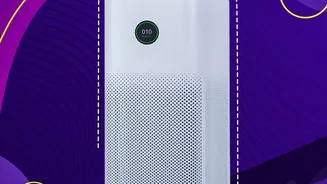




When outdoor air quality plummets, many of us retreat indoors for safety. But polluted air easily finds its way into our homes, where it can be up to five times worse than outside. A HEPA air purifier can be your best defence, but only if it fits your space.
The Invisible Threat Indoors
We often think of our homes as a safe haven from outdoor pollution. However, indoor and outdoor air are closely linked. Pollutants from traffic, industry, and smoke can easily enter through open windows, doors, and even tiny cracks in the building. These outdoor pollutants combine with indoor sources like cooking fumes, cleaning products, pet dander, and dust. The result is a cocktail of airborne particles, the most dangerous of which is PM2.5—fine particulate matter so small it can penetrate deep into our lungs and enter the bloodstream, posing significant health risks. During periods of poor outdoor Air Quality Index (AQI), these indoor concentrations can spike, making the air you breathe inside your home potentially more harmful than you realise.
Decoding HEPA Technology
This is where a High-Efficiency Particulate Air (HEPA) filter becomes essential. A true HEPA filter is an air-cleaning marvel, engineered to capture at least 99.97% of airborne particles that are 0.3 microns in size—the most difficult particle size to trap. This makes them extremely effective at removing the harmful PM2.5 particles that dominate air pollution concerns. Unlike a simple sieve, a HEPA filter uses a dense mat of fibres to catch particles through a combination of physical processes: interception, impaction, and diffusion. Critically, they do this without producing harmful byproducts like ozone, which some other types of air cleaners can release. When you see 'True HEPA', you're looking at the gold standard for physically removing dust, pollen, mould spores, and smoke from your air.
Why Size Is Not Just A Number
Buying an air purifier that is too small for your room is one of the most common mistakes. An undersized unit simply cannot move enough air to be effective, becoming little more than an expensive fan. The effectiveness of an air purifier is measured by its Clean Air Delivery Rate (CADR). This rating, typically measured in cubic feet per minute (CFM), tells you how much clean air the purifier produces. A higher CADR means faster cleaning. The goal is to achieve a sufficient number of Air Changes per Hour (ACH), where the entire volume of air in your room is filtered multiple times. For a typical home, aiming for 4-5 air changes per hour is a good target. If a purifier is too small, it won't achieve this, and pollutants will build up faster than the machine can remove them.
Calculating Your Clean Air Needs
So, how do you find the right size? First, measure your room's area in square feet (length multiplied by width). A widely accepted guideline is the '2/3 Rule': your air purifier's smoke CADR rating should be at least two-thirds of the room's square footage. For example, a room that is 150 square feet (e.g., 10 ft x 15 ft) would require an air purifier with a CADR of at least 100. If you have high ceilings (over 8 feet), an open-plan layout, or are dealing with heavy pollution like smoke, it's wise to size up and choose a purifier with an even higher CADR. Always look for the CADR rating provided by the manufacturer to ensure the unit is powerful enough for your space.
Maximising Your Purifier's Performance
Once you have the right sized unit, using it correctly is key. For best results, run the purifier continuously, especially during periods of high AQI. Keep windows and doors closed to create a 'clean air room' and prevent new pollutants from entering. Place the unit in a central location, leaving at least 20cm of space around it for optimal airflow—avoid tucking it into a corner or behind furniture. Finally, maintenance is crucial. Clean the washable prefilter every few weeks to extend the life of the main filter. The HEPA filter itself cannot be washed and must be replaced according to the manufacturer's guidelines, typically every 6 to 12 months, or more frequently in highly polluted areas.