



The Comfort of the Clouds
There's a reason we don't crave a crisp salad on a gloomy, rainy day. The monsoon season in India is more than a weather pattern; it's a mood. As we spend more time indoors, a sense of coziness descends, and our appetites shift. This change isn't just
in our heads; it has a biological basis. Reduced exposure to sunlight during overcast days can lead to a dip in serotonin, the brain's 'feel-good' chemical. [7, 11, 13] In response, our bodies often crave carbohydrates and warm, comforting foods that provide a temporary mood boost. [7, 19] This emotional eating is a response to the environment, a search for warmth and contentment when the world outside is grey and damp. [5, 11]
Answering the Craving: Enter Lava Cake
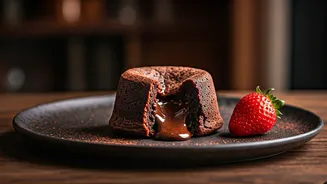
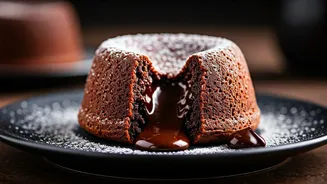
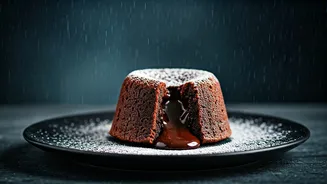
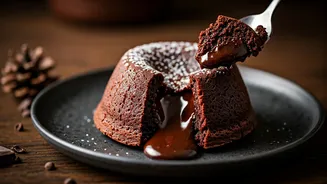
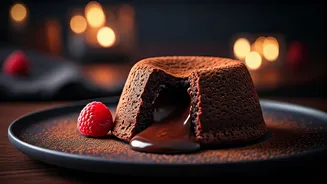
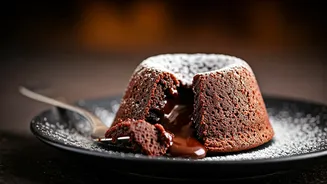
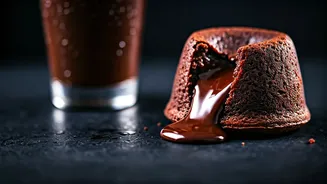
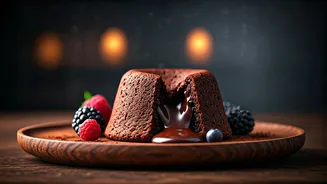
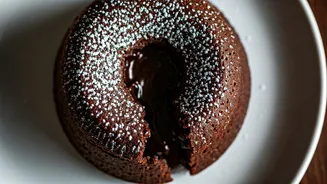
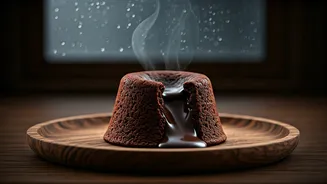
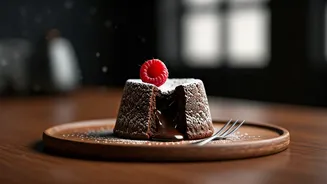
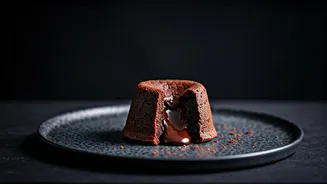
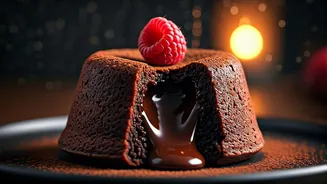
Among the pantheon of comfort desserts, from gulab jamun to gajar ka halwa, one modern classic has firmly established itself as a monsoon favourite: the molten chocolate lava cake. It’s a dessert that offers a dual texture experience—a firm, cakey exterior that gives way to a warm, gooey, liquid chocolate centre. [2, 6] This combination of a warm, soft cake and a flowing, rich interior makes it the perfect antidote to a cool, rainy evening. In India, its popularity is undeniable. Food delivery platforms have noted that choco lava cake is consistently one of the most ordered desserts in the country, especially during peak comfort-food seasons. [18, 20]
A Dessert with a Disputed History
The lava cake feels so timeless that it’s surprising to learn its history is relatively recent and highly debated. [6, 17] One story credits French chef Michel Bras, who says he spent two years perfecting his *coulant au chocolat*, which he first served in 1981. His goal was to recreate the feeling of drinking hot chocolate after a family ski trip, achieved by placing a frozen ganache ball inside the batter. [6, 12] However, another acclaimed French chef, Jean-Georges Vongerichten, claims he invented it by accident in New York in 1987 when he underbaked a batch of chocolate sponge cakes. [10, 12] Regardless of its true origin, the dessert became a global sensation in the 1990s, loved for its theatrical presentation and rich flavour. [6]
The Joy of a Homemade Volcano
While it remains a restaurant and café staple, the lava cake is surprisingly easy to make at home, making it an ideal monsoon project. The secret lies in two key areas: using high-quality dark chocolate and, most importantly, not overbaking it. [8] The 'lava' effect comes from pulling the cakes from the oven when the edges are set but the centre is still soft and jiggly. [2, 9] A few simple ingredients—chocolate, butter, eggs, sugar, and a touch of flour—are all it takes. [4] The batter can be made in under 30 minutes, and the short baking time of 12-15 minutes means you’re never far from a warm, decadent treat. For the best results, use a good quality chocolate bar with 60-70% cocoa content, as chocolate chips contain stabilizers that prevent them from melting as smoothly. [4, 9]