





Sun, Soil, and Solar Panels
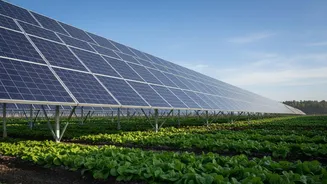
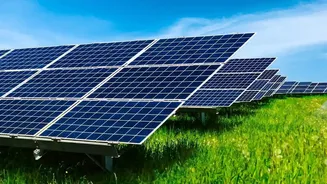
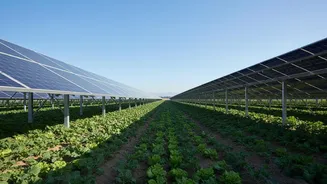
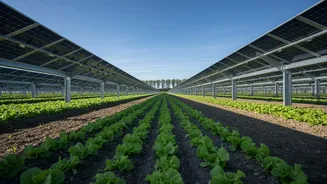
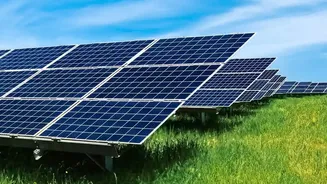
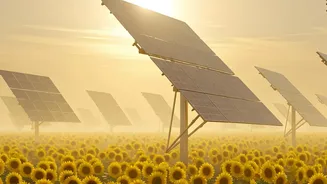
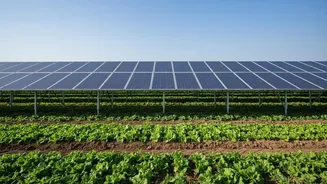
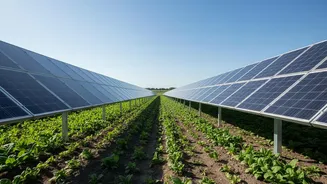
At its heart, agrivoltaics—sometimes called solar farming—is the practice of co-locating agriculture and solar photovoltaic (PV) power generation on the same piece of land. Instead of choosing between a field of crops or a field of solar panels, this
model combines them. Typically, this involves mounting solar panels high enough off the ground to allow crops to grow underneath or for livestock to graze between the rows of panels. The concept, which dates back to the 1980s, is built on a symbiotic relationship. The solar panels can protect crops from excessive heat and reduce water evaporation from the soil, creating a more stable microclimate. In return, the evapotranspiration from the plants can help to cool the solar panels, potentially improving their efficiency.
India's Green-Energy Gambit
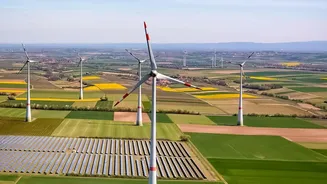
With one of the world's most ambitious renewable energy targets—aiming for 500 GW of non-fossil fuel capacity by 2030—India faces immense pressure on its most valuable resource: land. Agrivoltaics presents a compelling solution to the land-use conflict between agriculture and energy. Recognizing this, India has been actively promoting the technology through policies like the PM-KUSUM scheme, which provides subsidies to farmers for installing solar projects. More than two dozen pilot projects are already operational across the country, testing the viability of growing everything from leafy greens and turmeric to grapes under solar arrays. These projects are crucial test beds, providing data and demonstrating the potential for farmers to earn a dual income from selling both crops and electricity.
Beyond Just Kilowatts
Traditionally, the success of a solar project was measured almost exclusively by its energy output and financial return—its Levelized Cost of Energy (LCOE). Agricultural success was measured by crop yield. The assessment of agrivoltaics was often a simple combination of these two metrics. However, this approach failed to capture the full picture. It overlooked the intertwined benefits and trade-offs of the integrated system. An assessment might find that crop yield is slightly reduced or that the cost per watt is slightly higher than a conventional solar farm, and deem the project a failure.
A New Yardstick for Success
India's push is forcing a re-evaluation of these narrow metrics. The new context demands a more holistic assessment that considers a wider range of socio-economic and environmental benefits. Success is not just about the Land Equivalent Ratio (LER), a measure of how efficiently land is used. It's about resilience. For instance, in a water-scarce region, a system that reduces irrigation needs while still producing a healthy crop and clean energy is a profound success, even if the yield is 5% lower than in an open field. This new assessment framework, influenced by India's experience, now includes factors like water conservation, soil health, biodiversity improvements, and, crucially, the diversification and stabilization of farm income. Countries like France are already adopting frameworks that grade agrivoltaics on its service to agriculture, not just its power output.
Hurdles on the Horizon
Despite the promise, the path to scaling up agrivoltaics in India is not without its challenges. The initial implementation costs are high, often 30-40% more than traditional solar installations, which can be a major barrier for small and marginal farmers. There's also a lack of standardized, cost-effective solar structures designed specifically for agricultural use. Policy and regulatory ambiguity regarding land use can also deter farmers who fear their agricultural land could be reclassified. Overcoming these hurdles will require targeted financial incentives, further technological innovation, and clear, supportive government policies that de-risk the investment for farmers.