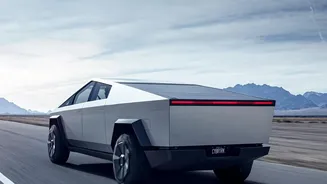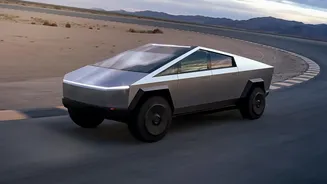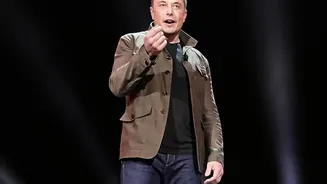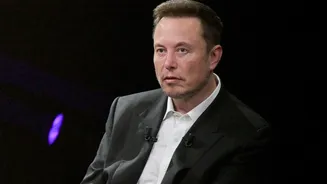





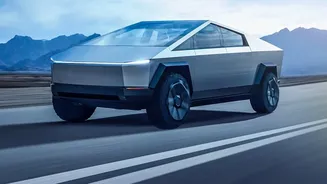
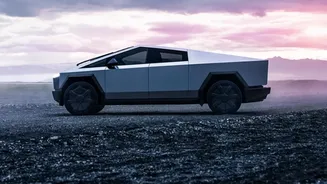
In a surprising reversal, Elon Musk announced Tesla will extend Cybertruck production through summer 2027. This move comes just days after announcing the line would wind down by mid-year, giving the polarising pickup a short reprieve.
A Sudden Change of Plans
Just last week, Tesla
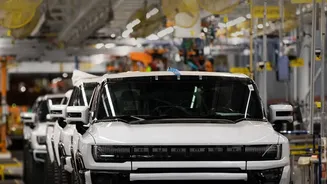
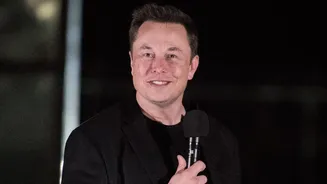
CEO Elon Musk announced the company would begin winding down production of its radical Cybertruck around the middle of 2027. The plan was to repurpose the manufacturing capacity at its Texas Gigafactory for the upcoming Cybercab, a key part of Tesla's autonomous robotaxi ambitions. However, in a new statement on November 11, Musk confirmed a change of course: production will now continue 'through the end of summer 2027'. This extension of a few months is intended to help Tesla work through more of its significant order backlog for the stainless-steel pickup.
Why the Extension?
The decision appears to be a direct response to the massive number of outstanding orders and the backlash from customers who feared they would not receive their vehicle. Before the extension, Musk had acknowledged that the order rate 'far exceeds' Tesla's production capacity and that the company would have to return deposits to many people. To meet some of this demand, Tesla planned to add an extra production shift. This latest extension provides a slightly longer runway to fulfill more orders before the production line is shut down. Musk framed the decision as one rooted in sentimentality, stating it was not the 'smartest move from a profit-maximizing standpoint'.
The Troubled History of Cybertruck
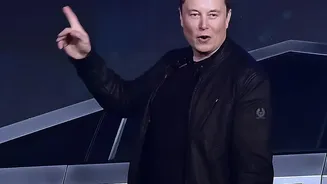
The Cybertruck's journey has been anything but smooth. After its infamous 2019 unveiling, where its 'shatter-resistant' glass broke during a live demo, the truck faced years of production delays, finally reaching customers in late 2023. Since its launch, it has been plagued by a series of quality issues and safety recalls, with the National Highway Traffic Safety Administration logging 11 recalls for issues ranging from faulty accelerator pedals to exterior panels that could detach while driving. Sales have also failed to meet Musk's ambitious projections of 250,000 units annually. After selling around 39,000 trucks in 2024, sales fell by nearly half to just over 20,000 in 2025.
A Pivot to the 'Cybercab'
The plan to end Cybertruck production was never about a lack of factory space in general, but a strategic pivot. Tesla is shifting its focus and resources toward the Cybercab, a two-seat autonomous vehicle without a steering wheel or pedals. This vehicle is central to Musk's vision for a Tesla-owned robotaxi network, a concept he sees as having greater longterm potential than the Cybertruck. Even with the extension, the broader strategy remains in place: the Cybertruck's time is limited, and its manufacturing footprint at the Texas factory will eventually be handed over to the Cybercab. The limited extension does not change the eventual outcome for the pickup.
What This Means for Buyers and Tesla
For those still holding a reservation, the extension offers a glimmer of hope, though it is still not a guarantee that all orders will be filled. The cheapest version of the truck available to order recently rose to over $92,000, a significant jump from its initial launch price. For Tesla, the Cybertruck has been what one engineer called an 'incredible technology development platform' whose innovations will live on in the Cybercab. However, its short, four year production life marks a rare and costly misstep in terms of commercial success. Musk himself has been candid about the vehicle's challenges, once stating, 'We dug our own grave with Cybertruck'.