



Cosmic Collisions and Stellar Nurseries
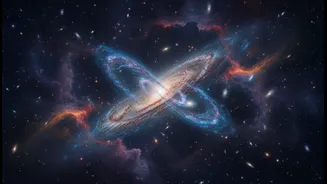
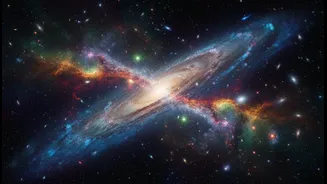
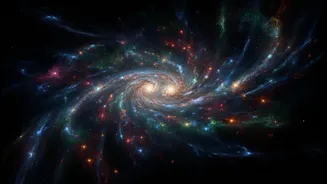
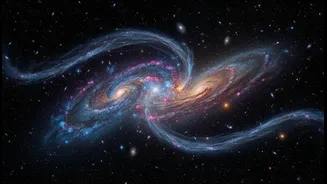
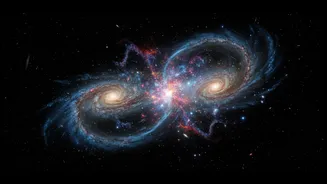
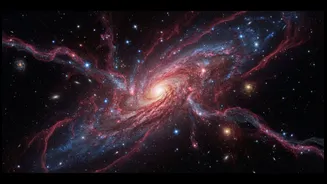
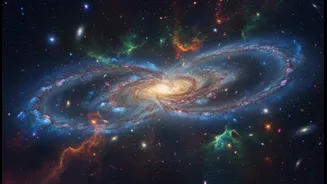
When galaxies, vast islands of stars, gas, and dark matter, are drawn together by gravity, they begin a long process of merging. This can take hundreds of millions of years. As they interact, powerful tidal forces disrupt their once-orderly structures,
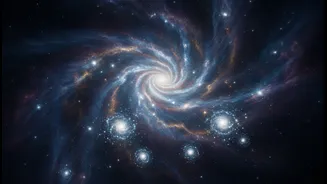
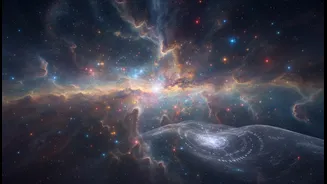
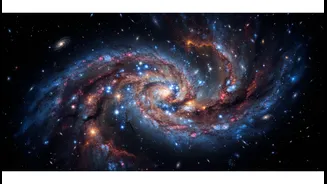
pulling out long streams of stars and gas. More importantly, the collision compresses huge clouds of interstellar gas, kickstarting a furious wave of star formation known as a starburst. Instead of forming stars spread out over a disk, this compressed gas collapses to form extremely dense and massive collections of stars known as young massive clusters or globular clusters. These mergers are so significant that they were a primary driver of galaxy growth in the early universe, when galaxies were packed more closely together.
Ancient Relics and Newborn Behemoths
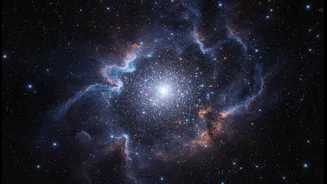
Globular clusters are spherical, tightly packed collections of hundreds of thousands to millions of stars. Our own Milky Way has about 150 of them, mostly ancient relics that are among the oldest objects in the universe, some dating back 12 to 13 billion years. These primordial clusters are like fossils; their low content of heavy elements tells us they formed when the universe was young, before many generations of stars had a chance to enrich space with new materials. However, galaxy mergers can create new globular clusters. The intense pressures and high gas densities in a merger mimic the conditions of the early universe, allowing for the birth of these massive, compact stellar families in the modern era.
A Fingerprint of Invisible Matter
This is where the connection to the primordial universe becomes truly exciting. The formation and properties of these new star clusters are not just dependent on the gas that forms them. They are profoundly influenced by the gravitational scaffolding of the merging galaxies, which is dominated by dark matter. Dark matter is the mysterious, invisible substance that makes up about 85% of the matter in the universe. Different theories about the nature of dark matter predict different distributions and behaviors on galactic scales. The process of a merger, where the gravitational potential of the galaxies changes rapidly, is known as 'violent relaxation', and it affects both normal matter and dark matter.
Simulating the Unseen
By observing the mass, size, and distribution of the young star clusters formed in a merger, astronomers can test which models of dark matter and early universe conditions hold up. This is done by running complex supercomputer simulations. Scientists can create virtual galaxy mergers using different assumptions about primordial matter configurations—for instance, different types of dark matter. They then run the simulation and see what kind of star clusters are produced. If a particular model of dark matter consistently produces star clusters that look like the ones we observe with telescopes like the James Webb Space Telescope (JWST) and the Hubble Space Telescope, it becomes a much stronger candidate for explaining our reality.
From Cosmic Structures to Fundamental Physics
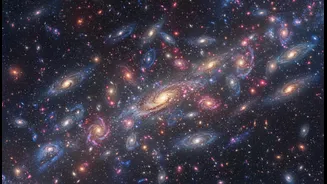
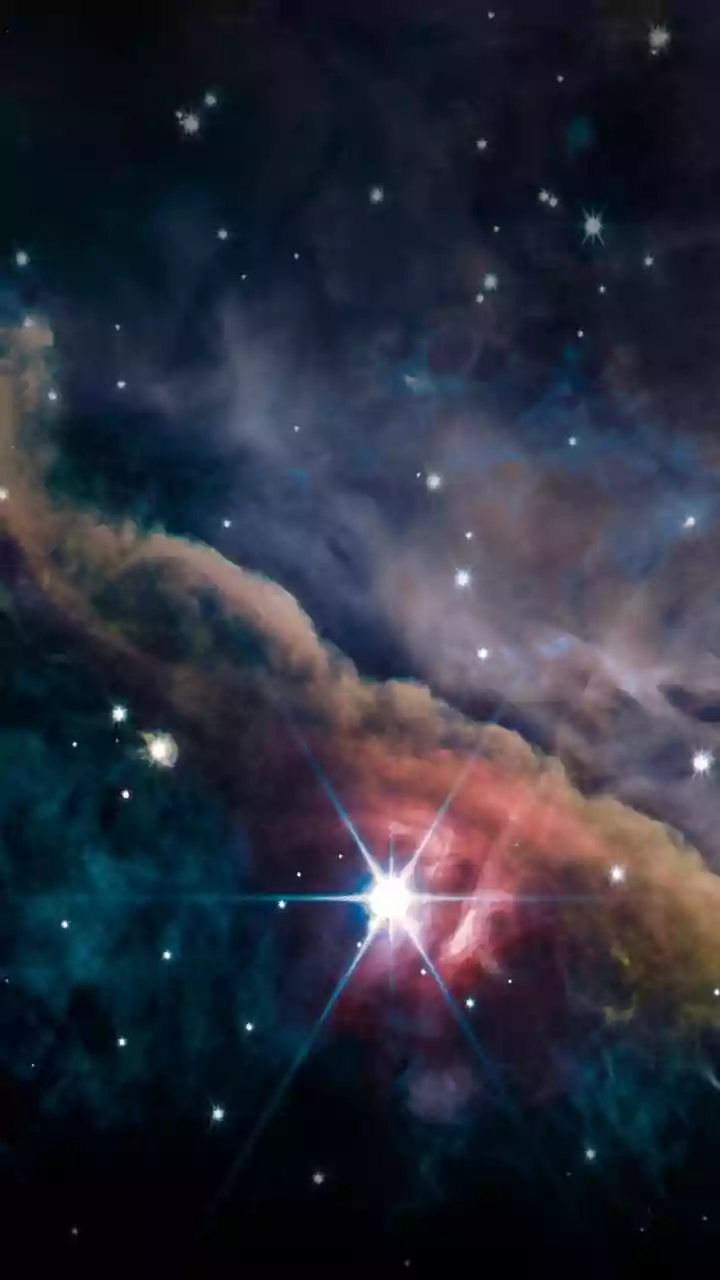
Essentially, galaxy mergers act as giant, natural experiments. The young, massive clusters born from them are the results of that experiment. By studying them, we are effectively reading the results. Recent observations with powerful telescopes have allowed astronomers to peer through the dust that typically hides these stellar nurseries, revealing their lifecycle in unprecedented detail. These studies provide a crucial link between the largest structures we can see (galaxy clusters) and the most fundamental, subatomic physics of dark matter. Each cluster’s properties constrain the possibilities, ruling out certain theories and bringing us closer to a complete picture of how structure formed in the universe, from the initial ripples in primordial matter to the great galaxies we see today.