






The Rise of Smart Circuit Travel
The secret lies not in a new type of train, but in a smarter way of booking: the Circular Journey Ticket (CJT). For decades, Indian Railways has offered this little-known facility, designed for pilgrimages or multi-city tours. Today, savvy backpackers
are repurposing it for adventure. A CJT allows a traveller to book a multi-stop trip that starts and ends at the same station, covering a minimum of 1,000 kilometres with up to eight break-of-journey stops. The key advantage is its 'telescopic fare' structure. Instead of paying separate, front-loaded fares for each leg of the trip, the total distance is calculated as one single journey. This can result in savings of 20-30%, a significant amount for any budget-conscious traveller. By planning a loop that touches several trailheads or base towns, a backpacker can create a custom wilderness itinerary on a shoestring budget.
Your Gateway to the Wild
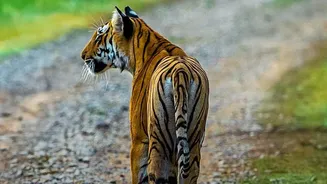
These rail circuits serve as arteries into some of India’s most stunning natural landscapes. Consider a journey starting in Delhi. A solo trekker could plan a circular route touching stations like Pathankot or Kalka. Pathankot is the gateway to the Kangra Valley, with its charming narrow-gauge railway leading into the heart of Himachal Pradesh, surrounded by the Dhauladhar mountain range. Kalka, meanwhile, is the starting point for the UNESCO World Heritage Kalka-Shimla Railway, a five-hour journey through pine forests that deposits you in the foothills of the Himalayas. In the south, a circuit could connect you to the Western Ghats. A route from Vasco da Gama in Goa to Londa in Karnataka is famed for its monsoon-season beauty, with waterfalls cascading past the tracks. From hubs like Londa or nearby stations, access to trekking routes in the verdant hills becomes much simpler. Even national parks are within reach; a train journey from Junagadh in Gujarat can take you to Sasan Gir, home of the Asiatic lion.
Why Solo Backpackers Are on Board
For solo travellers, especially women, the benefits of train travel go far beyond cost. Trains offer a comparatively safer and more structured environment than long-distance buses or hitchhiking. Sleeper class, a favourite among backpackers, provides a personal berth where one can rest securely on overnight journeys, saving on accommodation costs. The journey itself becomes part of the adventure. Unlike the sterile environment of an airport, a train compartment is a microcosm of India. It offers a unique opportunity for cultural immersion, sharing food and stories with fellow passengers from all walks of life. This social aspect can be a welcome comfort for those travelling alone. Furthermore, the logistical simplicity of a pre-booked circular ticket eliminates the stress of arranging transport at every stop, allowing the backpacker to focus on the experience.
Planning Your Own Rail Adventure
Booking a Circular Journey Ticket requires some old-school planning, as it currently cannot be done online. The first step is to finalise your itinerary, choosing up to eight break-journey stations. With your route mapped out, you must approach the Divisional Commercial Manager at a major station within your starting railway zone. They will calculate the total fare and provide a form. This form is then presented at the booking office to purchase the master ticket. It's important to remember that the CJT itself is not a reservation. After purchasing the ticket, you must visit a reservation counter to book your berths on specific trains for each leg of your journey. While it involves more bureaucracy than a few clicks on a website, the significant cost savings and travel flexibility make it a worthwhile endeavour for any serious backpacker looking to explore India’s wild frontiers.