







The Next Leap in Indian Train Travel
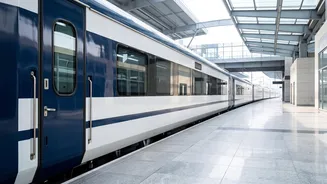
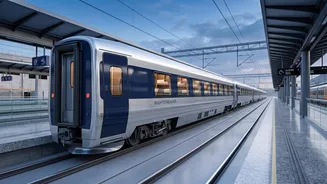
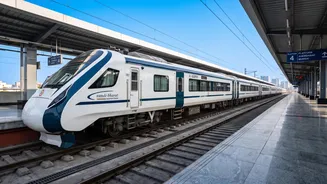
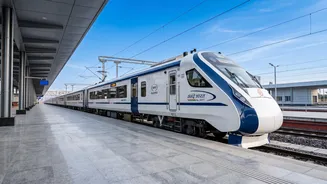
Following the success of the Vande Bharat chair-car services, Indian Railways is expanding the brand to long-distance, overnight routes. These are not conventional trains pulled by a locomotive; they are self-propelled trainsets designed for higher speeds
and a smoother ride. The first Vande Bharat sleeper service was launched in January 2026 between Howrah and Kamakhya. Now, a second major route has been announced, signaling a major upgrade for inter-city connectivity. The goal is to offer a premium, comfortable, and faster alternative to existing overnight trains, directly competing with air travel for convenience on popular routes.
Bengaluru to Mumbai in 16 Hours
The second Vande Bharat sleeper service is set to launch on November 1, 2026, connecting two of India's most important economic hubs: Bengaluru and Mumbai. This is a game-changer for the route. Currently, trains like the Udyan Express take between 22 and 24 hours to cover the distance. The Vande Bharat sleeper aims to complete the journey in just 16 hours, saving passengers up to eight hours of travel time. The service is expected to run six days a week and will feature a 16-coach train with a capacity for 823 passengers across three classes: AC First Class, AC Two-Tier, and AC Three-Tier.
What's New Inside the Coaches?
The passenger experience is at the heart of the Vande Bharat sleeper's design. The interiors are a significant upgrade from conventional trains. Berths are wider and feature better cushioning. Each berth has its own adjustable reading light, charging sockets, and privacy curtains. The train features automatic doors and fully sealed gangways, which reduce noise and dust, creating a quieter and cleaner environment. For enhanced hygiene, the train is equipped with bio-vacuum toilets with touchless fittings, similar to those on aircraft. Passengers in First AC will even have access to a hot shower facility.
Faster and Smoother Journeys
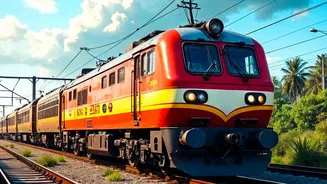
The Vande Bharat sleeper is engineered for speed and stability. Its aerodynamic design and distributed power system allow for quicker acceleration and deceleration, crucial for reducing overall journey time. The trains are designed to operate at a maximum speed of 160 km/h, though actual speed depends on track conditions. Advanced couplers and suspension systems are used to minimize jerks and vibrations, promising a much smoother ride compared to traditional locomotive-hauled trains like the Rajdhani Express. Safety is also enhanced with the inclusion of the indigenous Kavach train protection system.
The Future of Overnight Travel
The Bengaluru-Mumbai and the recently proposed Delhi-Varanasi routes are just the beginning. Indian Railways plans to roll out a significant number of these sleeper trains across its network. Contracts have been awarded to multiple manufacturers to produce hundreds of Vande Bharat sleeper trainsets. While these new trains may come with a premium fare structure compared to existing services, they offer a compelling package of speed, comfort, and modern amenities. By bridging the gap between traditional rail travel and air travel, the Vande Bharat sleeper is poised to become the new benchmark for long-distance journeys in India.