


A Nursery for New Worlds
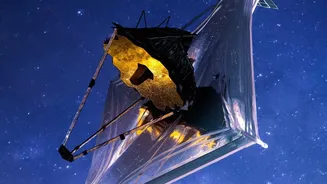
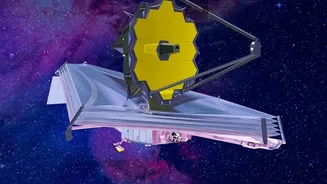
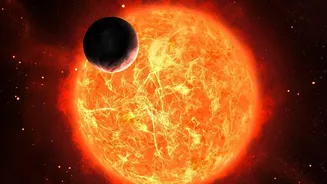
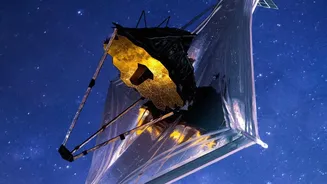
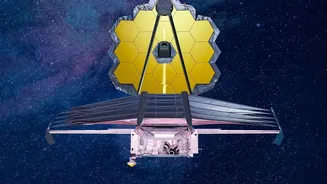
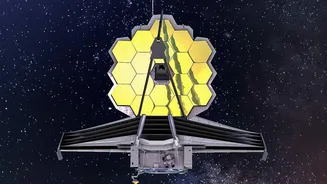
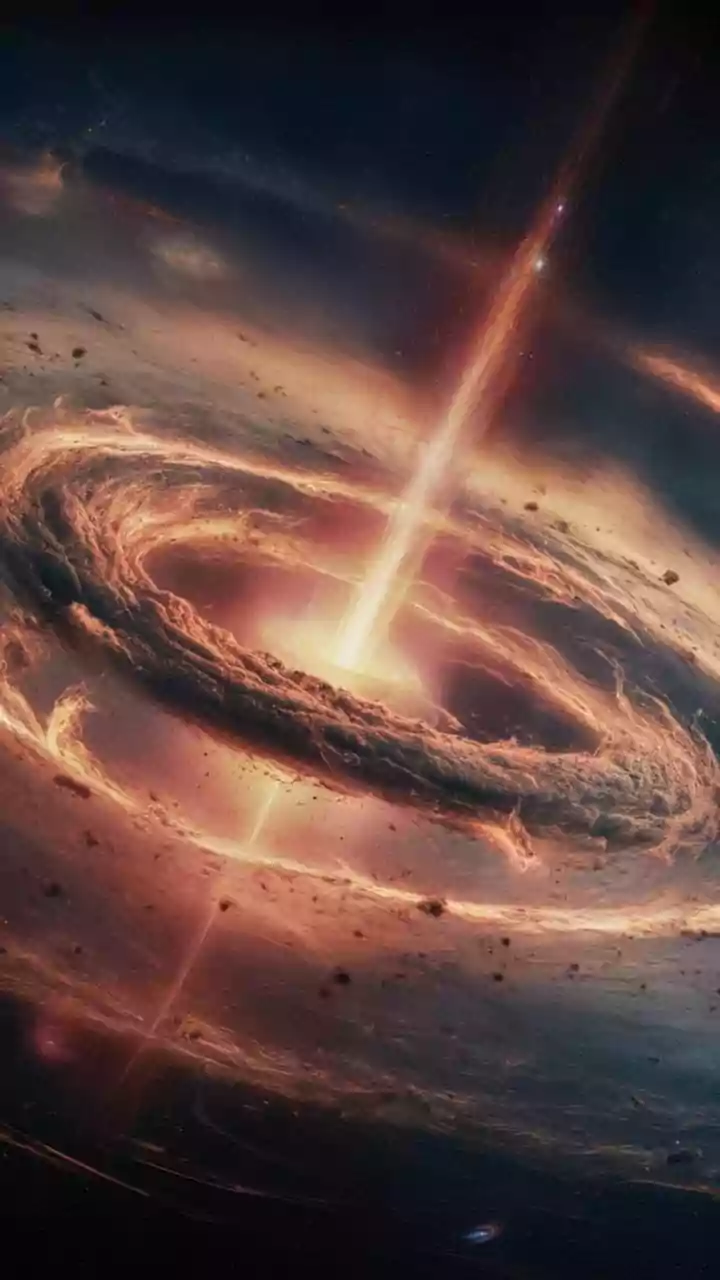
In a groundbreaking observation, astronomers have used the James Webb Space Telescope (JWST) to detect water vapour within the inner planet-forming disk of a young star called PDS 70. Located 370 light-years away, PDS 70 is a stellar nursery, a system
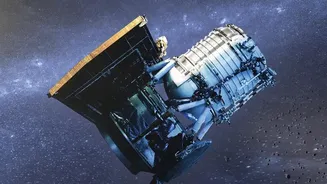
where new planets are actively under construction. The telescope's Mid-Infrared Instrument (MIRI) pinpointed the water signatures in a region less than 160 million kilometres from the star—a zone analogous to the area where Earth and the other inner rocky planets formed in our own solar system. This is the first time water has been detected so close to a star in a disk that is already known to host developing protoplanets, offering a direct glimpse into the raw ingredients available for building new worlds. Scientists were ecstatic about the finding, with lead author Giulia Perotti of the Max Planck Institute for Astronomy stating, "We've seen water in other disks, but not so close in and in a system where planets are currently assembling. We couldn't make this type of measurement before Webb."
Seeing the Invisible with Infrared Light
Detecting specific molecules across hundreds of light-years requires incredible precision. The JWST achieved this by using a technique called spectroscopy. As the light from the star PDS 70 passed through the gas and dust of its inner disk, the MIRI instrument acted like a high-tech prism, splitting the infrared light into its constituent wavelengths to create a spectrum. Within this spectrum, water vapour left a distinct chemical fingerprint—a series of bright emission lines that could only be water. This infrared capability is what makes Webb uniquely powerful for such discoveries. Previous telescopes struggled to make these kinds of measurements, especially in the turbulent and dense inner regions of planet-forming disks. The clarity of Webb's data not only confirms the presence of water but also allows scientists to begin quantifying it, opening a new chapter in understanding planetary environments before the planets themselves have even fully formed.
Solving the Mystery of Earth's Water
One of the longest-standing debates in planetary science is how Earth got its vast oceans. Was our water delivered billions of years ago by icy comets and asteroids from the outer solar system, or was it a primordial ingredient baked into the planet from the very beginning? The discovery at PDS 70 provides compelling evidence for the latter. Finding abundant water vapour in the terrestrial planet-forming zone suggests that any rocky planets that coalesce there will have access to water from day one. This means that worlds like Earth may not be cosmic accidents requiring a special delivery of water, but rather a natural outcome of planet formation in a sufficiently water-rich environment. As MPIA director Thomas Henning noted, "This discovery is extremely exciting, as it probes the region where rocky planets similar to Earth typically form." It implies that the potential for habitable, water-rich planets may be more common throughout the galaxy than previously thought.
From Vapour to Habitable Worlds
While this discovery is a monumental step, it is important to remember that Webb detected water vapour, not liquid oceans on a finished planet. The PDS 70 system is still a chaotic construction zone. The water exists as a gas in a disk of dust and other elements that will gradually clump together to form planetesimals, the building blocks of planets. The key implication is that these building blocks will be water-rich. The next step for astronomers is to continue monitoring PDS 70 and similar systems to observe this process in action. They will look for evidence of how this water gets incorporated into the newly forming rocky bodies and whether it can survive the violent early stages of a planetary system's life. This discovery is not the end of the search but a critical clue that points scientists in the right direction, providing a tangible link between the interstellar medium's raw ingredients and the formation of potentially life-sustaining planets.