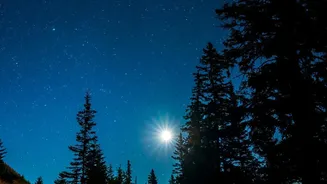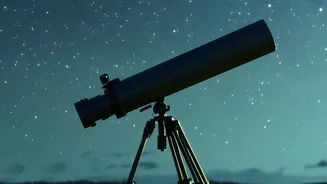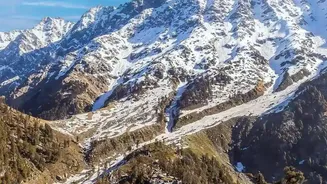





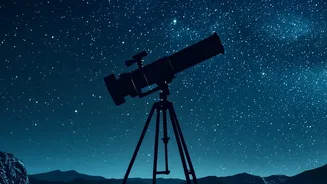
Remember looking up at the night sky as a child, lost in a sea of stars? In our bright, smog-filled cities, that view is a distant memory. But high in the Indian Himalayas, it’s a nightly spectacle. Here are eight villages that deliver it.
Chopta
Often called
the ‘Mini Switzerland of India’, Chopta is a paradise of meadows nestled within a wildlife sanctuary. At an altitude of about 8,500 feet, its remote location guarantees minimal light pollution. The open slopes provide an unobstructed, 360-degree view of the cosmos, making it a favorite for astrophotographers who come to capture the Milky Way’s galactic core rising over the Himalayas. The clear, crisp winter air from November to February offers the best viewing conditions.
Mukteshwar
Perched at over 7,500 feet, Mukteshwar is a well-known hub for astrotourism. The town is home to the Starscapes Observatory, which offers guided stargazing sessions with high-powered telescopes, allowing visitors to get a closer look at planets, star clusters, and distant galaxies. Its unpolluted skies and panoramic views make it an ideal spot for both beginners and seasoned astronomers to witness the brilliance of the cosmos.
Harsil
Set on the banks of the Bhagirathi River, Harsil is a serene valley at an altitude of over 8,500 feet. Known for its dense deodar forests and apple orchards, its seclusion results in exceptionally clear night skies with minimal light pollution. In the stillness of a Himalayan night, Harsil provides a perfect, tranquil setting for stargazing, where the Milky Way often becomes visible to the naked eye. The autumn and winter months provide the clearest atmosphere for celestial viewing.
Kanatal
A small, quiet village located at an altitude of around 8,500 feet, Kanatal has become a popular destination for camping and glamping. Many campsites here are specifically designed to offer stargazing experiences, with some even providing telescopes. Its location, far from major urban centers, ensures dark skies perfect for watching meteor showers or simply lying back and identifying constellations in the crisp mountain air.
Benital
Designated as India's first ‘Astro Village’, Benital is a quiet hamlet in the Chamoli district, situated at an elevation of about 8,200 feet. Developed specifically for astrotourism, it offers an ideal setting with virtually zero light pollution. The village is being equipped with telescopes and observatories to provide visitors an immersive celestial experience, allowing for clear views of the Milky Way, distant nebulae, and planets.
Munsiyari
Located in a remote corner of the Pithoragarh district near the Tibetan border, Munsiyari sits at an elevation of about 7,200 feet. Its isolation makes it one of the darkest locations in the state, with virtually zero light pollution. This pristine environment provides an unparalleled canvas for observing faint deep sky objects and the full, breathtaking arc of the Milky Way, making it a dream destination for serious astrophotographers and stargazers seeking solitude.
Khirsu
A lesser known gem in the Pauri Garhwal district, Khirsu is a peaceful offbeat destination surrounded by dense oak and deodar forests. At an altitude of around 5,600 feet its lack of commercialization means the nights are incredibly dark and quiet. The clear skies offer spectacular stargazing opportunities making it an ideal spot for travelers looking to escape the crowds and enjoy a tranquil evening under a canopy of countless stars.
Binsar Wildlife Sanctuary
While famous for its panoramic Himalayan views and rich biodiversity, the Binsar Wildlife Sanctuary also offers some of the most pristine night skies. At an elevation of over 7,900 feet, its core area is free from artificial light, especially at 'Zero Point'. On a clear, moonless night, the sanctuary transforms into a natural observatory where the Milky Way and constellations shine with remarkable clarity, offering a truly immersive back to nature experience.