




Looking for a US getaway that swaps crowded landmarks for authentic charm? These five cities offer a richer experience, where stunning architectural heritage and bustling local markets provide a true sense of place and community character.
Savannah, Georgia
Savannah's allure
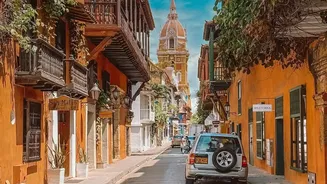
lies in its meticulously preserved historic district, one of the largest in the country. The city's 22 public squares are framed by stunning examples of Federal, Georgian, and Gothic Revival architecture. Strolling down its cobblestone streets, you'll find grand mansions with wrought-iron details and ancient oak trees draped in Spanish moss, creating a transportive, romantic atmosphere. This deep sense of history extends to the City Market, a four-block open-air marketplace that has been a center of commerce since the 1700s. While the original structures have been replaced, the spirit of the market endures. Today, it's a bustling hub filled with art galleries, boutiques, and restaurants set within restored warehouses, offering a modern experience within a historic shell.
Santa Fe, New Mexico
Santa Fe's visual identity is unforgettable, thanks to a city ordinance that protects its unique architectural style. Buildings in the historic core adhere to the Pueblo Revival or Territorial Revival look, characterized by low-slung, earth-colored adobe (or adobe-style) structures, flat roofs, and exposed wooden beams called 'vigas'. This commitment to a singular aesthetic, rooted in Native American and Spanish colonial history, gives the city a cohesive, almost painterly quality. This cultural richness is also on full display at the Santa Fe Farmers' Market, hailed as one of the nation's best. For over 50 years, it has brought together more than 100 vendors from across northern New Mexico, offering a vibrant taste of the region’s agricultural bounty, from fresh-roasted chile to artisan cheeses and grass-fed meats.
Philadelphia, Pennsylvania
As the nation's first capital, Philadelphia is a living museum of American architectural history. Beyond Independence Hall, its neighborhoods are filled with everything from quaint Colonial-era brick row houses on Elfreth's Alley to grand Federal and Georgian mansions. The city's evolution can be read in its buildings, showcasing a dense, walkable timeline of American design. At the heart of this historic landscape is the Reading Terminal Market, an institution since 1893. Housed in a National Historic Landmark building beneath a former railroad shed, it's one of the oldest and largest public markets in the country. With over 80 merchants, including some descended from original vendors, the market is a bustling intersection of culture and cuisine, offering everything from fresh produce and local meats to world-famous cheesesteaks and Pennsylvania Dutch specialties.
Buffalo, New York
Often overlooked, Buffalo boasts an architectural portfolio that rivals any major American city, a legacy of its immense wealth during the Gilded Age. It is home to a collection of masterpieces by architects like Frank Lloyd Wright and Louis Sullivan. The cityscape features early American skyscrapers, opulent mansions along Delaware Avenue's 'Millionaire's Row', and the first coordinated park system in the nation, designed by Frederick Law Olmsted. This rich heritage pairs with the Broadway Market, an institution that has served as a community hub for Eastern European immigrants and their descendants since 1888. While the building has been updated, its purpose remains: to provide a place for socializing and shopping for traditional and exotic foods. The market reflects the city's diverse history and continues to be a vital part of the Broadway-Fillmore neighborhood.
Portland, Maine
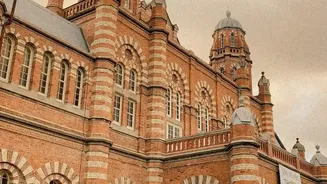
This charming New England port city is defined by the historic brick buildings and Victorian-era architecture of its Arts District and Old Port. Strolling through areas like Monument Square, you're surrounded by a rich sense of 19th-century maritime history, from the historic City Hall to the detailed facades of commercial buildings. This heritage is deeply connected to its tradition of public markets. The Portland Farmers' Market is one of the oldest in the nation, with roots tracing back to 1768. It has operated continuously since, embodying a long-standing link between the city and its rural surroundings. Held year-round in different locations, including Deering Oaks Park in the summer, the market is a beloved local institution where farmers sell goods they grow themselves, from organic produce and fresh flowers to local meats and maple syrup.