

An Unlikely Scientific Tool
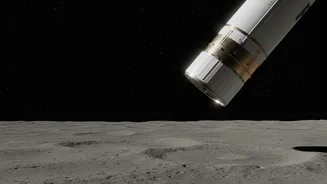
When we think of space exploration, we picture graceful landings and precise manoeuvres. A high-speed crash is usually the last thing anyone wants. Yet, for lunar scientists, an impact event—whether from a spent rocket booster or a purpose-built impactor—is
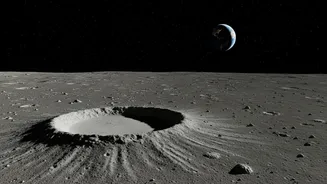
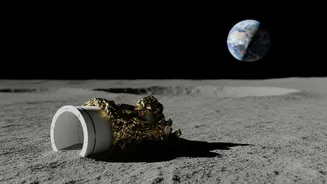
a golden opportunity. The Moon's surface has no atmosphere to weather it, meaning it holds a pristine record of the solar system's history. But to read that history, you need to dig. A rocket impact is essentially a high-energy excavation project, blasting open a new crater and throwing subsurface material out for scientists to study from afar. Accidental impacts, such as a SpaceX Falcon 9 upper stage that hit the Moon, and deliberate ones, like NASA's LCROSS mission, both serve this unique purpose.
Creating a Controlled Collision
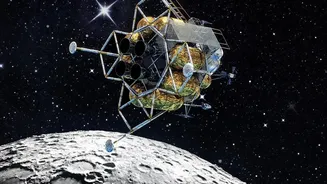
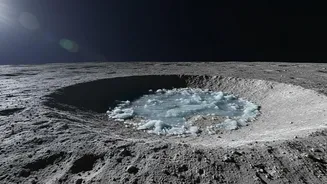
The most famous example of a planned impact was NASA's Lunar Crater Observation and Sensing Satellite (LCROSS) mission in 2009. The mission was ingeniously simple: it guided the spent upper stage of its launch rocket into a permanently shadowed crater near the Moon's south pole. These dark craters are some of the coldest places in the solar system, making them perfect cold-storage traps for volatile compounds, including water ice. The rocket stage, weighing over two metric tons, slammed into the Cabeus crater at over 9,000 km/h. A second, smaller "Shepherding Spacecraft" flew right through the plume of debris kicked up by the impact, analyzing its composition before making its own, smaller impact minutes later.
Reading the Debris Cloud
The massive cloud of ejected material, or ejecta, is where the real science happens. As this plume rises out of the dark crater and into sunlight, instruments on the shepherding spacecraft and on orbiting satellites can analyze the light passing through it. This technique, called spectroscopy, allows scientists to identify the chemical composition of the dust and gas. The LCROSS mission's primary goal was to confirm the presence of water, and it succeeded spectacularly. The data showed significant amounts of water ice in the plume, ending decades of speculation. But water wasn't all they found. The ejecta was also rich in other useful materials like hydrogen, methane, mercury, and silver, revealing the Moon to be a much more chemically complex and active body than previously believed.
Why Finding Water Matters
The confirmation of lunar water is a game-changer for the future of space exploration. Water is heavy and expensive to launch from Earth, but it's essential for human survival. Finding it already on the Moon means future astronauts could potentially harvest it for drinking water and growing plants. Even more importantly, water (H2O) can be split into its component elements: hydrogen and oxygen. Oxygen is breathable air, and both elements are primary components of rocket fuel. A lunar base with access to water could become a self-sustaining outpost and a refueling station for missions to Mars and beyond, dramatically lowering the cost and complexity of deep space travel.
The Crater's Lasting Legacy
The science doesn't end when the dust settles. The newly formed crater becomes a long-term scientific site. By observing the fresh crater and its ejecta blanket with orbiting spacecraft like NASA's Lunar Reconnaissance Orbiter, scientists can study the geology and physical properties of the lunar soil, or regolith. For accidental impacts, knowing the mass and velocity of the impacting object allows researchers to refine their models of crater formation. They can see how the impact energy is transferred to the ground and how material is thrown across the surface. This helps them better understand the natural cratering process that has shaped the Moon over billions of years and provides crucial data for planning the safety and construction of future lunar habitats.