


The Bare Essentials: Comfort Is Key
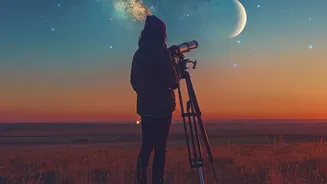
Before you even think about telescopes, focus on your immediate comfort. Night-time temperatures can drop significantly, even after a warm day. The secret to enjoyable stargazing is dressing in layers. A base layer, a fleece, and a windproof jacket will
serve you well. Don't forget a warm hat, gloves, and thick socks. You’ll likely be sitting or lying down for long periods, so a comfortable camping chair, a thick blanket, or even a beanbag can save you from a stiff neck and a sore back. A flask of something warm like coffee or hot chocolate can also make the experience much more pleasant.
Your First Window to the Universe: Optics
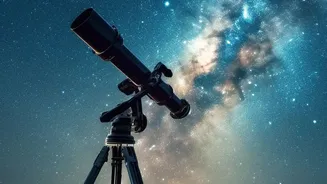
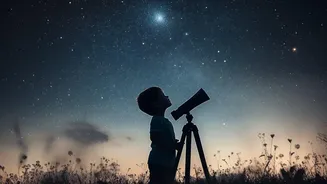
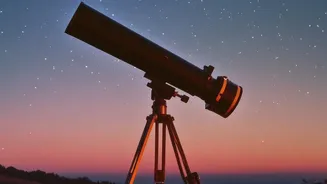
You don't need an expensive telescope to start. In fact, a good pair of binoculars is often the best first instrument for a beginner. Look for models like 7x50 or 10x50; the second number indicates the aperture, which is crucial for gathering the faint light from celestial objects. Binoculars are portable, intuitive to use, and can reveal stunning details on the Moon, the moons of Jupiter, and bright star clusters. If you are ready for a telescope, a Dobsonian mount is often recommended for beginners because it offers a large light-gathering aperture for a reasonable price. Remember, the best telescope is the one you'll actually use, so don't be tempted by a large, complicated scope that is difficult to transport and set up.
Navigating the Celestial Sea
Looking up at a blanket of stars can be overwhelming without a guide. A planisphere (a rotating star wheel) or a basic astronomy book are excellent, screen-free tools for learning constellations. There are also many smartphone apps, like Stellarium, that can help you identify objects in real-time. However, the bright light from a phone screen can ruin your night vision. If you use an app, be sure to switch it to its red-light mode. To see the faintest objects, you must let your eyes fully adapt to the dark, which can take 20 to 30 minutes. Patience is a stargazer’s most important virtue.
What Not to Expect: Managing Your Gaze
This is perhaps the most crucial part of a successful night out. The biggest misconception beginners have is expecting to see vibrant, colourful nebulae just like in photographs. Those images are the result of long-exposure photography that captures far more light and color than the human eye can. Through a typical backyard telescope, most galaxies and nebulae will appear as faint, ghostly smudges of grey light. Seeing them at all is the real triumph. Don't feel discouraged; learning to see these faint details is a skill that develops over time.
Debunking Common Sky Myths
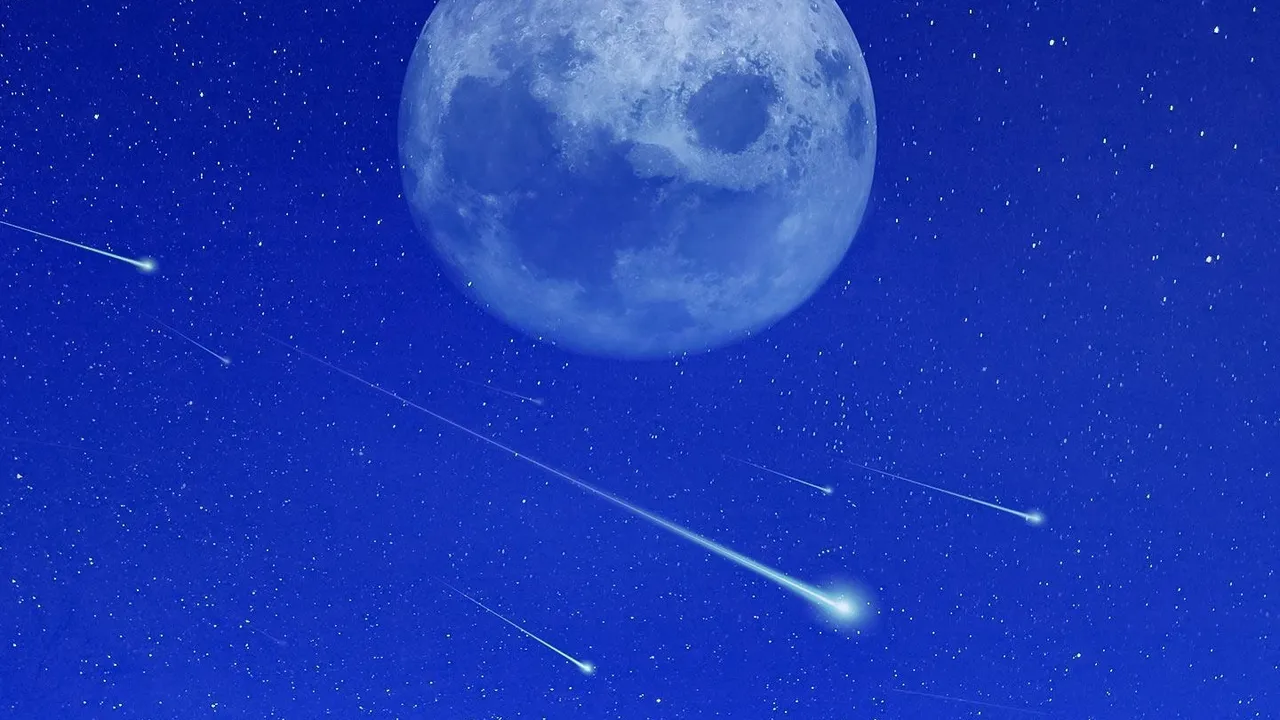
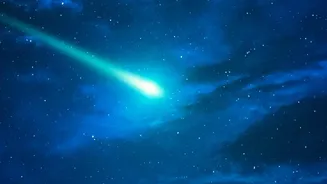
It’s also helpful to correct a few common myths. Shooting stars are not actually stars; they are tiny bits of dust and rock, often no bigger than a grain of sand, burning up in Earth's atmosphere. Polaris, the North Star, is not the brightest star in the sky—Sirius and Vega are much brighter, for example. Its importance comes from its position, remaining nearly stationary over the North Pole. Finally, don't assume you can see millions of stars with the naked eye. Even from the darkest locations on Earth, only about 6,000 to 10,000 stars are visible to our eyes.