





The Moon's Hidden Oxygen Reservoir
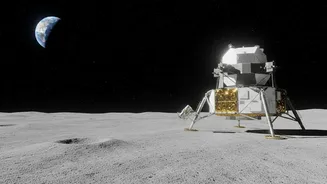
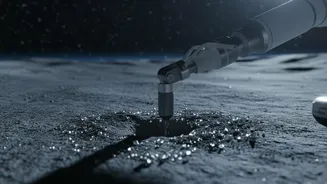
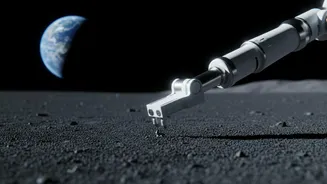
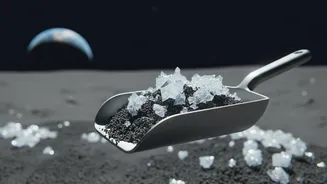
At first glance, the Moon's surface appears to be a barren, lifeless expanse of grey dust. But that dust, known as regolith, is a treasure trove of resources. Scientists have determined that lunar regolith is composed of roughly 45% oxygen by weight.
This isn't free-floating gas, however. It's chemically bound within silicate minerals and metallic oxides, the same compounds that make up much of the rock on Earth. The challenge for NASA and its commercial partners hasn't been finding the oxygen, but rather figuring out an efficient way to unlock it from its mineral prison. This concept, known as In-Situ Resource Utilization (ISRU), is considered fundamental to making a long-term human presence on the Moon economically viable. By learning to 'live off the land,' future missions can dramatically reduce their reliance on costly resupply missions from Earth.
The Science of 'Making Air'
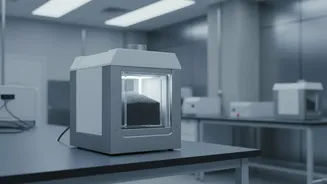
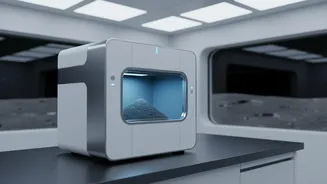
Several methods for extracting this oxygen are being developed, but one of the most promising is called carbothermal reduction. In simple terms, this process involves heating the lunar regolith to very high temperatures, around 1,700 to 1,800 degrees Celsius, in a specialized reactor. At these temperatures, the material melts. A carbon-based agent, such as methane, can then be introduced to react with the oxygen in the molten regolith, producing carbon monoxide (CO) and carbon dioxide (CO2) gas. These gases are then collected, and through a subsequent process, the oxygen is separated out, ready to be used. Recent tests have made significant progress. NASA's Carbothermal Reduction Demonstration (CaRD) project, in collaboration with companies like Sierra Space, has successfully used simulated solar energy to heat regolith simulant and extract oxygen in vacuum conditions, mimicking the lunar environment. This confirms the basic chemistry is sound and moves the technology closer to being ready for a real lunar demonstration.
More Than Just Breathing
While providing breathable air for habitats and spacesuits is the most obvious benefit, it's just the beginning. The largest consumer of oxygen on a space mission is actually rocket propellant. Liquid oxygen (LOX) is a primary component of the oxidizer used to burn fuel in most rocket engines. By producing LOX on the Moon, a lunar base transforms from a remote outpost into a strategic refueling station. This would dramatically lower the cost of missions, as spacecraft launching from Earth would no longer need to carry all the propellant required for a round trip. It could enable easier travel to and from the lunar surface and even support more ambitious missions deeper into the solar system, such as to Mars. Furthermore, the process also leaves behind a byproduct of metal alloys, which could potentially be used in 3D printing and construction to build the very structures of the lunar base.
The Road to a Lunar Economy
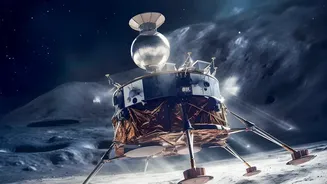
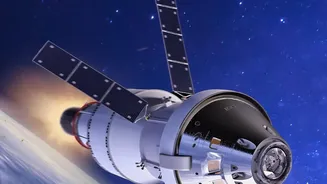
This technology is a cornerstone of NASA's Artemis program, which aims to establish the first long-term human presence on the Moon. NASA has a stated baseline goal for an initial lunar oxygen plant to produce around 10 metric tonnes of oxygen per year, enough for crew life support and anticipated resupply missions. To get there, engineers are testing hardware to ensure it can withstand the harsh lunar environment, particularly the sharp, abrasive nature of the dust itself. Projects like CaRD and collaborations with commercial partners, including Blue Origin and Sierra Space, are pushing to mature these systems for deployment on future robotic and crewed Artemis missions. The goal is to move from small-scale demonstrations to industrial-level production, paving the way not just for survival, but for a thriving lunar economy built on local resources.