




The Mystical Allure of Living Root Bridges
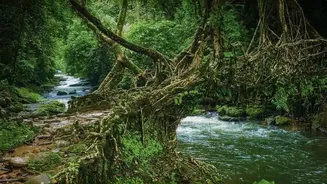
The heart of a Meghalaya backpacking trip beats strongest in its dense, rain-soaked forests, home to the incredible living root bridges. These are not built, but grown, by the indigenous Khasi people over decades. The roots of the Ficus elastica tree
are guided across rivers and streams, intertwining to form sturdy, natural walkways. While several exist, the ultimate pilgrimage for any traveller is the journey to the Umshiang Double-Decker Root Bridge in Nongriat village. This two-tiered marvel of bio-engineering is a testament to the symbiotic relationship between humans and nature. Getting there is an adventure in itself, involving a trek of over 3,500 steps down into a valley, crossing suspension bridges and passing through tiny hamlets. The physical effort required makes the final reveal of the bridge, arching gracefully over a turquoise stream, a deeply rewarding experience.
Nongriat: A Backpacker's Rite of Passage
The trek to Nongriat is more than just a hike; it's an immersion. Starting from the village of Tyrna, the descent can take around two hours. The path is steep but well-defined, and the breathtaking scenery provides ample reason to pause. Once in Nongriat, the vibe is tranquil and disconnected from the bustle of modern life. Accommodation is simple and affordable, with basic homestays offering a bed for as little as a few hundred rupees. These family-run guesthouses provide a warm welcome and simple, delicious local food, allowing travellers to experience Khasi hospitality firsthand. Staying overnight is highly recommended, as it allows you to enjoy the bridge without the day-tripper crowds and trek further to the stunning Rainbow Falls, where waterfalls create a natural swimming pool.
Shnongpdeng: Camping by the Crystal River
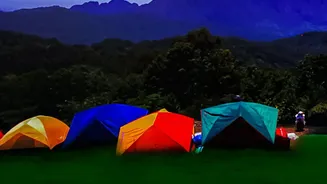
After the jungle trek, the next quintessential Meghalaya experience is camping by the crystal-clear waters of the Umngot River in Shnongpdeng. Located near the border town of Dawki, Shnongpdeng is a small village that has become a hub for adventure and relaxation. In the dry winter months from October to April, the river becomes so clear that boats appear to float in mid-air. Riverside camping is the most popular way to stay here, with tents available for rent at budget-friendly prices, often starting from ₹400-₹900 per person. Days are spent kayaking, snorkelling, swimming in the pristine water, and for the more adventurous, cliff jumping from designated safe points. Evenings are for sitting around a bonfire, sharing stories with fellow travellers under a star-lit sky, with the gentle sound of the river in the background.
Crafting Your Budget Itinerary
Connecting these two defining experiences is surprisingly straightforward and affordable. The typical backpacker route starts from Shillong, the state's capital. Shared Sumos (taxis) are the most common and cheapest mode of transport, plying routes from Shillong's Bara Bazaar to Sohra (Cherrapunji) and Dawki. From Sohra, you can hire a local taxi to the Nongriat trek starting point. After your trek, you can travel from Sohra towards Dawki to reach Shnongpdeng. A sensible plan involves dedicating at least two days for the Nongriat trek and an overnight stay, and another two days for Shnongpdeng. Food is incredibly cheap at local dhabas and homestays, where a full meal can cost around ₹100-₹150. By relying on shared transport and basic homestays, a focused 5-day trip covering these highlights can be managed on a tight budget.