


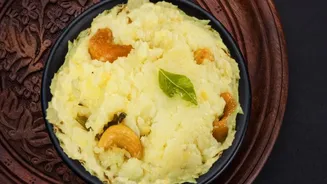
The Soul of the Puja Feast
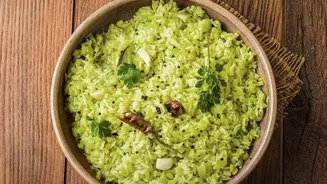
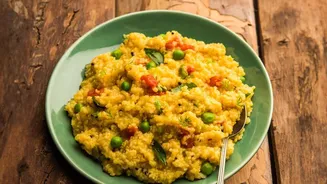
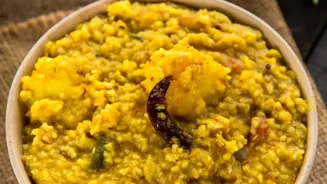
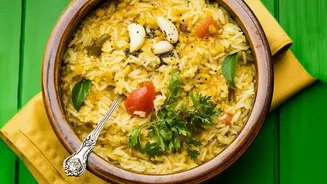
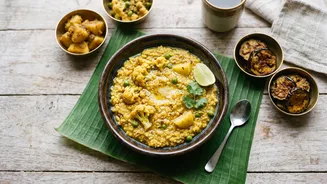
No Durga Puja bhog is complete without two star dishes: Bhoger Khichuri and Labra. The khichuri, a wholesome mix of rice and lentils, is considered a 'sattvik' or pure food, making it a perfect offering for the goddess. It symbolises simplicity, unity,
and nourishment. Paired with it is Labra, a medley of seasonal vegetables cooked together, which represents nature's abundance and gratitude for the harvest. Together, they form a meal that transcends food, becoming an act of devotion and community sharing that brings everyone together, regardless of background.
Bhoger Khichuri: A Divine Offering
What makes Bhoger Khichuri special is its unique aroma and flavour, derived from specific ingredients and techniques. It's a no onion, no garlic recipe. The keys are fragrant Gobindobhog rice, dry-roasting the moong dal until it releases a nutty aroma, and the generous use of ghee and whole spices. While vegetables like potatoes, cauliflower, and green peas are common additions, the core of the dish remains the perfectly cooked rice and dal. Ingredients: - 1 cup Gobindobhog rice (or another short-grain, aromatic rice). - 1 cup Sona Moong dal. - 2 medium potatoes, cubed. - 1 cup cauliflower florets. - 1/2 cup green peas. - 2 tbsp ginger paste. - 2-3 bay leaves. - 2-3 dried red chillies. - Whole spices: 1-inch cinnamon stick, 2-3 green cardamoms, 3-4 cloves. - 1 tsp cumin seeds. - 1 tsp turmeric powder. - 1 tsp cumin powder. - Salt and sugar to taste. - 4-5 cups of hot water. - 3-4 tbsp ghee. - 1 tsp garam masala powder for finishing. Method: 1. First, rinse the Gobindobhog rice and let it drain. 2. In a heavy-bottomed pan or kadai, dry roast the moong dal on low to medium heat until it turns light golden and releases a nutty fragrance. Remove from heat, wash it, and set aside. 3. Heat 2 tbsp of ghee in the same pan. Lightly fry the potato cubes and cauliflower florets until golden brown. Remove and keep them aside. 4. In the remaining ghee, add the bay leaves, dried red chillies, and the whole spices (cinnamon, cardamom, cloves). Once they start to crackle, add the cumin seeds. 5. Add the ginger paste and sauté for a minute until the raw smell disappears. Then, add the turmeric and cumin powder. 6. Add the washed rice and roasted dal to the pan. Stir gently for a couple of minutes to coat them in the spices. 7. Pour in the hot water, add salt and a pinch of sugar to balance the flavours. Bring the mixture to a boil. 8. Add the fried potatoes, cauliflower, and green peas. Cover the pan and let it simmer on low heat, stirring occasionally to prevent sticking. Cook until the rice and dal are soft and have reached a thick, porridge-like consistency. 9. Once cooked, turn off the heat. Finish by stirring in the remaining ghee and a sprinkle of garam masala powder. Let it rest, covered, for a few minutes before serving.
Labra: A Medley of Vegetables
Labra is a quintessential Bengali mixed vegetable dish where no single vegetable should overpower the others. Its beauty lies in the harmony of different textures and flavours, all brought together by the distinct aroma of 'panch phoron'—a Bengali five-spice blend. The combination of vegetables can vary based on season and availability, but staples often include pumpkin, brinjal, potatoes, and radish. Ingredients: - 4-5 cups of mixed vegetables, cubed (e.g., pumpkin, potato, sweet potato, brinjal, radish, cauliflower). - 1 tsp panch phoron (equal parts fenugreek, nigella, cumin, black mustard, and fennel seeds). - 2 bay leaves. - 2 dried red chillies. - 1-2 tbsp ginger paste. - 1 tsp turmeric powder. - 1/2 tsp cumin powder (optional). - Salt and sugar to taste. - 3-4 tbsp mustard oil. - Slit green chillies for flavour. Method: 1. Chop all vegetables into roughly equal, bite-sized pieces to ensure they cook evenly. 2. Heat mustard oil in a kadai until it is almost smoking. First, lightly fry the brinjal pieces until golden and set them aside. This prevents them from turning mushy. 3. In the same oil, add the panch phoron, bay leaves, and dried red chillies. Allow them to splutter and release their aroma. 4. Add the harder vegetables first, such as potatoes, sweet potatoes, and radish. Sauté for a few minutes. 5. Add the ginger paste and turmeric powder. Stir well. 6. Next, add the remaining vegetables like pumpkin and cauliflower. Add salt and a little sugar. Mix everything well, cover the pan, and cook on low heat. The vegetables will release their own moisture, so you may not need to add extra water. 7. Cook until all the vegetables are tender but still hold their shape. Stir occasionally. 8. Add the fried brinjal pieces and slit green chillies back into the pan. Gently mix and cook for another couple of minutes. 9. Adjust seasoning if required. The final dish should be moist but not watery.