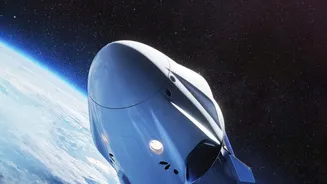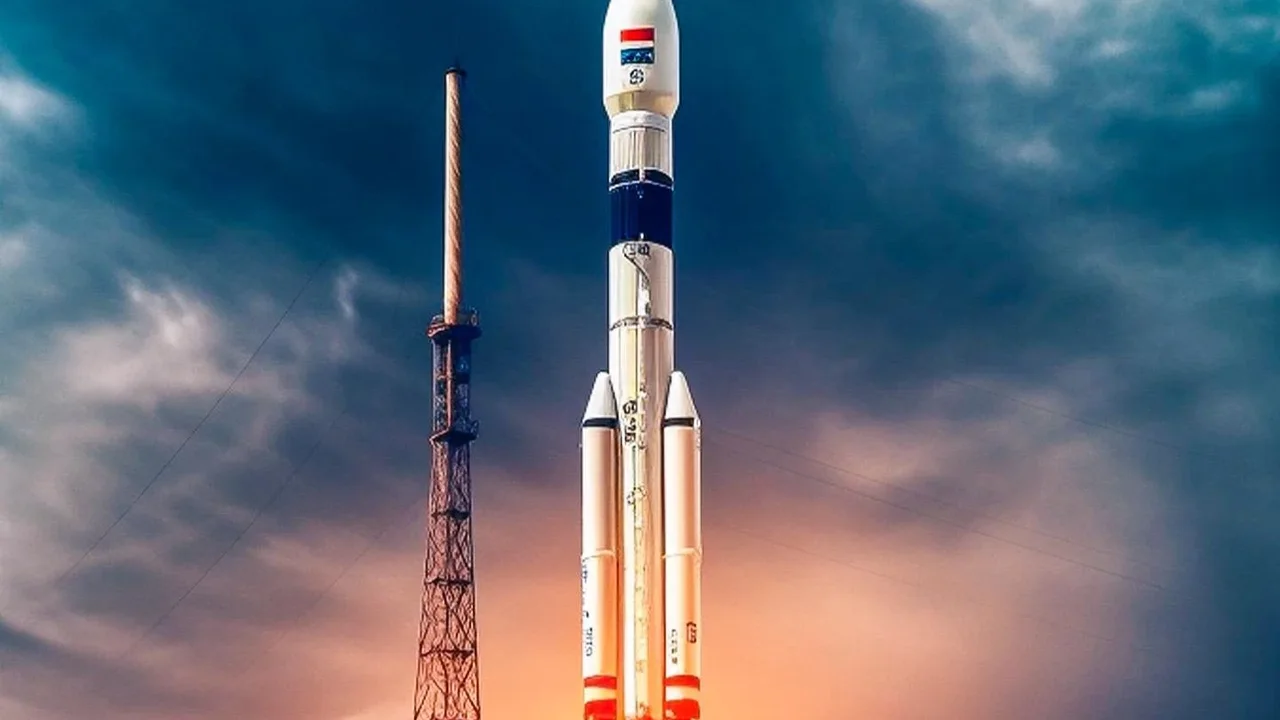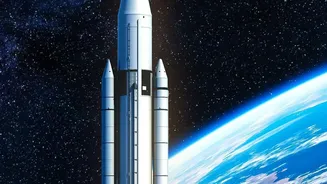




The world's most powerful rocket, SpaceX's Starship, is set to fly over India during its next ambitious test flight. This event marks a significant moment, bringing the forefront of space exploration directly into view for skywatchers on the ground.
What is Starship?
Starship
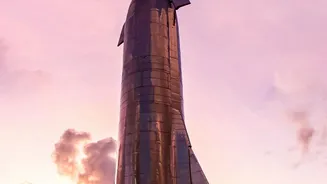
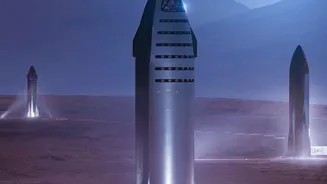
is the colossal, next-generation launch vehicle developed by SpaceX, the aerospace company founded by Elon Musk. Standing taller than any rocket ever built, it is designed to be fully and rapidly reusable. This capability is the key to SpaceX's long-term vision: dramatically lowering the cost of access to space. Unlike traditional rockets where expensive components are discarded after a single use, both stages of Starship—the Super Heavy booster and the Starship upper stage—are intended to return to Earth for refurbishment and relaunch. The ultimate goal is to create a system capable of carrying both crew and cargo to Earth orbit, the Moon, and eventually Mars, paving the way for human colonisation of other planets.
The Upcoming Orbital Mission
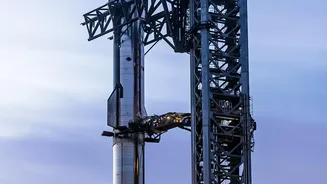
The next mission, designated Starship Flight 15, is scheduled to launch from SpaceX's Starbase facility in Texas. This flight is particularly ambitious because, for the first time, SpaceX will attempt to recover both the Super Heavy booster and the Starship spacecraft by 'catching' them with the giant mechanical arms of the launch tower. After liftoff, the Super Heavy booster is expected to separate and return to the launch site within minutes. The Starship upper stage will continue into orbit, where it will deploy a batch of Starlink internet satellites. The spacecraft is then planned to circle the globe approximately 14 times over a period of more than 22 hours before beginning its journey back to Earth.
A Path Across Indian Skies
The long-duration orbital phase of Flight 15 means the spacecraft's ground track will repeatedly cross over various parts of the world, including India. While the rocket itself will be at an altitude of around 275 kilometres, making it difficult to see with the naked eye, its passage will be a significant event for space enthusiasts. For previous suborbital tests, Starship's trajectory concluded with a splashdown in the Indian Ocean, a location chosen to safely test in-space engine burns and reentry manoeuvres. This new, truly orbital path, however, represents a more operational phase for the vehicle. The repeated passes over the subcontinent highlight the global nature of modern spaceflight and place India directly under the path of the world's most advanced spacecraft.
Why This Flight Matters for India
The presence of Starship in the skies above India is more than just a passing spectacle; it's a symbol of a rapidly evolving space industry. As ISRO continues to achieve remarkable feats with its own cost-effective missions, the development of a fully reusable heavy-lift rocket by a private company signals a paradigm shift. Cheaper access to orbit, as promised by Starship, could open up new opportunities for international collaboration, satellite deployment, and scientific research. While there are no formal partnerships between ISRO and SpaceX for this specific flight, the technology being proven could one day benefit India's own ambitious space goals, potentially enabling heavier payloads and more complex missions in the future.
A New Era of Spaceflight
Starship's successful orbital flight and payload deployment on its previous mission, Flight 14, already marked a major milestone. That flight was the first time Starship reached orbit and deployed operational satellites, proving the fundamental concept. Flight 15 aims to take the next crucial step by demonstrating full reusability with the tower catch. If successful, it would be a historic achievement, proving that an entire orbital launch system can be recovered and reused. This would move space travel closer to the model of air travel, where vehicles are routinely flown multiple times a day. For people in India and around the world, the flyover is a tangible reminder that this future of accessible and routine spaceflight is no longer a distant dream, but is unfolding right above our heads.