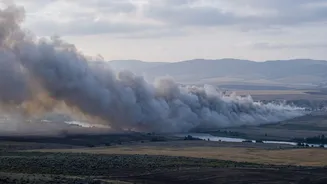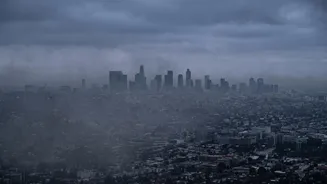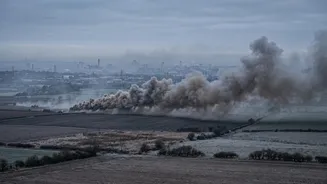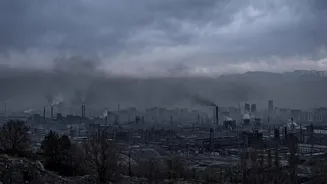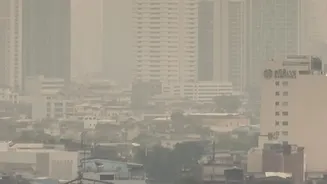




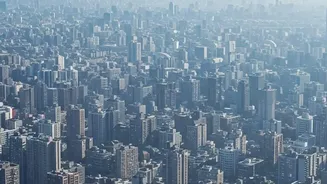
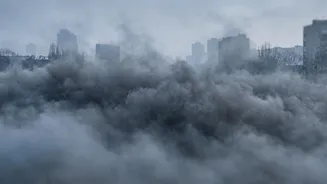
As November arrives, a familiar grey haze descends upon Delhi-NCR, turning the sky opaque and the air toxic. This isn't a sudden event, but the result of a predictable atmospheric trap. Here’s how specific meteorological shifts create a perfect storm.
The Pollutant Cocktail
Before weather becomes the villain, the stage must be set with a steady stream of pollutants. Throughout the year, Delhi-NCR generates significant pollution from various sources. Vehicular emissions contribute a large share of toxic gases and particulate matter. Construction and road dust, industrial output from factories and power plants, and the open burning of waste add to this daily load. While these sources are a year-round problem, their impact becomes a full-blown crisis only when the weather turns against us.
The Lid Effect: Temperature Inversion
The single most important meteorological factor in winter is 'temperature inversion'. Normally, air is warmer near the ground and gets cooler with altitude. This allows warm, polluted air to rise and disperse. However, during winter nights, the ground cools rapidly, making the air closest to the surface colder than the air layer above it. This creates an inversion: a layer of warm air sitting on top of a layer of cold air, acting like a lid. This atmospheric cap prevents the vertical mixing of air, trapping all the pollutants from vehicles, industry, and biomass burning close to the ground where we breathe. The 'mixing height', or the altitude to which pollutants can disperse, can shrink from over a kilometre in summer to just a few hundred metres in winter, concentrating pollution in a much smaller volume of air.
When the Winds Die Down
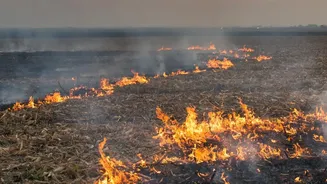
If inversion puts a lid on the vertical escape of pollutants, the lack of wind prevents their horizontal escape. After the monsoon withdraws, the strong winds that help clear the air die down. The winter months, particularly October and November, are characterised by much calmer, slower winds. These light winds are not powerful enough to blow the thick, pollutant-laden air mass away from the landlocked Delhi-NCR. Furthermore, the wind direction shifts to northwesterly during this period. These winds carry smoke and particulate matter from post-harvest stubble burning in the states of Punjab and Haryana, adding a massive external pollution load directly into the already trapped air of the capital region.
Geography's Unfortunate Role
Delhi's geography further complicates the situation. The city is situated in the vast Indo-Gangetic Plain, which is bordered by the Himalayas to the north. This massive mountain range acts as a natural barrier, blocking the northward escape of polluted air masses. The topography essentially creates a 'bowl' where pollutants, once carried in, struggle to find an exit. This geographical trapping means the polluted air mass can linger for days or even weeks, especially during periods of low wind speed and persistent temperature inversions.
From Pollutants to Toxic Smog
The trapped pollutants don't just sit there; they react and transform. The cold, stagnant, and often humid conditions in November are ideal for secondary pollutant formation. Gases like sulphur dioxide (SO2) and nitrogen oxides (NOx), primarily from vehicles and industry, react with other compounds and moisture in the air. This process forms more dangerous secondary particulates and contributes to the thick, greyish-brown haze we call smog. The high humidity and fog in winter mean water droplets can condense around tiny particulate matter (PM2.5), making the haze denser and more persistent. This chemical reaction, especially at night when temperatures drop, is what turns an already polluted atmosphere into a visibly toxic and hazardous breathing environment.