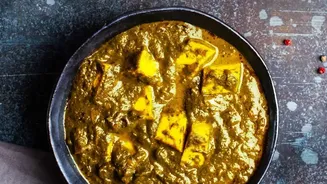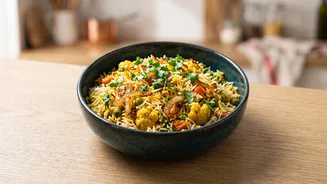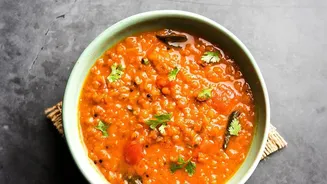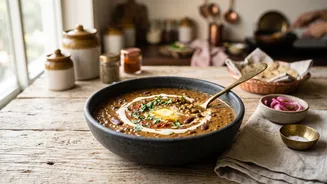






Ever notice how last night’s curry tastes even better the next day? It’s not your imagination. A series of fascinating chemical reactions in the fridge are responsible for transforming good flavours into great ones. Here’s what’s happening.
More Than Just 'Melding' Flavours
The common
wisdom that flavours 'meld' or 'marry' overnight is true, but it's a simplification of some complex food science. When a spice blend, especially one used in a curry or marinade, is left to rest in a cool environment, it's not just sitting there. Continuous chemical and physical changes are happening. These processes rebalance the flavour profile, mellowing harsh notes and allowing deeper, more complex aromas to emerge. The result is a more cohesive and rounded taste that you simply can't achieve in a freshly cooked dish. This transformation is the secret behind why many traditional Indian recipes suggest making a dish a day in advance.
The Crucial Role of Fat and Water
The key to understanding this flavour evolution lies in how spice compounds interact with the other ingredients in your dish, specifically fat and water. Most aromatic compounds in spices—like the terpenes and phenols responsible for the distinct notes of cumin, coriander, and cinnamon—are 'lipophilic', meaning they are fat-soluble, not water-soluble. When you cook, you bloom spices in oil or ghee, a technique known as 'tadka'. This initial heating releases their essential oils. However, the process doesn't stop there. During overnight chilling, these fat-soluble compounds have extended time to dissolve and migrate from the spices into the fats, distributing themselves evenly throughout the entire dish. This slow, steady infusion ensures every bite is consistently flavourful.
Chemical Transformations in the Cold
While resting, several chemical reactions are gently ticking away. The sharp, pungent notes from ingredients like raw ginger, garlic, and onions begin to mellow as their volatile compounds slowly break down. At the same time, other reactions are building new flavour molecules. Acids from tomatoes or yogurt continue to interact with other elements, further tenderizing proteins in meat and allowing them to absorb more of the surrounding sauce. The various aromatic compounds from different spices interact, sometimes creating entirely new notes that weren't present initially. This process is similar to the aging of wine or cheese, where time allows for the development of greater complexity and depth that heat and speed cannot replicate.
Physical Changes and Texture
It's not just the flavour that changes; the texture improves too. As a curry or blend cools, starches released from ingredients like potatoes, lentils, or onions continue to absorb liquid and gelatinize. This process, along with gelatin breaking down from meat cooked on the bone, naturally thickens the sauce or gravy. When you reheat the dish, this results in a richer, more velvety mouthfeel that clings to rice and bread more effectively. The individual pieces of vegetables or meat also act like sponges. As they cool, their structures relax and draw in the flavourful liquid, ensuring the taste penetrates deep into the core rather than just coating the surface.
Putting Patience into Practice
So, how can you use this knowledge in your own kitchen? For any slow cooked dish like a rogan josh, dal makhani, or chana masala, try making it a day before you plan to serve it. After cooking, let it cool completely before covering and refrigerating. This resting period works best for wet dishes, where fats and liquids provide the medium for all these reactions to occur. For dry spice rubs, the principle is slightly different; mixing them with a little oil and letting them sit for a few hours before use can still help 'bloom' the flavours. The main takeaway is that patience is a powerful ingredient. By giving your spice blends time to rest, you allow chemistry to do its work, resulting in a dish that is noticeably more harmonious, aromatic, and delicious.