



What Am I Looking For?
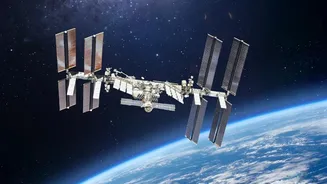
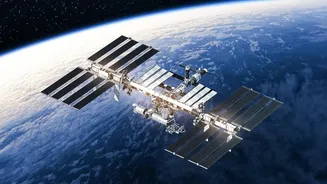
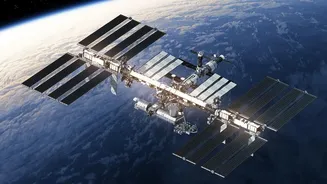
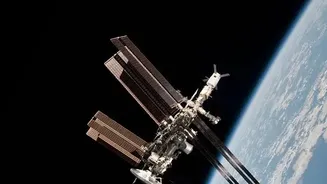
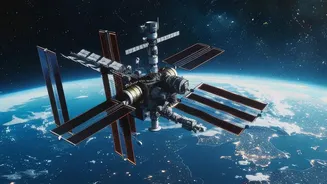
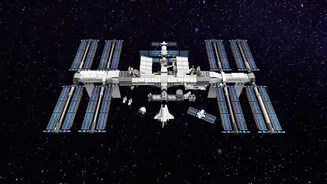
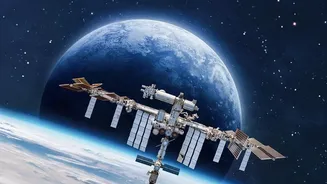
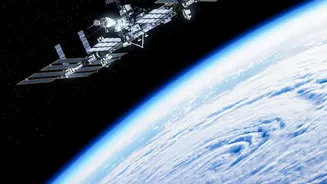
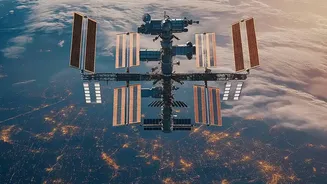
Forget what you think a space station might look like. From the ground, the ISS appears as a very bright, steady point of light moving quickly across the sky. It looks like a fast-moving star or planet. The key difference between the ISS and an airplane
is that the space station does not have flashing or blinking lights. It shines with a constant, reflected sunlight. It also moves much faster than a commercial jet. While a plane travels at around 965 kph, the ISS zips along at a staggering 28,000 kph, completing an orbit of Earth every 92 minutes or so. This speed makes its journey across your entire field of view last only a few minutes.
When Is the Best Time to Look?
You can't see the station just any time. The magic hours for ISS spotting are shortly after sunset or just before sunrise. This is the perfect window when your location on the ground is in darkness, but the ISS, at its high altitude, is still bathed in sunlight. It is this reflected sunlight that makes it visible against the darker twilight sky. During the day, the sky is too bright to see it, and in the middle of the night, the station is in Earth's shadow and doesn't reflect any light. Sighting opportunities can happen several times a week or as infrequently as once a month, depending on the station's orbital path.
Your Essential Toolkit: Websites and Apps
The secret to a successful sighting is knowing exactly when and where to look. Thankfully, several fantastic and free tools do all the work for you. The most recommended starting point is NASA's official Spot The Station website. You can simply enter your city to get a list of upcoming sighting opportunities. For even more convenience, you can sign up for email or text alerts that notify you about 12 hours before a good pass is about to happen over your area. There are also excellent third-party mobile apps. Popular choices for both Android and iOS include ISS Detector, Heavens-Above, and Satellite Tracker by Star Walk, many of which offer alerts and real-time tracking maps.
Understanding the Sighting Data
When you get a sighting alert, you'll see a few key pieces of information. 'Time' is the local time the pass will begin. 'Visible' or 'Duration' tells you how many minutes the station will be in view. 'Max Height' is crucial; measured in degrees, it indicates how high the ISS will get in the sky. Zero degrees is the horizon, while 90 degrees is directly overhead. Passes with a higher maximum height are generally brighter and more impressive. 'Appears' and 'Disappears' will give you compass directions (like WSW for west-southwest) telling you where to look for the station to first emerge and where it will eventually fade from view.
Tips for a Perfect Sighting
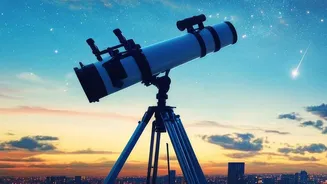
To make the most of your first viewing, head outside about five minutes before the scheduled time to let your eyes adjust to the darkness. Find a spot with a clear, open view of the sky, especially in the direction the pass will begin. While you don't need any equipment, a pair of binoculars can enhance the view, sometimes revealing the station's golden hue from its large solar panels. Don't expect to see the shape of the station with the naked eye; it will remain a bright point of light. The true reward is the profound feeling of watching a human-occupied outpost silently gliding through the cosmos above your home.