



Ever look up at the night sky from a city and wonder where all the stars have gone? The celestial grandeur that once captivated humanity is now a rare sight. To truly witness the cosmos, you need to escape to remote destinations. Here’s why.
The Battle Against Light Pollution
The single
biggest factor obscuring our view of the universe is light pollution. Cities and towns emit a tremendous amount of artificial light from streetlights, buildings, and vehicles. This light scatters in the atmosphere, creating a phenomenon called 'sky glow'. This persistent, hazy dome of light brightens the night sky, drastically reducing the contrast needed to see faint objects like nebulae, distant galaxies, and the majority of stars. Remote locations, by their very nature, are far from these epicentres of population and development. With minimal artificial light, the night sky returns to its natural, profound darkness, allowing even the faintest celestial objects to become visible to the naked eye. This is why areas classified with a low Bortle Scale rating—a measure of sky brightness—are so coveted by astronomers.
The Advantage of Altitude
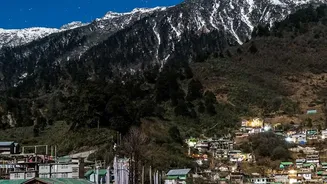
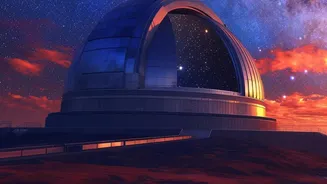
Getting away from cities is the first step, but getting higher is the next. High-altitude locations offer a significant advantage for stargazers. The Earth's atmosphere, while essential for life, acts as a turbulent, hazy filter for starlight. At lower elevations, the air is denser and contains more dust, moisture, and pollutants. These particles scatter light and cause stars to twinkle, an effect astronomers call 'bad seeing'. By ascending to a higher altitude, you place yourself above a significant portion of this dense, murky air. The thinner, drier atmosphere at elevation results in a clearer, more stable, and transparent window to the cosmos. This is precisely why the world's most powerful observatories are built on mountain tops. In India, destinations like the Spiti Valley in Himachal Pradesh and Hanle in Ladakh, both situated at over 3,500 metres, offer some of the most pristine skies for this very reason.
Ideal Atmospheric Conditions
Beyond just darkness and altitude, the local weather and atmospheric stability play a crucial role. Dry, arid environments are often the best for skywatching. Deserts, both hot and cold, typically experience fewer cloudy nights and have much lower humidity. Moisture in the air can bend light and create a hazy effect, reducing clarity. Cold, dry air, on the other hand, is stable and transparent. This is what makes India’s cold deserts in the Himalayas and the salt desert of Gujarat such prime locations. Spiti Valley, for instance, is a rain shadow region that boasts exceptionally clear skies throughout the summer and autumn months. Similarly, the Rann of Kutch in Gujarat, with its vast, flat expanse and dry winter air, provides an unobstructed, 360-degree view of the celestial sphere.
India's Premier Dark Sky Havens
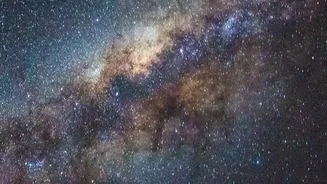
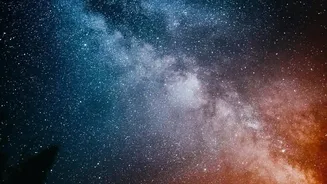
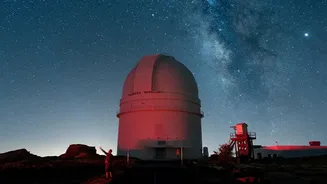
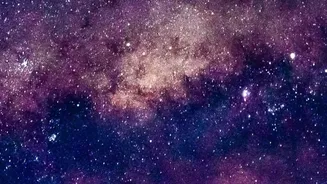
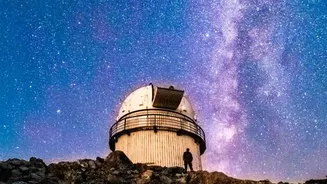
India's diverse geography is a gift to astrotourists. In Ladakh, the village of Hanle is home to India's first official Dark Sky Reserve, an area protected against light pollution. At an altitude of 4,500 metres, it hosts the Indian Astronomical Observatory and offers over 250 clear nights a year, making it a world-class destination. Spiti Valley is another jewel, with villages like Kaza, Kibber, and Langza offering breathtaking views of the Milky Way arching across the sky. For those in southern India, the plantations of Coorg in Karnataka provide a different kind of dark sky experience. Away from the main towns, the hills of the Western Ghats offer clear skies, particularly from October to May, with several homestays and observatories catering to stargazers. Even the surreal white salt flats of the Rann of Kutch become a celestial theatre during the Rann Utsav festival, where the ground can seem to reflect the starlight from above.
The Experience Beyond the View
Ultimately, the appeal of stargazing in a remote destination is about more than just seeing more stars. It's a deeply humbling and restorative experience. In the profound silence of a remote mountain or desert, far from urban noise and distraction, looking up at a sky filled with thousands of stars reconnects us to the universe and our place within it. The feeling of awe inspired by the sheer scale of the cosmos can put our daily worries into perspective. It's an opportunity to switch off, reflect, and awaken a sense of wonder that is often lost in modern life. The experience is not just visual; it is an emotional and psychological journey that reminds us of the natural beauty that exists beyond the glow of our cities.