




NASA has formally invited India's space agency, ISRO, to help build a permanent lunar base, signaling a new era of strategic space cooperation.
The Invitation: More Than Just a Formality
During the ninth U.S.-India Civil Space Joint Working Group meeting in Bengaluru, NASA extended a formal invitation for the Indian Space Research Organisation (ISRO) to participate in its ambitious Moon Base program. This isn't just another diplomatic
handshake; it’s a significant evolution of a partnership that began when India signed the Artemis Accords in 2023. The Accords are a U.S.-led set of principles for peaceful and transparent lunar exploration. While signing on was a major step, this new invitation moves India from a signatory to a potential core partner in one of the most complex engineering projects ever conceived: building a permanent, sustainable human outpost on another world.
Artemis: America's Plan for a Permanent Lunar Address
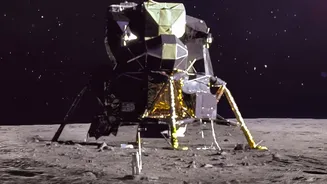
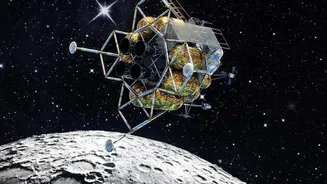
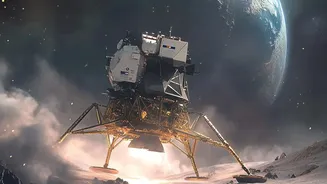
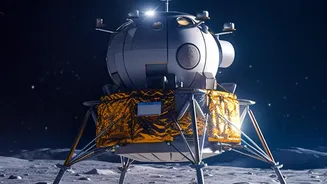
So, what exactly is this program ISRO has been invited to join? The Artemis program is NASA’s multi-phase mission to return humans to the Moon and, this time, to stay. Unlike the Apollo missions, which were about flags and footprints, Artemis is focused on establishing a long-term presence, particularly near the Moon's south pole. This region is believed to hold significant deposits of water ice, a critical resource that can be used for life support, and even converted into rocket fuel. The plan involves a series of increasingly complex missions, from initial landings to the eventual construction of habitats, power systems, and scientific facilities, creating humanity's first off-world base camp. The goal is to create a blueprint for future missions, including sending astronauts to Mars.
Why NASA Wants India on the Team
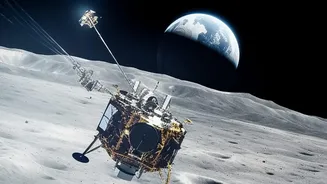
NASA has its pick of global partners, so why the specific and public invitation to ISRO? The answer lies in India's impressive and growing track record in space. ISRO has earned a global reputation for its 'frugal innovation'—executing complex deep-space missions at a fraction of the cost of other space powers. Its landmark achievement came in 2023 with the successful landing of the Chandrayaan-3 mission near the lunar south pole, making India the first and only nation to accomplish this feat. This demonstrated a mastery of precision landing and robotic operations in the very region NASA is targeting. With ambitious plans of its own, including a robotic sample-return mission and landing an Indian astronaut on the Moon by 2040, ISRO isn’t just a capable partner; it’s an emerging powerhouse whose goals align with NASA's vision.
What a Joint Moon Base Could Look Like
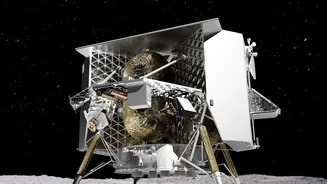
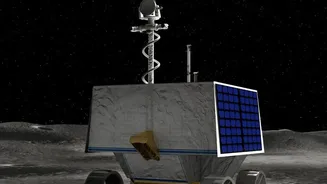
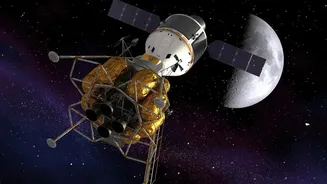
While specifics are still under discussion, a NASA-ISRO collaboration on a lunar base would likely play to each agency's strengths. NASA brings its heavy-lift capabilities with the Space Launch System (SLS) rocket and Orion spacecraft, along with decades of experience in human spaceflight. ISRO could contribute its proven expertise in robotics, cost-effective landers, and scientific payloads. Future contributions could involve developing communication and navigation systems, specialized rovers for exploring polar craters, or components for the lunar habitat itself. This division of labor not only shares the immense financial burden but also accelerates the timeline by allowing parallel development. It creates an international ecosystem for exploration, a key tenet of the Artemis program.
The Geopolitical Orbit: An Alliance with Earthly Stakes
This partnership isn't just about science and exploration; it carries significant geopolitical weight. The modern space race is increasingly seen as a competition between two major blocs: one led by the U.S. and its democratic partners under the Artemis Accords, and another led by China and Russia, who are also planning a joint lunar base. By bringing India deeper into the fold, the U.S. strengthens its coalition of like-minded nations committed to a transparent, peaceful, and cooperative framework for space governance. This collaboration solidifies the strategic alignment between the world's two largest democracies, extending a partnership that already includes joint satellite missions like NISAR into the realm of deep-space human exploration.