


The Green Myth's Origin Story
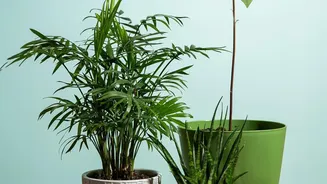
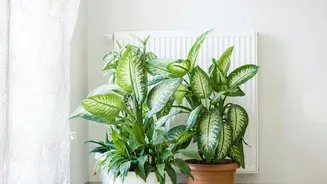
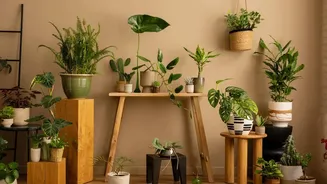
The popular idea that houseplants can scrub the air of toxins stems from a well-known NASA study from 1989. The research showed that plants in a small, sealed chamber could indeed remove volatile organic compounds (VOCs) like benzene and formaldehyde.
This was a promising finding for contained environments like space stations. However, a typical home or office is nothing like a sealed lab chamber. Our living spaces are much larger and have constant air exchange from drafts, windows, doors, and ventilation systems, which dramatically dilutes any effect the plants might have.
The Overwhelming Problem of Scale
Subsequent research has put the NASA findings into a real-world context, and the numbers are staggering. A 2019 review by researchers at Drexel University concluded that to have the same air-cleaning effect as a standard building's ventilation system or just a few open windows, you would need to place between 10 and 1,000 plants per square metre of floor space. To put that in perspective, a small 150-square-foot room would require at least 140 plants to make a meaningful difference, and potentially many more. The rate at which a few potted plants remove pollutants is simply too slow to compete with the constant influx of new air and pollutants in a normal room.
What Plants Can't Touch: Particulate Matter
Crucially, even if you did turn your home into a dense jungle, plants are mostly studied for their ability to absorb gaseous pollutants (VOCs). They do very little to remove the biggest threat during severe pollution events: fine particulate matter, or PM2.5. These microscopic particles from smoke, dust, and exhaust can penetrate deep into the lungs and bloodstream, posing significant health risks. For tackling these, you need entirely different tools.
What Actually Works: Air Purifiers
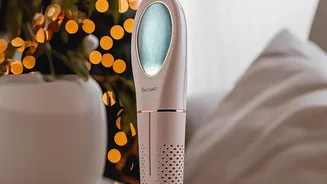
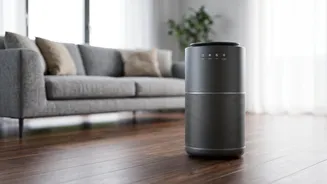
When outdoor air is severely polluted, the most effective strategy is to use a mechanical air purifier. Look for a model equipped with a True HEPA (High-Efficiency Particulate Air) filter. These are certified to capture at least 99.97% of airborne particles at 0.3 microns in size, which makes them highly effective against PM2.5, dust, pollen, and smoke. For dealing with gases and odours from cooking or cleaning products, a purifier that also includes an activated carbon filter is the best choice, as HEPA filters alone do not remove gaseous pollutants. Running a correctly sized purifier continuously in the rooms where you spend the most time can significantly reduce indoor particle concentration.
Smart Habits for Cleaner Air
Beyond technology, simple habits can make a big difference. First, control pollution at its source. Avoid using scented candles, harsh chemical cleaners, and smoking indoors, as these release VOCs and particulates into your air. Use exhaust fans in the kitchen when cooking and in the bathroom to vent out moisture and pollutants. Regular cleaning, including vacuuming with a HEPA-filter vacuum and dusting with a damp cloth, helps remove particles that have settled on surfaces before they can become airborne again. On days when outdoor air quality is good, opening windows for ventilation is an excellent way to refresh your home, but be sure to keep them closed during severe pollution events.