





Tyres: Your Only Grip on Slippery Roads
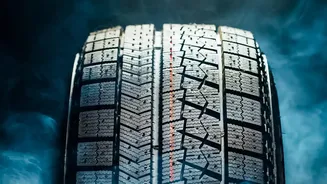
Your tyres are the single most critical safety component for monsoon driving. On wet, winding ghat roads, their ability to grip the surface is paramount. Before you leave, check for a tread depth of at least 3mm; anything less significantly increases
the risk of hydroplaning, where your car effectively floats on a layer of water, leading to a complete loss of control. Also, ensure your tyre pressure is at the manufacturer-recommended level. Properly inflated tyres maintain optimal contact with the road, providing the traction you need on steep inclines and sharp curves. Don't forget to inspect the spare tyre and ensure the jack and tools are accessible.
Brakes: The Ultimate Failsafe
Ghat roads put immense strain on your braking system, with constant downhill slopes and hairpin bends. Wet conditions further increase your vehicle's stopping distance. Before your trip, have your brake pads inspected for wear; they should have at least 4mm of thickness. Listen for any squealing or grinding sounds, which signal that a replacement is urgent. It is also crucial to check the brake fluid. If the fluid is dark or cloudy, it may have absorbed water, which can reduce braking effectiveness. A responsive and reliable braking system is non-negotiable for navigating steep descents safely.
Visibility: Wipers, Lights, and Defogger
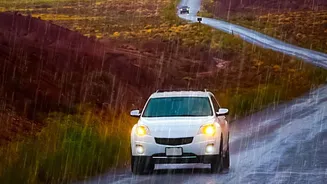
In a monsoon downpour, especially at night, seeing and being seen can be the difference between a safe drive and a disaster. Inspect your wiper blades for any cracks or hardening of the rubber; if they leave streaks or judder across the windscreen, replace them immediately. Top up your windshield washer fluid with a proper cleaning solution. Test all your vehicle's lights: headlights (both low and high beam), taillights, brake lights, and fog lamps. Properly functioning lights are crucial for visibility in heavy rain and fog. Also, check that your air-conditioning and defogger systems are working correctly to prevent the windows from fogging up from the inside.
Engine Fluids and Battery: The Car's Lifeline
A long, continuous drive, particularly up steep inclines, puts a heavy load on the engine. Make sure your engine oil, coolant, and transmission fluid levels are adequate and the fluids themselves are clean. Old oil or low coolant can cause the engine to overheat, leaving you stranded in a remote area. The monsoon weather can also be tough on your car's battery, as you'll be heavily relying on wipers, lights, and the defogger. Check for any corrosion on the battery terminals and if your battery is over three years old, have it tested to ensure it holds a proper charge.
The Emergency Kit: Your Roadside Backup
While vehicle checks prevent many issues, it's wise to be prepared for the unexpected, especially in the isolated stretches of a ghat road at night. Beyond the standard toolkit, your emergency kit should include a tow cable, a puncture repair kit or tyre inflator, and a powerful flashlight. Also, pack a first-aid kit, extra water and snacks, and a blanket. Ensure your phone is fully charged and consider carrying a power bank. In many ghat areas, mobile network can be patchy, so informing someone of your route and expected arrival time is a sensible precaution.