





From Guesswork to Algorithms
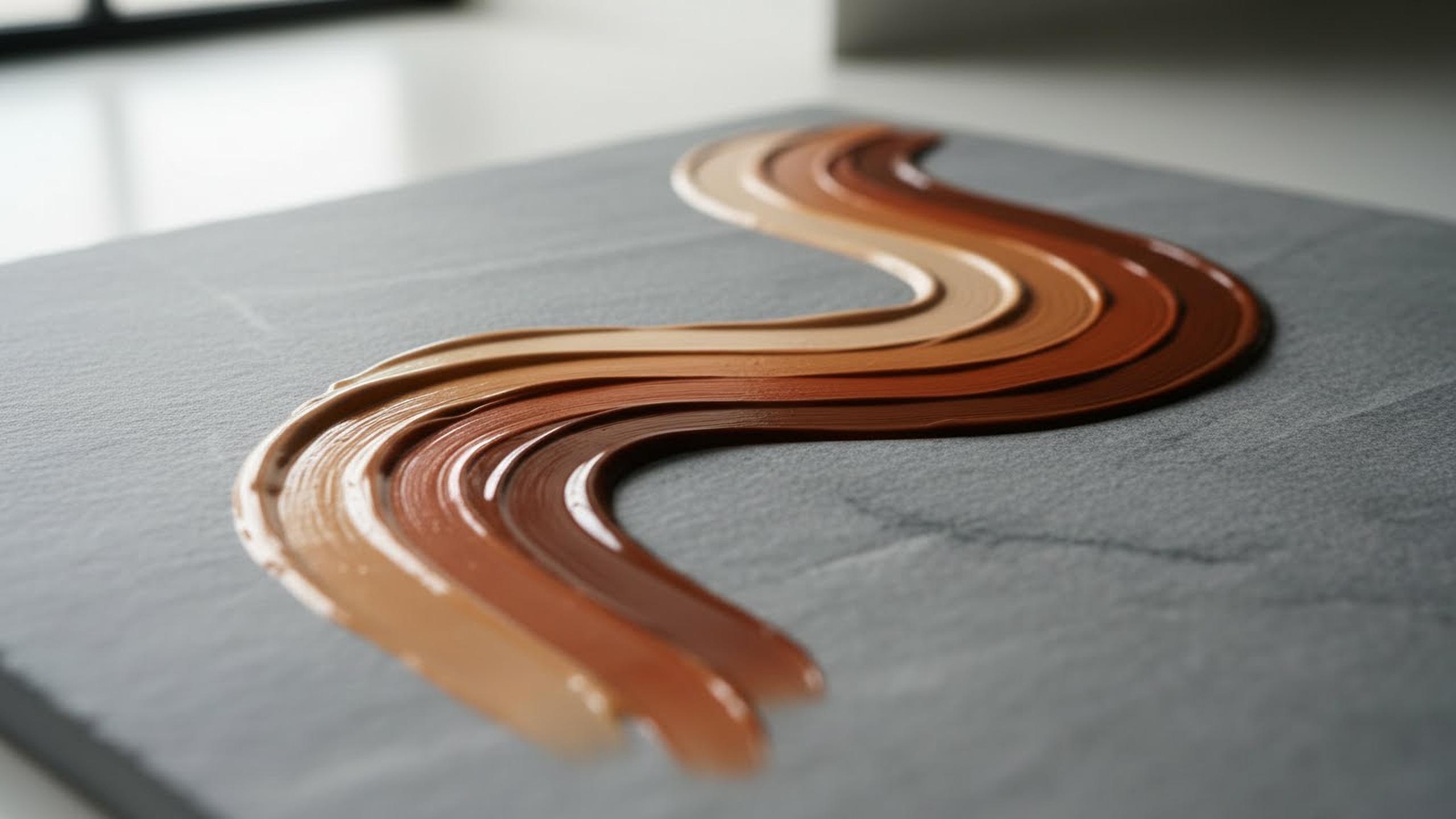
For years, buying foundation online was a game of chance. Shoppers relied on static product photos, confusingly named shades, or rudimentary quizzes that required them to accurately self-diagnose their skin's undertones—a skill most people don't possess.
This uncertainty led to high rates of abandoned carts and costly product returns, with many returned foundations being destroyed for hygiene reasons. Now, AI shade-matching technology is replacing that friction-filled process with a seamless, data-driven experience. Brands like Estée Lauder, Clarins, and e.l.f. Beauty have integrated tools that ask users to simply use their smartphone's camera. The software takes over from there, delivering a personalized recommendation in seconds.
The Tech Behind the Magic
So how does it work? These tools use a combination of artificial intelligence, computer vision, and augmented reality. When you scan your face, the AI algorithm maps dozens or even hundreds of unique points on your skin. It analyzes your precise skin tone and, crucially, your undertones (the subtle cool, warm, or neutral hues beneath the surface) by processing the visual data. Leading tech companies in this space, like Perfect Corp and L'Oréal's ModiFace, have developed algorithms trained on vast datasets of diverse skin tones. The system then cross-references your unique skin profile with a brand's product catalog to find the most accurate mathematical match. Many platforms then use augmented reality to offer a virtual try-on, allowing you to see exactly how the recommended shade will look on your own face in real-time.
A Win for Inclusivity and Confidence
Beyond convenience, AI shade matching is a significant step forward for inclusivity in the beauty industry. For decades, consumers with very light or very dark skin tones, as well as those with less common undertones, have struggled to find products that match. AI systems, when built on diverse and inclusive datasets, can identify nuances in skin colour with far greater precision than the human eye. This helps shoppers who have historically felt excluded by traditional product ranges finally find a match. By providing accurate recommendations, these tools empower consumers, giving them the confidence to purchase products they may have otherwise avoided online. For brands, this technology provides valuable data, highlighting gaps in their shade ranges and revealing the true diversity of their customer base.
The Business of a Perfect Match
The benefits for beauty companies are substantial. The primary advantage is a significant reduction in returns driven by shade mismatches, which are both costly and environmentally wasteful. When customers are confident in their shade selection, conversion rates can increase dramatically, with some brands reporting up to a threefold lift. Furthermore, these tools build trust and loyalty. A shopper who successfully finds their perfect match is more likely to return. The technology also opens the door for upselling; once a perfect foundation shade is identified, the AI can recommend complementary products like concealer, powder, or blush, helping to increase the average order value.
Not Quite Flawless Yet
Despite the advancements, the technology is not perfect. The accuracy of an AI shade recommendation can still be heavily influenced by external factors. Poor ambient lighting, the quality of the smartphone camera, and even the calibration of the screen you're viewing can skew the results. Some experts argue that cameras are not yet a fully reliable source for capturing true colour information. There are also valid privacy concerns. As users upload images or live video of their faces, questions arise about how this biometric data is stored and used. Most companies state they analyze images in real-time and do not store them, but it remains a critical point of consideration for consumers.