




The Official Process: A Simple Façade
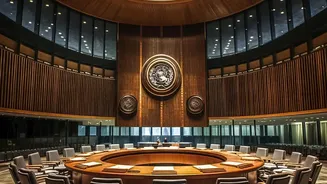
On paper, the process for appointing the UN Secretary-General is straightforward. According to Article 97 of the UN Charter, the General Assembly, which includes all 193 member states, appoints the Secretary-General based on a recommendation from the 15-member
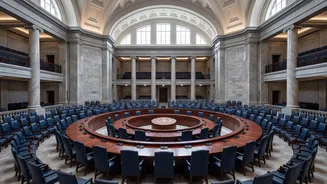
Security Council. For decades, this simply meant the Security Council would meet in private, select a single candidate, and present that name to the General Assembly for a rubber-stamp approval. While recent reforms have introduced more transparency, such as public dialogues with candidates, the fundamental power structure remains unchanged. The recommendation from the Security Council is the decisive step, making it the kingmaker in this global election.
The Real Game: The Power of the P5
The true power lies with the Security Council's five permanent members (P5): China, France, Russia, the United Kingdom, and the United States. Any one of these countries can veto a candidate, effectively ending their bid. To be recommended, a candidate needs at least nine 'yes' votes in the Council and, crucially, no vetoes from the P5. This means the entire selection process is a high-stakes geopolitical negotiation. The ideal candidate is often not the one with the broadest support from the general membership, but rather one who does not challenge the core interests of any of the P5 nations. This dynamic has been criticized for producing 'lowest common denominator' candidates, chosen for being the least objectionable to the most powerful countries.
A History of Backroom Deals
History is filled with examples of the P5's influence. In 1996, the United States vetoed a second term for Boutros Boutros-Ghali of Egypt. Similarly, China once vetoed a third term for Austria's Kurt Waldheim. The selection process often involves several rounds of informal 'straw polls' where Council members vote to 'encourage' or 'discourage' candidates. In these secret ballots, the P5 members' votes are cast on different coloured paper, making it clear when a potential veto is in play. Even the threat of a veto can be enough to sink a campaign, forcing candidates to withdraw before a formal vote ever takes place.
A Push for Transparency and Relevance
In recent years, there has been a significant push from the wider UN membership for a more open and inclusive process. Reforms championed since 2015 have led to the formal nomination of candidates, the publishing of vision statements, and televised town-hall-style debates with the General Assembly. These changes have undoubtedly increased public scrutiny and have given the 193 members of the General Assembly a greater sense of involvement. However, these reforms have not altered the underlying power dynamic. The final decision still rests with the Security Council, and the P5's veto power remains absolute.
Why This Matters for India and the World
The selection process for the UN's top job is more than just internal politics; it has profound implications for global governance. For a country like India, which has long advocated for Security Council reform and a more equitable world order, the process highlights the institutional hurdles that centralize power. The structure often forces aspiring candidates to remain silent on controversial topics, including the very reform of the Security Council itself, to avoid jeopardizing their chances. The choice of Secretary-General influences the UN's priorities on everything from climate change to peacekeeping and sustainable development for the next five to ten years. The tension between the Council's power and the General Assembly's democratic aspirations remains a central challenge for the UN's credibility.