
A Storm for the Ages
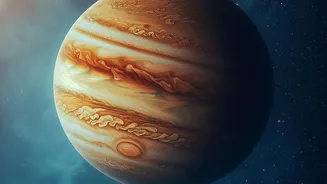
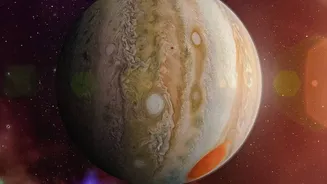
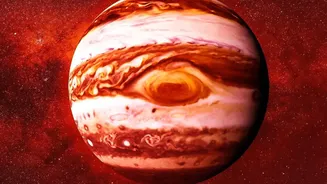
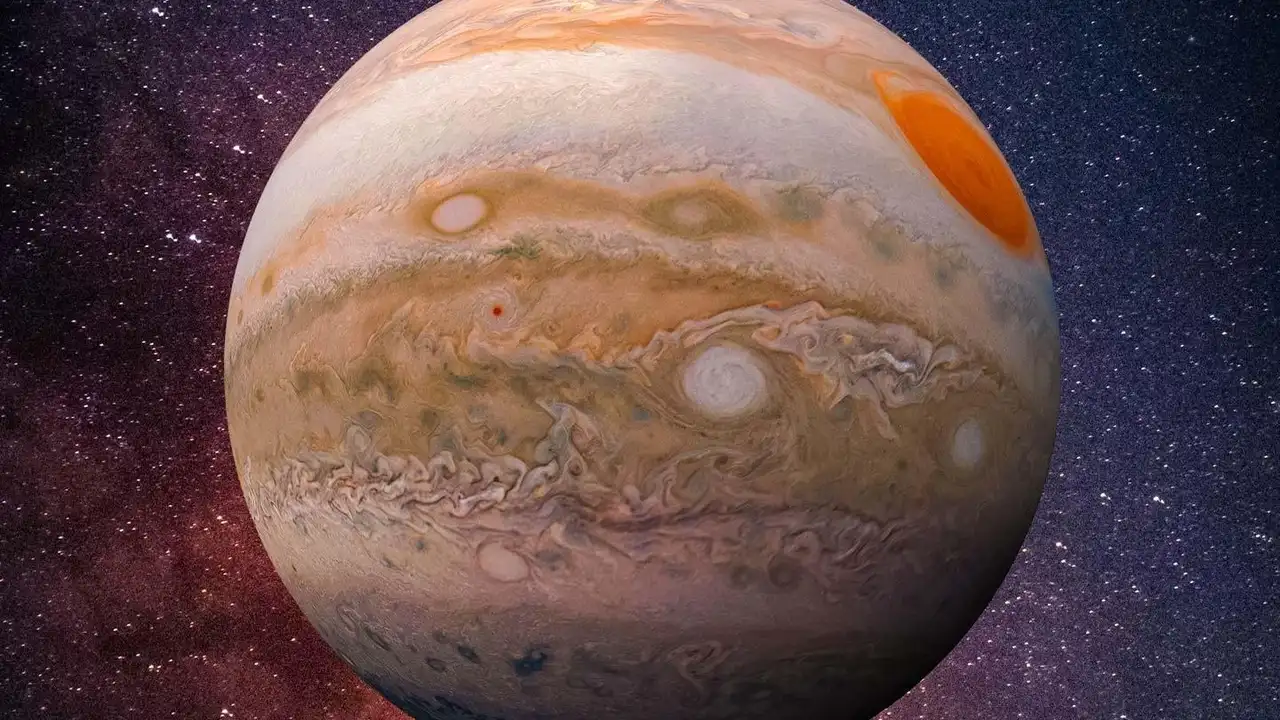
Jupiter’s Great Red Spot is a colossal anticyclone, a high-pressure system that has been churning in the planet’s southern hemisphere for at least 150 years, and possibly much longer. Early observations in the late 1800s measured the storm at over 40,000
kilometres wide, vast enough to swallow three Earths side-by-side. With winds whipping at hundreds of kilometres per hour, it’s a storm of almost unimaginable power and longevity. For generations, it has been a permanent, defining feature of the gas giant, a subject of fascination for astronomers and stargazers alike. But the seemingly eternal storm is proving to be more dynamic and volatile than we ever realised.
What the New Images Reveal
Recent, high-resolution images, particularly from the Hubble Space Telescope, have given scientists an unprecedented look at the storm's behaviour. Observations taken between late 2023 and early 2024 showed the Great Red Spot is not as stable as it looks; instead, it's oscillating in size and shape, jiggling like a bowl of gelatin. According to NASA scientists, this is the first time this kind of squeezing and stretching motion has been definitively identified. This structural instability adds a new layer of complexity to the storm's behaviour, which until now was primarily defined by its slow, steady shrinkage and its gradual shift from an oval to a more circular shape.
A Storm in Decline?
The long-term trend for the Great Red Spot is one of contraction. Astronomers have tracked this shrinking since the 1930s. In the late 1970s, NASA's Voyager spacecraft measured it at around 23,000 kilometres across. By 2014, it was just under 16,500 kilometres. More recent measurements confirm this trend continues, with the storm now only slightly larger than our own planet. Scientists have hypothesised that the storm has sustained itself for so long by absorbing smaller, surrounding vortices. However, these new observations of it jiggling and oscillating suggest its internal dynamics are changing. One theory is that as it shrinks, the storm is becoming less stable, and these structural shifts could be a symptom of its slow decline.
The View From Juno and Hubble
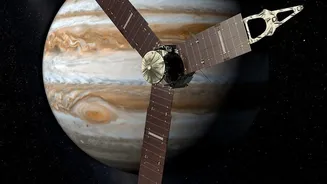
Our understanding of the Great Red Spot has been revolutionised by a new generation of powerful instruments. The Hubble Space Telescope’s Outer Planet Atmospheres Legacy (OPAL) program provides yearly check-ups, allowing scientists to monitor long-term changes. Complementing this is NASA's Juno spacecraft, which has been orbiting Jupiter since 2016. By performing close flybys, Juno’s instruments can peer deep beneath the cloud tops. Its gravity measurements have helped determine the storm's depth, revealing it extends between 350 and 500 kilometres into the atmosphere—far deeper than a terrestrial hurricane. This 3D view is crucial for understanding the storm's underlying energy source and what is driving its evolution.
The Future of a Solar System Icon
So, will the Great Red Spot disappear? The simple answer is that nobody knows for sure. The observed shrinking and new instabilities have led some scientists to predict it could vanish within a few decades. Others suggest that as it shrinks, it could settle into a new, more stable circular shape and persist for many years to come. The latest findings show that the storm is more complex and unpredictable than previously thought. The ongoing observations from missions like Juno and Hubble are not just cataloguing the end of a famous landmark; they are providing vital data on how giant planetary atmospheres work. This research helps us understand not only our own solar system but also the weather on the countless exoplanets being discovered around other stars.