








Swap Heavy Curtains for Sheer Fabrics
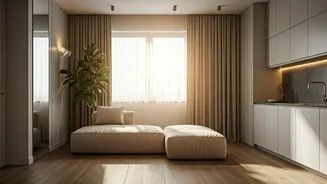
One of the quickest ways to make a room feel lighter and more open is to address the windows. Heavy, dark curtains can block precious natural light and make a space feel enclosed. [9, 14, 18] By swapping them for sheer or lightweight fabrics, you allow
sunlight to flood in, which instantly creates an airy and expansive feeling. [6, 9] These lighter window treatments provide privacy without sacrificing brightness, making the entire flat feel more connected to the outdoors and less confined. Choose colours like off-white, beige, or soft pastels to maximize the effect. [9]
Trade Bulky Furniture for Leggy Pieces
Bulky furniture that sits directly on the floor can make a room feel heavy and crowded. [16] A simple but impactful swap is to choose furniture with raised legs. [7, 14, 20] Sofas, side tables, and TV consoles that are elevated on slender legs allow light to pass underneath them, creating an illusion of more space. [14] This trick lets you see more of the floor, which visually opens up the room. [3] Similarly, opting for pieces made of glass or acrylic can help, as their transparency makes them seem to take up less visual real estate. [2, 16]
Replace a Single Ceiling Light with Layered Lighting
Relying on a single, central ceiling light can create harsh shadows in the corners of a room, making it feel smaller. A better approach is to layer your lighting. Swap the one-size-fits-all approach for a combination of floor lamps, table lamps, and perhaps some wall sconces. [3, 20] This layered effect eliminates dark corners, creates depth, and allows you to adjust the mood of the room. [3] Good lighting is essential for making a space feel warm and expansive, and multiple light sources give you more control over the atmosphere. [19]
Swap Clutter for Curated Displays
Nothing makes a small flat feel smaller than clutter. [2, 14] While it’s tempting to display all your favourite things, too many small items can create visual noise. The swap here is to trade scattered knick-knacks for intentional, curated displays. Group decorative items in threes or fives on a tray to keep them contained. [4] Better yet, go vertical. Swap low, wide storage units for tall, narrow bookshelves or floating shelves. [3, 6, 8] This draws the eye upward, making the ceiling feel higher and freeing up valuable floor space. [10]
Exchange Dark Walls for a Light Palette
Dark paint colours can be cozy, but in a small space, they tend to absorb light and make the walls feel like they are closing in. Swapping a dark wall colour for a lighter, neutral shade is a classic trick for a reason. [9, 15] Whites, beiges, light greys, and soft pastels reflect light, making a room feel brighter and more spacious. [14, 16] To create an even more seamless look, consider painting the trim and even the ceiling the same colour as the walls. This erases the visual breaks that can make a room feel smaller. [2]
Use Mirrors to Swap a Wall for a View
A well-placed mirror is one of the most effective tools in a small-space decorator's arsenal. Instead of just a blank wall, you can effectively swap it for a reflection that adds depth and light. Placing a large mirror opposite a window is a classic strategy, as it bounces natural light around the room and can almost create the illusion of a second window. [3, 5, 11, 14] Avoid scattering many small mirrors, which can look cluttered. Instead, opt for one large, statement mirror to act as a focal point and visually double the space. [3, 5]
Switch to Multi-Functional Furniture
In a compact flat, every piece of furniture should work hard. Swap single-use items for multi-functional ones. A coffee table can be replaced with a storage ottoman that holds blankets and magazines. [10, 15] A simple guest bed can be a sofa-cum-bed, and a decorative bench can also offer hidden storage. [8, 13] These smart pieces reduce the number of items you need in a room, freeing up space and helping you stay organized without sacrificing functionality or style. [15]