




A Landmark Moment in Space
NASA has confirmed a historic achievement for its Deep Space Optical Communications (DSOC) experiment. The system successfully beamed an ultra-high-definition video from the Psyche spacecraft back to Earth. At the time of the test, the spacecraft was
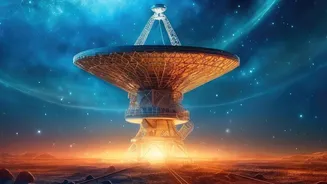
approximately 31 million kilometres away, a distance roughly 80 times farther than the Moon. The 15-second video file took just 101 seconds to traverse this immense void, arriving at Earth at a maximum speed of 267 megabits per second (Mbps). This successful test, received by the Hale Telescope at Caltech's Palomar Observatory in California, marks a pivotal moment, proving that high-bandwidth data transmission is possible over vast interplanetary distances.
The Big Upgrade: Lasers Over Radio
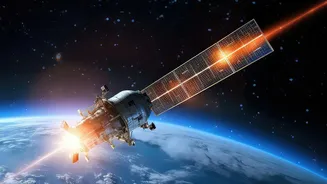
For decades, space missions have relied on radio waves to communicate, a dependable but increasingly limited technology. Think of it as the difference between dial-up internet and modern fibre-optic broadband. Radio waves, while reliable, have a much lower bandwidth, meaning they can't carry as much data. Laser communications, on the other hand, use near-infrared light, which packs data into much tighter waves. This allows for data rates that are 10 to 100 times greater than the best radio systems currently in use. This massive increase in bandwidth is essential for the future of space exploration, which will involve sending back complex scientific data, high-resolution imagery, and even live video feeds from distant worlds. It’s a fundamental upgrade to the infrastructure of our solar system communications network.
Why Send a Cat Video?
The star of this historic transmission was a ginger tabby cat named Taters, the pet of an employee at NASA's Jet Propulsion Laboratory. While sending a cat video from deep space might seem whimsical, the choice was a deliberate and clever nod to history. The clip of Taters chasing a laser pointer echoes the use of a Felix the Cat figurine in early television broadcast tests in 1928. More importantly, to demonstrate the system's capability, the team needed a pre-loaded video file. A playful clip, complete with overlaid graphics showing technical data like Psyche’s trajectory and the data transmission rate, served as the perfect test subject for this high-definition stream. It proved the system could handle the kind of rich data future missions will generate.
The Incredible Challenge of Precision
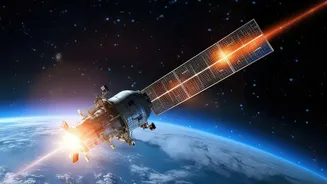
Transmitting a laser beam across 31 million kilometres and hitting a target on Earth is an extraordinary feat of engineering. The challenge is equivalent to pointing a laser pointer at a coin from several kilometres away. The DSOC system requires incredibly precise pointing to lock onto the ground station receiver. The flight transceiver aboard the Psyche spacecraft must calculate the exact location of the receiving telescope on Earth, accounting for the movement of both the spacecraft and our planet. The system then beams the encoded near-infrared laser, which is captured by the massive Hale Telescope. This successful link-up, or 'first light', demonstrates that the complex pointing, acquisition, and tracking technology works flawlessly even across unimaginable distances.
Paving the Broadband Highway to Mars
This technology demonstration isn't just an isolated experiment; it is a crucial stepping stone for humanity's next giant leap: sending astronauts to Mars. A crewed mission to the Red Planet would require robust, high-speed communication for both mission-critical data and the well-being of the astronauts. This laser communication system would allow for the streaming of high-definition video, facilitating everything from telemedicine consultations to letting astronauts connect with their families back on Earth in near real-time (accounting for the light-travel delay). By proving this technology works, NASA is laying the foundation for a future where the vastness of space feels a little less distant, ensuring that future explorers are never truly disconnected from home.