







Finding the right exercise can be a challenge, especially when you're short on space. Two of the most accessible and effective options are walking and skipping. But which one is the better fit for your goals, your body, and your home?
The Calorie Burn Question
When it comes to
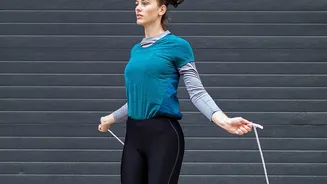
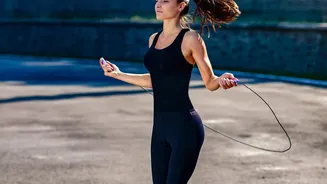
burning calories efficiently, skipping—also known as jumping rope—has a clear advantage. It's a high-intensity activity that elevates your heart rate quickly, providing a vigorous full-body workout. On average, just ten minutes of skipping can burn over 200 calories, while some estimates suggest it can burn roughly two to three times more calories per minute than brisk walking. A 10-minute skipping session could be equivalent in calorie burn to a 30-minute walk. However, the total number of calories burned isn't the only factor. While skipping is more intense, many people can walk for much longer periods. A sustained 45-minute walk may end up burning a similar or greater number of total calories than a 10-minute skipping session. Consistency is key, so the best exercise is often the one you can maintain longer and perform more regularly.
Space, Cost, and Convenience
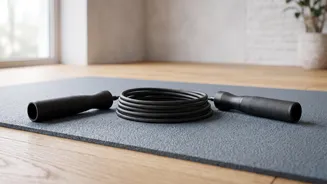
This is where the 'available space' constraint truly comes into play. Walking is arguably the most convenient exercise; it can be done almost anywhere, requires no special equipment beyond a good pair of shoes, and costs nothing. You can walk outdoors, on a treadmill, or even by marching in place in a small room. Skipping, on the other hand, has specific spatial needs. You require a small, flat area—roughly two square metres—with enough vertical clearance for the rope to pass over your head without hitting the ceiling. While a jump rope is an inexpensive and highly portable piece of equipment, finding that clear, snag-free space can be a challenge in a cramped apartment. For those with extremely limited room, walking in place might be the more practical daily option.
Impact on Your Joints
The physical impact on your body is a crucial differentiator. Walking is a low-impact exercise, meaning one foot is always on the ground, which places less stress on your ankles, knees, and hips. This makes it an excellent starting point for beginners, older adults, or anyone with pre-existing joint concerns. Skipping is a high-impact activity. The repeated jumping places significant stress on the joints, particularly the ankles and knees. While this impact can be beneficial for building bone density, it can also pose a risk for those not accustomed to it. Proper form, like landing softly on the balls of your feet and keeping jumps low, is essential to mitigate this. For many, a combination approach works best, using walking for daily movement and incorporating shorter skipping sessions to add intensity without overstretching the body.
Skill, Accessibility, and Sustainability
Anyone can walk. It requires no special skill or coordination, making it immediately accessible to nearly everyone. You can easily adjust the intensity by walking faster, choosing a route with hills, or carrying weights. Skipping has a learning curve. For beginners, mastering the timing and rhythm can be frustrating, and it might take time before you can skip continuously for more than a minute. However, this skill development can also make the activity more engaging and fun over the long term. Ultimately, the most sustainable exercise is the one you enjoy. Some find the meditative rhythm of walking to be a mental health benefit, while others prefer the challenge and playful nature of skipping.
Broader Health Benefits
Both walking and skipping are fantastic for cardiovascular health, strengthening your heart and improving lung capacity. Skipping, being a full body workout, engages your legs, core, shoulders, and arms simultaneously. The high impact nature of jumping rope is also particularly effective for improving bone mineral density, which is crucial for preventing osteoporosis. While walking is also a weight bearing exercise that helps maintain bone strength, high impact activities generally provide a stronger stimulus for bone growth. Studies have shown that even regular brisk walking, for at least four hours a week significantly lowers the risk of hip fractures in postmenopausal women. For overall fitness combining the two can offer a well rounded routine walking for endurance and low impact consistency and skipping for high intensity bursts and bone building benefits.