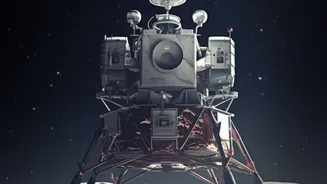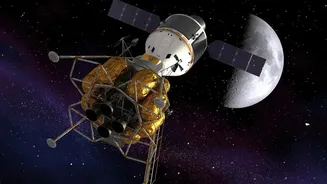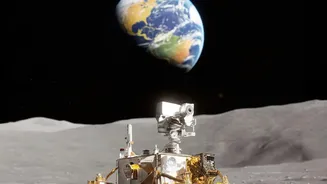





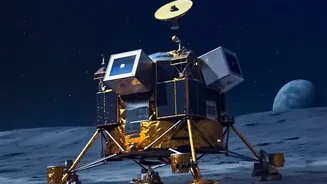
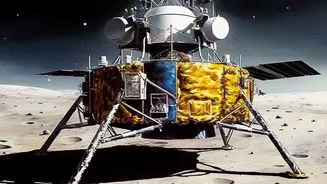

More Than Just a Moonshot
This isn't just an invitation to collaborate on another science project; it's a formal offer for India to become a core partner in building humanity’s first permanent outpost on another celestial body. The invitation was extended during the ninth India-U.S.
Civil Space Joint Working Group meeting in Bengaluru in early August 2026. The program aims to establish a sustained human presence near the Moon's South Pole, an area rich in scientific interest and potential resources like water ice. This initiative is a cornerstone of NASA's broader Artemis program, which is not only about returning astronauts to the Moon but about creating the infrastructure for long-term settlement and research. For India, accepting this invitation means moving from being a respected space-faring nation to becoming an architect of future international lunar infrastructure. It's a seat at the table where the rules for the next generation of space exploration are being written.
India's Hard-Earned Place at the Table
This invitation is a direct result of India's stunning and cost-effective achievements in space. ISRO's successful Chandrayaan-3 mission in 2023, which made India the first and only country to soft-land a spacecraft near the lunar South Pole, was a game-changer. That mission, accomplished on a famously frugal budget, showcased ISRO's world-class engineering and reliability. It proved that India could deliver high-stakes results in complex environments, making it an invaluable potential partner for a project as ambitious and costly as a lunar base. This capability, combined with a history of successful collaboration with NASA on projects like the recently launched NISAR Earth-observation satellite, has built a foundation of trust and mutual respect between the two agencies.
The Geopolitical Orbit
The partnership extends far beyond scientific curiosity. It represents a significant strategic alignment between the world's two largest democracies. By bringing India into the fold of the Artemis Accords—a set of principles for peaceful and cooperative space exploration which India signed in 2023—the United States is building a powerful coalition of like-minded nations. This move is widely seen as creating a democratic counterweight to the space ambitions of China and Russia. In an era where space is increasingly viewed as a domain for strategic competition, a U.S.-India partnership on something as foundational as a moon base sends a clear message about shared values and long-term goals. The collaboration is a key part of the broader U.S.-India TRUST (Transforming the Relationship Utilizing Strategic Technology) Initiative, aimed at deepening cooperation on critical and emerging technologies.
What Comes Next?
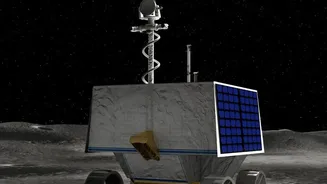
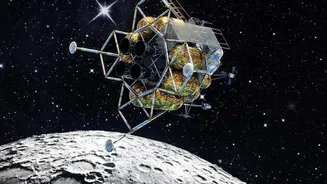
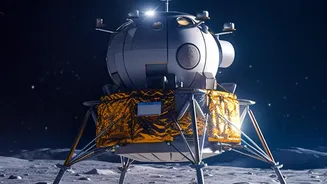
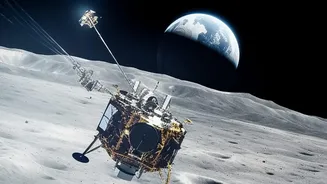
If India formally accepts, collaboration would likely begin in phases. NASA's plan involves robotic missions to scout and prepare the site, followed by the delivery of habitats, power systems, and rovers. India could contribute its expertise in launch vehicles, robotics, and potentially even components for the base itself. The partnership is also expected to enhance data sharing and human spaceflight cooperation. An Indian astronaut is already slated to travel to the International Space Station on a U.S. commercial flight, and this lunar collaboration would be the logical next step. While India also has its own long-term goals, including a national space station by 2035 and a crewed lunar landing by 2040, joining the NASA-led Moon Base program offers a faster path to achieving a human presence on the Moon through shared resources and risk.