
Our One and Only Blueprint
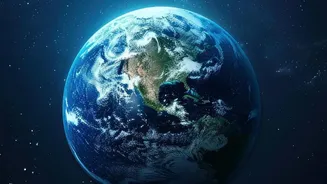
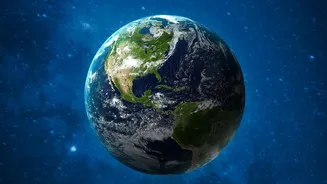
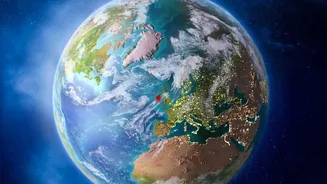
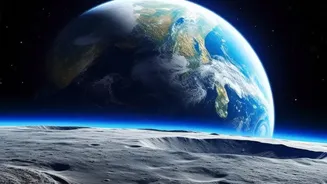
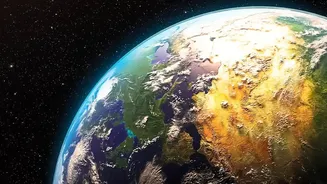
To find something, it helps to know what you are looking for. When it comes to life, Earth is our only working example. Every living thing we've ever studied, from the tallest redwood to the smallest bacterium, shares a common terrestrial origin. This
makes our planet the ultimate laboratory for astrobiology, the science of studying life in the universe. Scientists don't assume alien life will be identical to Earth's, but our world provides a crucial starting point. By studying how life arose and evolved here, what it's made of, and the traces it leaves behind, researchers can develop a toolkit for searching elsewhere. This knowledge helps them decide which planets to target, what instruments to build, and what specific signs might signal a biological presence light-years away.
Lessons from Life in the Extreme
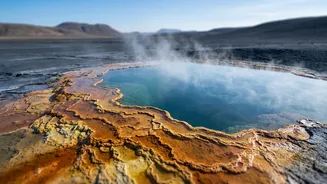
For a long time, scientists thought life required very specific, comfortable conditions. But the discovery of 'extremophiles' completely changed that perspective. These are organisms, mostly microbes, that thrive in environments we would consider uninhabitable. They are found in the crushing pressure and darkness of deep-sea hydrothermal vents, the boiling and acidic waters of hot springs, the driest deserts, and even frozen solid within Antarctic ice. Some bacteria can even survive the vacuum and intense radiation of outer space. The existence of extremophiles proves that life is far more tenacious than once believed. This radically broadens the number of places we might find it. Suddenly, the subsurface oceans of Jupiter's moon Europa or Saturn's moon Enceladus, once thought too cold and dark, become compelling targets because life on Earth has already proven it can handle similar conditions.
Searching for Life's Fingerprints
When scientists look for life on another planet, they aren't necessarily expecting to find little green men. More likely, they are hunting for biosignatures: any substance, pattern, or object that provides evidence of past or present life. A biosignature could be a fossil, a complex organic molecule, or even a combination of gases in a planet’s atmosphere that shouldn't exist together without a biological source, like oxygen and methane on Earth. To learn how to spot these, scientists study them here first. They examine how microbial mats create layered rock structures called stromatolites, which can be preserved for billions of years, giving us a potential visual target for rovers on Mars. They analyze the unique chemical ratios left by biological processes in ancient rocks, training their instruments to spot similar imbalances in Martian soil samples.
From the Atacama to Mars
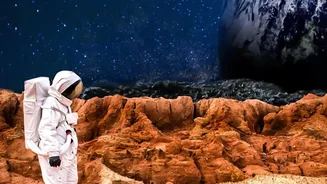
To test their theories and equipment, scientists use 'analog environments' on Earth—places that share key characteristics with extraterrestrial locations. The Atacama Desert in Chile, one of the driest places on the planet, serves as an excellent stand-in for the arid surface of Mars. By practicing with rovers and life-detection instruments in the Atacama, teams can figure out the best ways to search for evidence of microbial life on the Red Planet before a multi-billion dollar mission ever leaves the ground. Similarly, expeditions to subglacial lakes in Antarctica, like Lake Vostok, help engineers design probes that could one day melt through the thick ice shell of Europa to explore its hidden ocean. These earthly expeditions are critical dress rehearsals for some of the most ambitious robotic missions ever attempted.