






The Great Indian Space Paradox
On the surface, recent data suggests a surprising trend: post-pandemic, the average size of new homes in India's top cities has actually increased. This shift is largely fuelled by a booming luxury market where buyers, having spent months in lockdown,
are now demanding larger homes with more amenities. However, this statistic doesn't tell the whole story. For a vast majority of urban dwellers, particularly in hyper-dense areas like the Mumbai Metropolitan Region, the lived reality is one of compact living. The affordable housing segment, where most people shop, continues to face pressure from soaring land values and construction costs, making smaller, more economical units the only viable option for both developers and buyers. This has created a tale of two cities within one, where overall averages are skewed by a few, while the many navigate the challenges of a smaller footprint.
The Irresistible Pull of the Metropolis
Why do people accept these smaller spaces? The answer is simple: the city itself. India is undergoing rapid urbanisation, with millions drawn to metropolitan hubs for jobs, education, and opportunities. This relentless migration puts immense pressure on housing infrastructure, driving property prices to astronomical levels. For a young professional or a nuclear family, securing a home, however small, in a prime location close to work and urban amenities is often a greater priority than sprawling suburban space. The trade-off is clear: sacrifice square footage for access and convenience. This economic reality has cemented the small home not as a temporary phase, but as a permanent fixture of the Indian urban landscape.
When Style Becomes the Solution
Faced with the constraint of space, a new generation of Indian homeowners has refused to compromise on their quality of life. Instead of seeing a small home as a limitation, they view it as a design challenge to be solved with creativity and intelligence. This mindset shift is fuelling a vibrant domestic market for innovative home solutions. Style is no longer just about aesthetics; it's about function. It's the answer to the question: How do you live a full life in a compact space? The answer lies in smarter design, clever furniture, and a new definition of what makes a home feel luxurious.
The Art of Doing More with Less
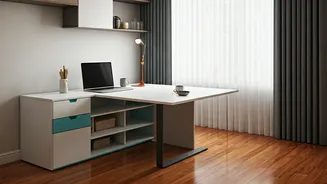
The hero of the modern Indian apartment is undoubtedly multifunctional furniture. The market for these space-saving marvels is booming as consumers embrace pieces that work as hard as they do. The classic sofa-cum-bed has been joined by a host of ingenious creations: dining tables that fold away into a slim console, coffee tables that rise to become workstations, and beds with hydraulic storage that swallows up clutter. It's a move away from bulky, single-purpose items towards a lean, adaptable approach to furnishing. By choosing furniture that can serve two or three purposes, homeowners can free up precious floor space, allowing a single room to function as a living room, dining area, and guest room all in one.
Creating the Illusion of Grandeur
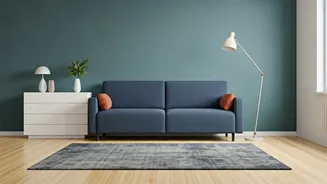
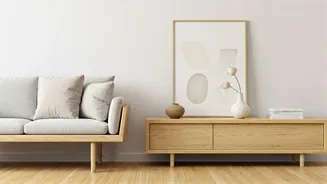
Beyond clever furniture, a whole new design language has emerged to make small spaces feel bigger. Light colour palettes—think whites, beiges, and soft greys—are used to create an airy, open feel and reflect natural light. Mirrors are no longer just for checking your reflection; they are strategically placed to create a sense of depth, visually doubling the size of a room. Vertical space is another key frontier, with floor-to-ceiling shelves and wall-mounted units drawing the eye upward and freeing up the floor. The focus is on a minimalist aesthetic, but not one devoid of personality. Instead, clutter is eliminated to make way for a few well-chosen statement pieces, proving that it’s not the amount of stuff you have, but how you display it, that defines your style.