



A Celestial Ghost Story
Imagine a ghost haunting our solar system. It’s not a spooky spirit, but the spectral trail of Halley’s Comet, a celestial wanderer that swings by Earth only once every 76 years. The last time it graced our skies was in 1986, and it won’t be back until
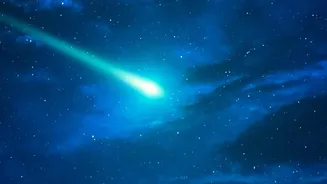
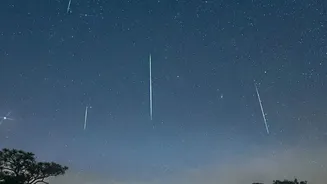
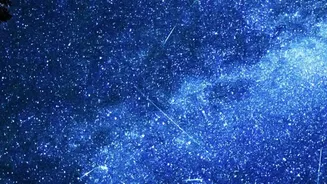
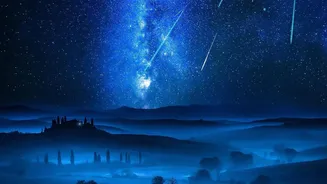
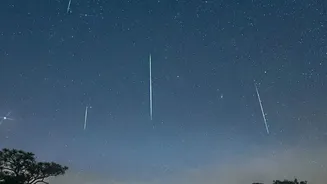
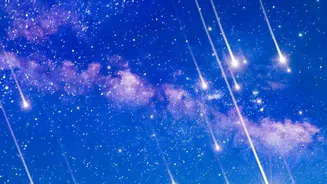
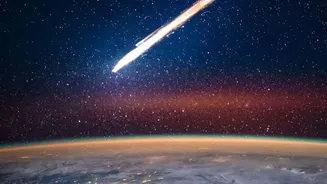
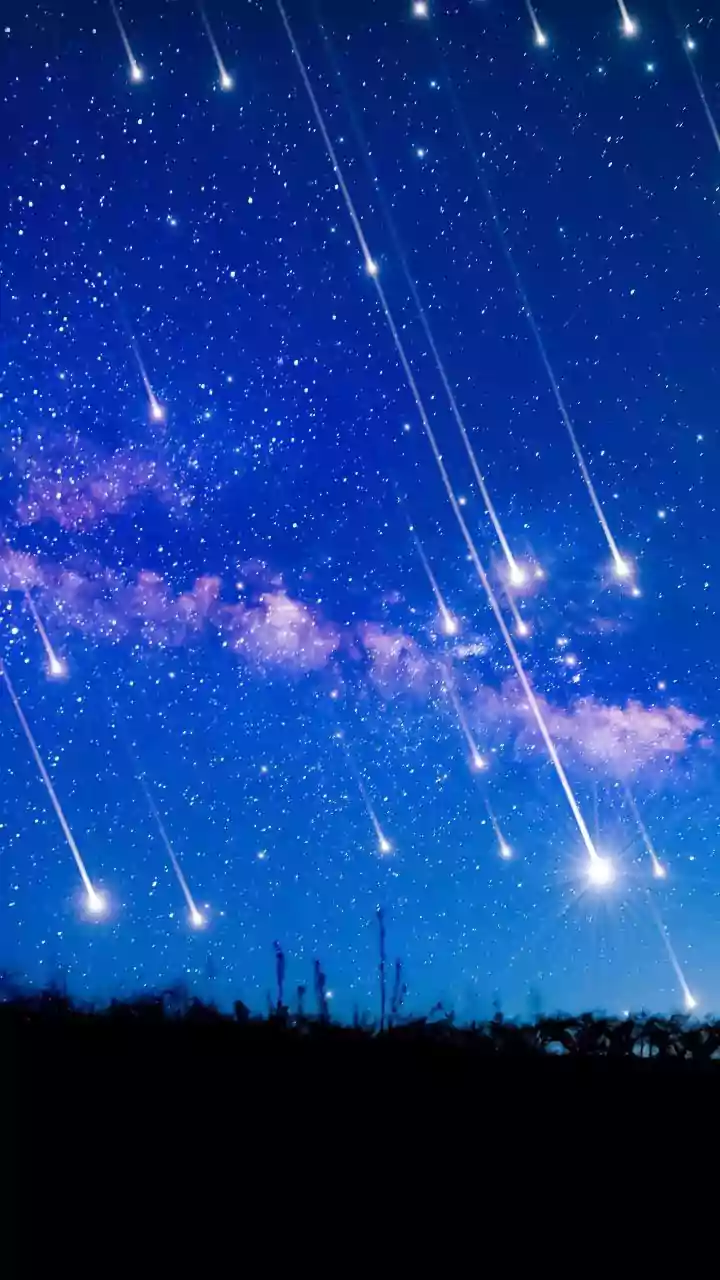
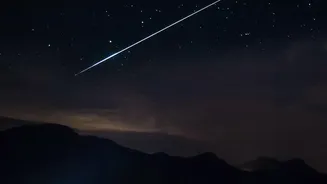
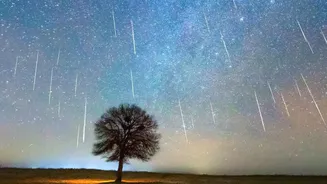
2061. Yet, long after the comet itself has vanished into the dark depths of space, it leaves behind a ghostly reminder of its passage: a stream of dust and icy debris. Meteor showers occur when Earth, on its own journey around the sun, ploughs through these ancient debris trails. The particles, often no bigger than grains of sand, slam into our atmosphere at incredible speeds and burn up, creating the fiery streaks we call meteors or 'shooting stars'.
The Sun's Role in a Comet's Mess
Halley’s Comet is essentially a large, dirty snowball, a mix of ice, rock, and dust. As it follows its long, elliptical orbit and gets closer to the sun, the intense solar heat causes the ice on its surface to vapourise. This process, called sublimation, releases the dust and rock particles that were trapped within the ice, creating a vast, dusty tail that stretches for millions of kilometres. This isn't a one-time event; every time Halley’s Comet completes its 76-year circuit, it replenishes this trail, leaving a thicker 'river of rubble' flowing through space along its orbital path. The particles we see as Orionid meteors today may have been shed by the comet hundreds or even thousands of years ago.
Earth's Two Annual Encounters
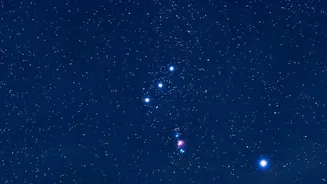
Earth's orbit around the sun is remarkably stable, and it happens to intersect the sprawling debris field of Halley's Comet at two different points. This is why Halley's Comet is the parent of not one, but two distinct annual meteor showers. The first encounter happens in early May, resulting in the Eta Aquariid meteor shower. The second occurs in mid-to-late October, giving us the Orionids. The reason they have different names and appear to come from different parts of the sky is due to Earth's position and perspective at those times of the year. Meteor showers are named for the constellation from which they appear to radiate. For the Orionids, this point, known as the radiant, is near the constellation of Orion the Hunter.
What Makes the Orionids Special
The Orionids are known for being particularly fast and bright. The debris particles from Halley's Comet strike our atmosphere at a blistering speed of about 66 kilometres per second (around 238,000 km/h). This tremendous velocity means they can burn brightly, and sometimes they leave persistent, glowing trails that can linger in the sky for several seconds after the initial streak has faded. Occasionally, an exceptionally bright Orionid, known as a fireball, can light up the entire sky for a fleeting moment. Though not the most prolific shower, the quality and beauty of these meteors make the Orionids a favourite for stargazers worldwide.
How to Watch the 2026 Show
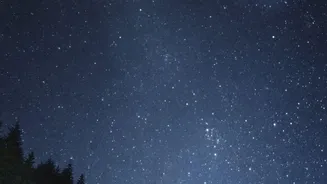
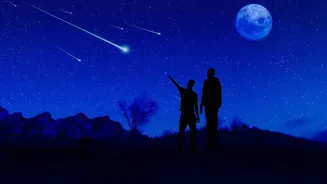
The Orionid meteor shower is active from early October to early November, but the best time to watch in 2026 will be during its peak on the night of October 21 and into the pre-dawn hours of October 22. Under ideal dark-sky conditions, you might see between 15 and 20 meteors per hour. This year, however, a bright waxing gibbous moon will be present for much of the night, washing out some of the fainter meteors. Your best viewing window will be in the few hours before dawn, after the moon sets around 3 a.m. local time. For the best experience, find a location away from city lights, lie back, and give your eyes about 20-30 minutes to adjust to the darkness. No special equipment is needed; just patience and a clear sky.