







Why Scientists Use Mice
Before we dismiss animal research, it's important to understand why it’s a cornerstone of modern medicine. Mice are invaluable because their genetic, biological, and behavioral characteristics closely resemble those of humans. Virtually every medical
therapy we have today, from vaccines to cancer treatments, owes its existence at some level to animal experiments. Scientists can study mice across their entire two-year lifespan, observing the effects of diet or drugs on aging in a way that would take decades in humans. By using genetically identical mice, researchers can control variables and isolate the impact of a specific intervention, a critical step in understanding the basic mechanics of disease. They provide an essential first step for testing the safety and efficacy of a new drug or understanding a biological process before it would be ethical to test in people.
The Gut-Brain Sugar Signals
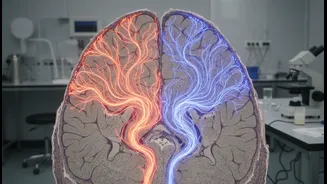
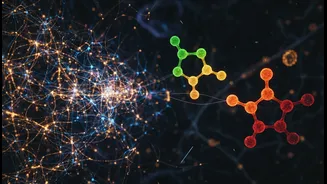
A hot topic in this research is the gut-brain axis, the communication highway between our digestive system and our brain. A major point of interest is how different sugars, like glucose and fructose, send signals that influence hunger and food preference. While both are simple sugars with the same calories, they are metabolized differently. Recent studies in mice, published in mid-2026, have shown that glucose and fructose trigger very different responses. Glucose sends a strong signal to the brain's hunger-promoting cells (called AgRP neurons) that you are full, while fructose sends a much weaker signal through a completely separate pathway. This might help explain why foods high in fructose can be easy to overeat.
Lost in Translation
Here's the problem: what happens in a mouse's gut doesn't always happen in ours. There are significant physiological differences that make direct translation difficult. For instance, the human small intestine is relatively shorter than that of rodents, and our capacity to metabolize fructose in the small intestine might be saturated at lower doses. Some studies suggest that in mice, most fructose is handled by the small intestine, which protects the liver. In humans, this might not be the case, especially with the high doses found in sugary drinks, leading to spillover into the liver. Furthermore, causes of mortality and disease progression can differ wildly. A condition that is deadly in humans might not even cause symptoms in a rodent, and vice-versa.
A Different Metabolic Story
The differences in metabolism are profound. While almost all genes in mice have functional counterparts in humans, the way those genes are regulated can vary. The basal metabolic rate of a mouse is about seven times greater per gram of body weight than a human's, which speeds up the development of diet-related diseases. This is useful for research but also a key difference. Many studies that find dramatic effects of fructose in mice are done on animals also eating a high-fat diet, a combination that produces much worse metabolic outcomes than fructose alone. In humans, the context of the entire diet is much more complex and harder to control. Because of these differences, a staggering nine out of ten experimental drugs that look promising in animal studies ultimately fail in human clinical trials.
How to Read the Science News
This doesn't mean you should ignore science news. Instead, become a more critical consumer. When you see a health headline, ask a few key questions. Was the study in animals or humans? If it was in humans, how many people were involved and for how long? Was the study published in a reputable, peer-reviewed journal? Look for cautious language; responsible scientists will say their findings "suggest" or are "associated with" a certain outcome, not that they "prove" it. Animal studies are designed to dissect a specific mechanism and are an essential part of the scientific process. They are meant to generate hypotheses that can then be tested in the messy, complex reality of human life.