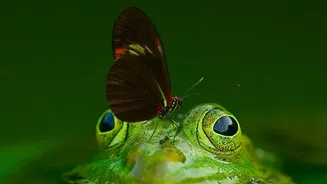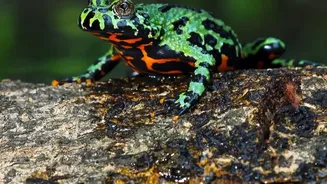


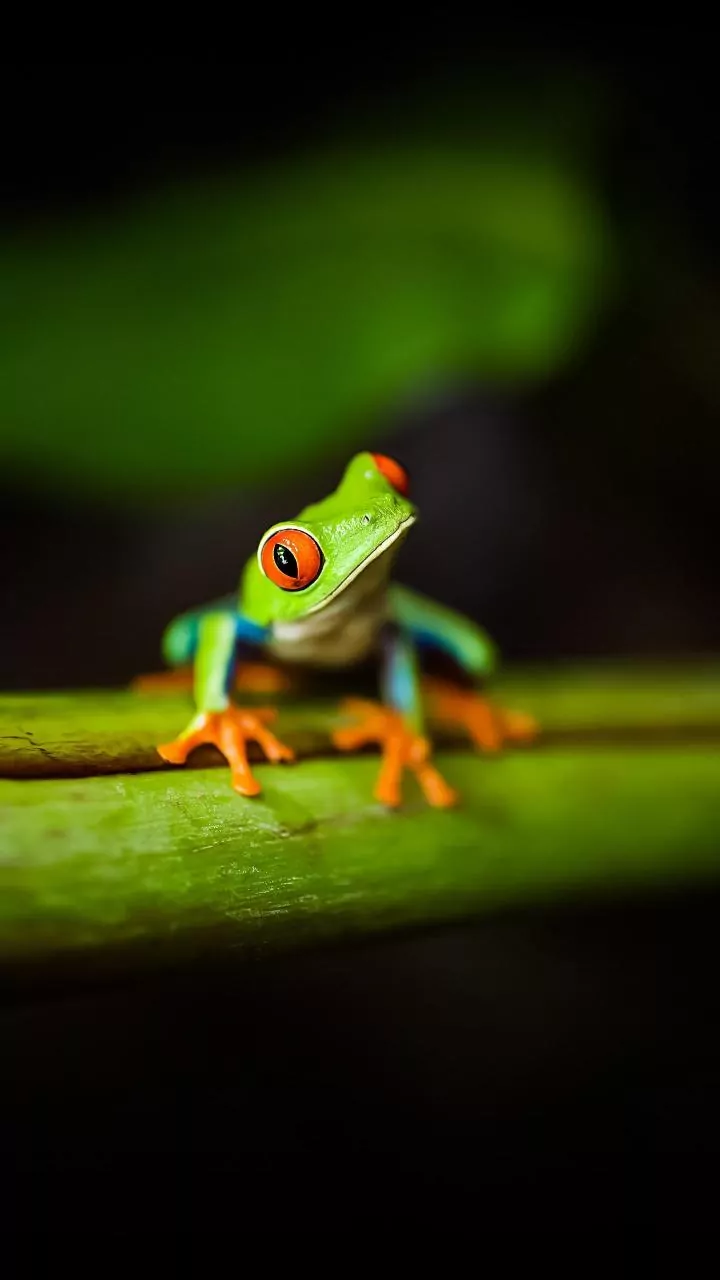


When you are thirsty, you grab a glass of water. But what if you could just sit on a wet surface and absorb all the hydration you need? For many frogs, this isn't science fiction; it’s a biological reality.
A Superpower Called Permeable Skin
Unlike humans, whose skin is designed to keep
moisture out, a frog's skin is permeable, meaning it allows liquids and gases to pass through. This thin, porous, and mucus-coated organ is a multi-purpose tool. It not only protects them but also allows them to breathe and, remarkably, to 'drink'. This process of cutaneous absorption means they don't need to find a pond or puddle to gulp from; they can draw moisture directly from damp soil, wet leaves, or even morning dew. The entire process relies on osmosis, the natural movement of water from an area of high concentration (like a moist leaf) to an area of lower concentration (the frog's body).
The 'Seat Patch' Does the Heavy Lifting
While their skin is generally absorbent, most of this incredible hydration process happens in a specific area. Many terrestrial frogs and toads have a highly specialised region on their belly and the underside of their thighs known as the 'pelvic patch' or, more informally, the 'seat patch'. This patch is densely packed with capillaries, or tiny blood vessels, lying very close to the surface. When a dehydrated frog needs water, it adopts a posture known as the 'water absorption response', pressing this patch firmly against a wet surface. Though the seat patch may only be a fraction of the frog's total surface area, it can be responsible for over 70 percent of its water uptake.
An Evolutionary Masterstroke
This unique ability is a brilliant evolutionary adaptation for an amphibian lifestyle, which straddles both aquatic and terrestrial worlds. It allows frogs to stay hydrated without being constantly tied to a large body of water, enabling them to explore a wider range of habitats. For species living in drier climates, like some desert rain frogs, this skill is the key to survival, allowing them to absorb every last drop of moisture from fog or damp sand. By absorbing water as they need it, they conserve energy and reduce their exposure to predators that might lurk around larger water sources. To aid this, their skin produces a layer of mucus that not only keeps them from drying out but also facilitates the smooth transfer of water into their bodies.
The Perils of Permeable Skin
Unfortunately, this superpower comes with a significant vulnerability. The same porous skin that so efficiently absorbs life-giving water can just as easily absorb harmful substances from the environment. Pollutants like pesticides, heavy metals, and other chemicals present in contaminated water can pass directly into a frog's bloodstream, causing illness, developmental issues, and even death. This extreme sensitivity makes frogs highly susceptible to changes in their environment. Their thin skin is a double-edged sword: a perfect tool for hydration in a clean world, but a dangerous liability in a polluted one.
Frogs as Nature's Sentinels
Because their health is so directly linked to the quality of their surroundings, frogs are known as 'bio-indicators'. The presence of a thriving and diverse frog population is often a sign of a healthy, clean ecosystem. Conversely, a decline in frog numbers can serve as an early warning that something is wrong with the local environment, particularly the water quality. By monitoring the health of these sensitive creatures, scientists can gain valuable insights into the overall well-being of our wetlands, forests, and waterways. The simple frog, sitting quietly on a leaf, is not just absorbing water; it's telling us a story about the health of our planet.