




The friendly face offering you a beverage is also a highly trained first responder. While passengers see service, a flight attendant’s primary role is safety, drilled into them through intense training for events you hope to never encounter.
Beyond Service: A First Responder's Mindset
The most important
job of a flight attendant has nothing to do with hospitality. Their fundamental responsibility, mandated by aviation authorities like the FAA, is to manage the cabin and protect passengers during emergencies. This shifts their role from service professional to in-flight first responder. Every year, crews must undergo recurrent training to refresh their skills and prove their proficiency in handling a wide range of abnormal situations. This continuous education ensures that whether facing a medical issue or a security threat, their response is based on deep and recent practice, not just a manual they read once.
The Ultimate Classroom: Hyper-Realistic Simulators
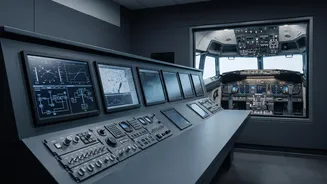
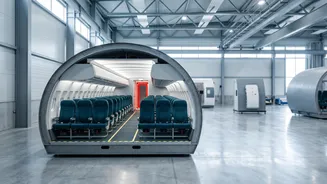
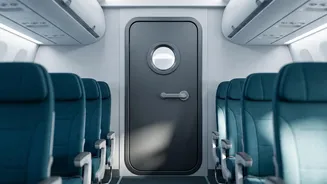
Modern cabin crew training happens in extraordinarily realistic environments called Cabin Emergency Evacuation Trainers (CEETs). These are full-scale aircraft fuselage mock-ups that can simulate a variety of emergencies. These simulators can fill with artificial, non-toxic smoke to mimic a fire, tilt violently on a motion platform to simulate severe turbulence or a crash landing, and feature functional emergency exits and slides. In these immersive sessions, crews practice everything from guiding passengers through a smoke-filled cabin to executing a rapid evacuation, all under intense pressure designed to mirror a real crisis.
Fighting Fire at 35,000 Feet
An in-flight fire is one of the most critical emergencies in aviation. Crews are trained extensively on how to handle different types of fires, including those in hidden spaces like lavatories or caused by lithium batteries in personal devices. Training involves using real fire extinguishers to put out controlled fires in specialized simulators. They learn to don Protective Breathing Equipment (PBE), which are smoke hoods with a dedicated oxygen supply, allowing them to locate and fight the source of a fire even in a dense, toxic environment. This hands-on practice builds the muscle memory needed to act decisively when seconds count.
Medical First Responders in the Sky
Flight attendants receive extensive medical training that goes far beyond basic first aid. They are trained and certified in CPR, how to use an automated external defibrillator (AED), and how to administer emergency oxygen. Their training covers a wide array of potential in-flight medical events, including heart attacks, strokes, seizures, allergic reactions, and even emergency childbirth. The goal is to preserve life, prevent a condition from worsening, and promote recovery until the aircraft can land and professional medical help is available. They learn to assess a situation, identify the condition, and provide the appropriate care within the confined space of an aircraft cabin.
De-escalation, Defense, and Unruly Passengers
Dealing with unruly or disruptive passengers has become a significant focus of cabin crew training. The first line of defense is always verbal de-escalation, and crews learn conflict resolution tactics to defuse tense situations before they turn physical. They are taught to identify warning signs and use a tiered threat-level system to categorize behavior. If a situation escalates to a physical threat, their training shifts to intervention. Many airlines provide voluntary self-defense courses, often taught by Federal Air Marshals, which are adapted for the narrow confines of an aircraft. Crews also learn the proper use of restraint devices, like flex cuffs, to secure a violent individual and ensure the safety of everyone on board.
Preparing for the Unthinkable: Evacuations and Survival
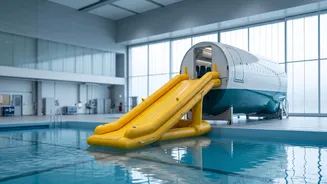
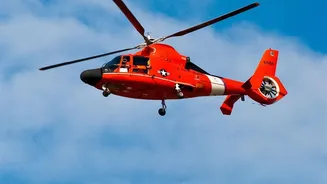
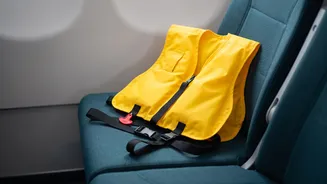
While exceedingly rare, cabin crews train relentlessly for emergency evacuations on both land and water. This includes operating every type of emergency exit and deploying evacuation slides. For a water landing, or “ditching,” training takes place in large pools, often with a cabin mock-up. Crews practice deploying life rafts, herding passengers into them, and using survival kits that include signaling devices. They are trained to take command, shouting instructions to guide panicked passengers and ensure an orderly, rapid evacuation. The goal is to get everyone out of the aircraft in 90 seconds or less, even if some exits are blocked.