



Before 'sustainability' and 'circular fashion' became global buzzwords, a quiet tradition of resourcefulness was thriving in Indian households. For centuries, worn-out fabrics were never waste; they were the beginning of a new story.
More Than a Trend, a Tradition
In India, the practice
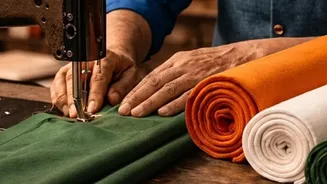
of recycling textiles is not a modern environmental movement but a deeply ingrained cultural ethos. Long before the industrial revolution, when textiles were painstakingly handmade, every thread was valuable. This respect for material led to countless ingenious methods of reuse, passed down through generations, primarily by women. What began as a necessity blossomed into distinct art forms, where old sarees, dhotis, and lungis were layered, stitched, and reborn as quilts, rugs, and embroidered treasures that held family memories within their folds. These crafts are a testament to a philosophy of mindful living that is woven into the very fabric of Indian society.
Kantha: The Stitched Narratives of Bengal
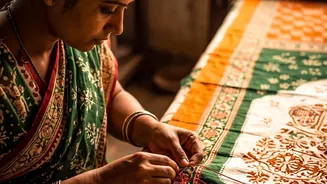
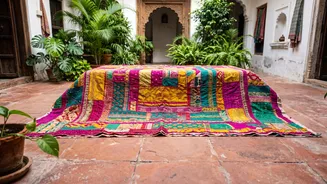
One of the most well-known examples of textile reuse is Kantha from West Bengal and Bangladesh. The word 'Kantha' itself is believed to derive from the Sanskrit word for 'rags'. Traditionally, women would layer soft, worn-out cotton sarees or dhotis, stitching them together with a simple running stitch. The thread itself was often pulled from the borders of old sarees, making the craft a true example of using every last scrap. This wasn't just functional; it was a canvas for storytelling. The stitches would form intricate motifs of flowers, animals, and scenes from daily life, transforming a simple quilt into a cherished heirloom. This craft, which is believed to be over 500 years old, turned the act of mending into an art form.
Godhadi: Maharashtra’s Quilt of Memories
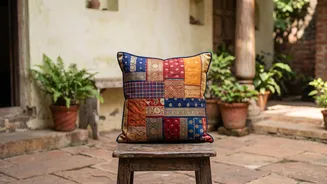
In Maharashtra, the Godhadi is a traditional hand-stitched quilt that embodies both thrift and affection. Made from refurbished old clothes, particularly sarees and shirts, a Godhadi is a patchwork of a family's history. Women in rural communities often gather in the afternoons, especially during the summer months when farm work is slow, to layer and stitch these quilts. The process itself becomes a social event, a time for sharing stories while working. Each piece of fabric holds a memory, making the final quilt more than just a blanket for warmth; it's a comforting tapestry of personal stories and familial love, often refused for sale at any price because of its sentimental value.
Kutch: A Collage of Colour and Craft
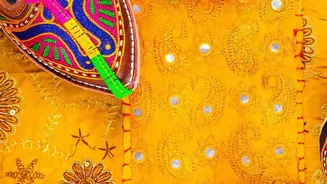
The Kutch region of Gujarat is famous for its vibrant and intricate textile arts, including patchwork and appliqué. Here, the tradition was born from both resourcefulness and practicality. For many artisans skilled in fine embroidery, patchwork became a natural progression as their eyesight diminished with age, allowing them to continue their craft. Known locally as 'Dhadki', these quilts are made by stitching together scraps of colourful fabric to form a base. Then, using an appliqué technique, intricate shapes of animals, flowers, and geometric patterns are cut and sewn onto the surface. This tradition, dating back hundreds of years, is not just about reusing old cloth; it creates stunning visual narratives that are often given as wedding gifts and passed down as precious family heirlooms.
A Legacy for the Future
Beyond these famous examples, many other regional practices highlight India's long history of textile reuse. In Haryana, women have traditionally woven leftover fabric strips into striking floor coverings known as Panja Dhurries. In Gujarat and Maharashtra, 'Chindi' rugs are braided from scraps of textile waste, creating durable and colourful household items. These crafts are more than just historical artifacts; they are living traditions that offer powerful lessons in sustainability. They remind us that creativity and conservation have long been intertwined, providing a blueprint for a more mindful approach to consumption in the modern world.