



Light's Cosmic Speed Limit
It all comes down to one fundamental principle of physics: light, while incredibly fast, has a finite speed. It travels at a staggering 299,792 kilometres per second. That means it could zip around the Earth more than seven times in a single second. But
space is vast—unimaginably vast. The distances between stars are so enormous that even at this breakneck speed, it takes light a very, very long time to travel from one star to another. To measure these distances, astronomers use a unit called a 'light-year,' which is the distance light travels in one year. That's about 9.5 trillion kilometres. So, when we say a star is 100 light-years away, we mean the light we see from it tonight began its journey 100 years ago.
Neighbours from the Recent Past
Not all starlight is centuries old. Our closest stellar neighbours offer a more 'recent' view. The Alpha Centauri system, the nearest to our Sun, is just over four light-years away. The light we see from its stars tonight left around the time the last FIFA World Cup was being played. Sirius, the brightest star in our night sky, is about 8.6 light-years away. When you look at Sirius, you're seeing it as it was nearly a decade ago. It’s like receiving a letter that has been in the post for several years. The information is still fascinating, but it’s not live news.
A View from Mughal-Era India
This is where the headline really comes to life. Many of the prominent stars we see are indeed hundreds of light-years away. Take Polaris, the North Star. It’s located roughly 430 light-years from Earth. This means the photons hitting your retina tonight started their journey around the year 1594, during the height of the Mughal Empire under Emperor Akbar. Think about that: the light left the star long before the Taj Mahal was even conceptualised. Another famous example is Betelgeuse, the bright reddish star in the Orion constellation. It's about 640 light-years away. The light we see from it today left during the 14th century, a time when the Tughlaq dynasty ruled the Delhi Sultanate. The night sky is a history book written in light.
Peeking Across the Galaxy
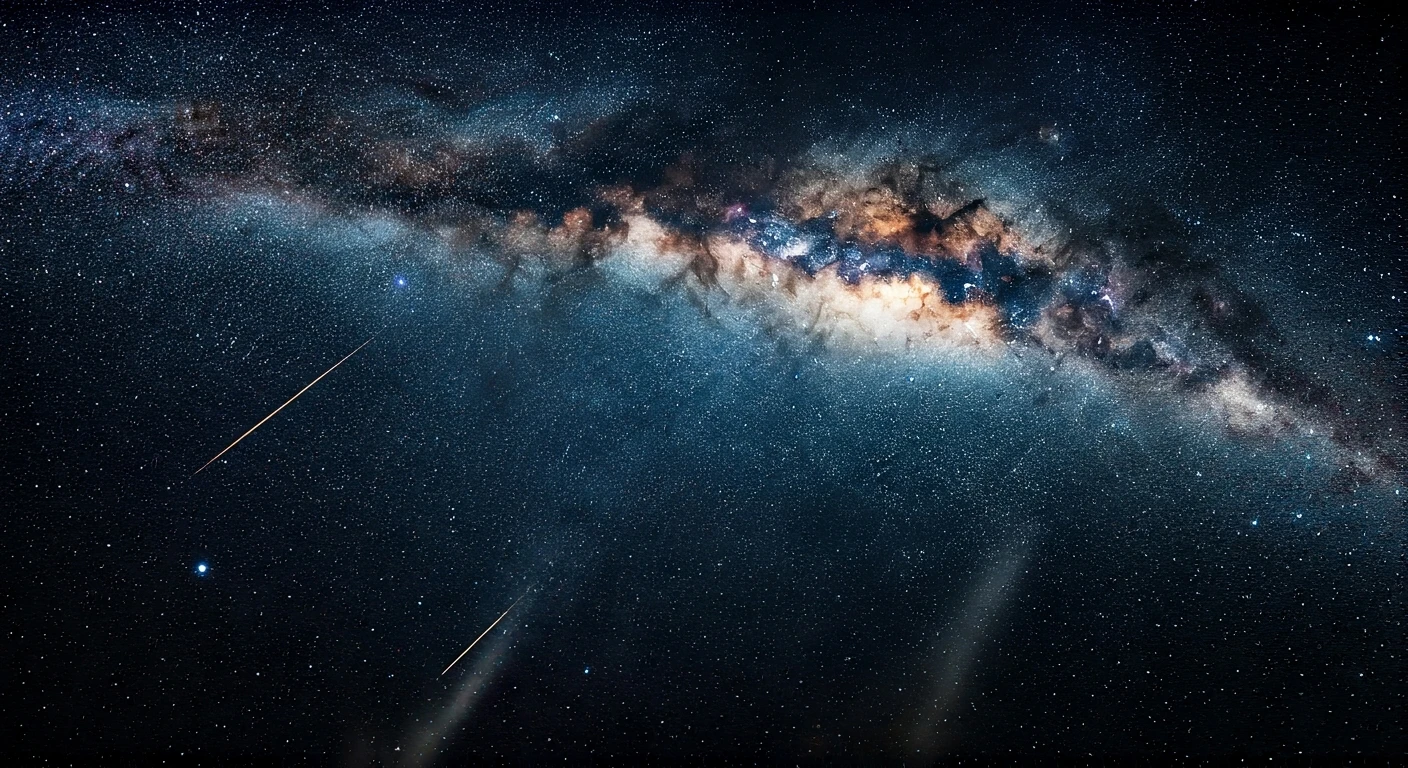
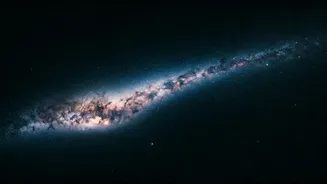
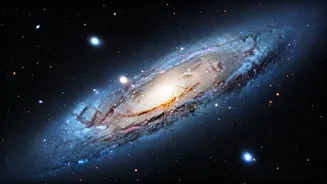
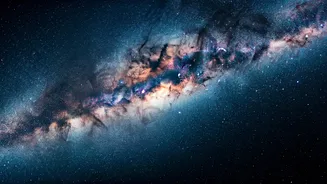
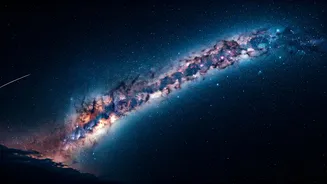
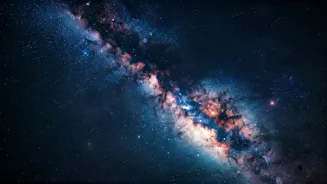
The scale gets even more mind-bending when we consider the full expanse of our galaxy. The Milky Way is a sprawling spiral city of stars, about 100,000 light-years across. Stars on the far side of the galaxy are so distant that their light takes tens of thousands of years to reach us. The star Deneb, part of the Summer Triangle asterism, is one of the most distant stars you can easily see with the naked eye, located about 2,600 light-years away. Its light began its journey to Earth around 600 BCE, a contemporary of Mahavira and Gautama Buddha. When we use powerful telescopes like the Hubble or the James Webb Space Telescope, we are looking at galaxies that are millions or even billions of light-years away, seeing the universe as it was when it was just a fraction of its current age.
A Sky Full of Has-Beens?
This cosmic time lag has a strange and profound implication. Because we are always seeing stars as they were in the past, some of the stars we see in the sky may not even exist anymore. A massive star like Betelgeuse is expected to go supernova—explode in a brilliant flash—sometime in the next 100,000 years. It might have already exploded 500 years ago, and we just haven't received the news yet. For all we know, the light from its cataclysmic death is already hurtling towards us through space, and one day, it will suddenly appear in our sky. We are forever looking at a delayed broadcast, a beautiful and majestic illusion where the present is hidden and the past shines brightly.