







What is Mechazilla?
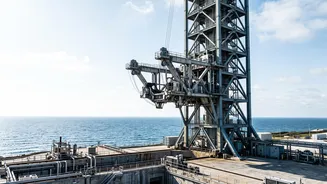
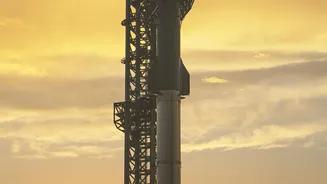
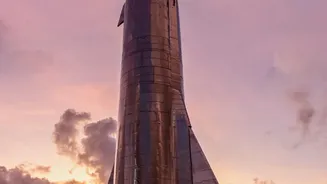
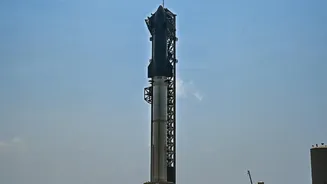
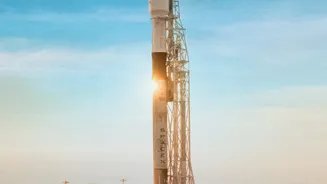
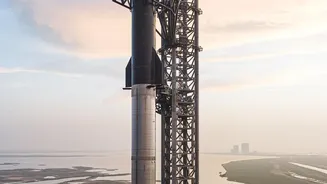
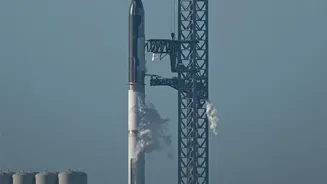
Mechazilla is the affectionate nickname given to SpaceX's Starship launch and integration tower. Standing approximately 146 meters (about 480 feet) tall, it's far more than a simple launch mount. This steel structure serves a triple purpose: it supports
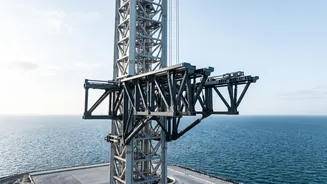
the massive Super Heavy booster and Starship upper stage during assembly, provides the essential propellant and electrical connections for launch, and, most audaciously, houses a pair of giant mechanical arms designed to catch the returning rocket stages. These arms, often called the 'chopsticks', are the core of the tower-catch strategy, transforming the launch pad into a combined launch, landing, and servicing gantry.
The 'Chopsticks': How the Catch Works
The 'chopsticks' are two powerful, actuated arms that can move up, down, and sideways along the tower. During a landing attempt, the returning Super Heavy booster uses its engines and grid fins—four large, waffle-patterned control surfaces—to guide itself precisely toward the tower. The booster aims to hover between the open arms. As it descends, the arms close in, securing the booster by clamping onto reinforced hard points located near the grid fins. These points are already built to withstand immense aerodynamic forces, so using them as catch points cleverly avoids adding extra weight to the booster. The entire sequence relies on a suite of advanced sensors, including LiDAR and high-resolution cameras, to track the booster's trajectory in real-time, allowing the system to make micro-adjustments for a successful grab.
Why Not Just Use Landing Legs?
SpaceX's Falcon 9 rocket perfected the art of landing on legs, so the switch to a tower-catch system seems complex. However, the reasons are rooted in efficiency and speed. Firstly, eliminating landing legs from the Super Heavy booster and Starship removes significant mass. For a rocket designed to send over 100 metric tons to orbit, every kilogram saved can be converted into more payload capacity. Secondly, the catch strategy is key to rapid reusability. Instead of landing on a droneship at sea and undertaking a lengthy recovery and transport process, the booster is caught and placed directly back onto the launch mount. This enables what Elon Musk describes as airline-like operations, with the potential for inspection, refueling, and relaunch in a matter of hours, not weeks.
A High-Stakes Engineering Gamble
The tower-catch strategy is a high-risk, high-reward maneuver. The precision required to catch a multi-ton rocket stage descending from the edge of space is immense. A failure could be catastrophic, potentially damaging or destroying not only the booster but also the launch tower itself. However, SpaceX has already proven the concept is viable. On October 13, 2024, the company successfully caught a Super Heavy booster for the first time. While the catch of the Starship upper stage, which returns from orbit at much higher speeds, presents an even greater challenge, the company has stated that recent flights demonstrated the required landing precision. According to recent statements from Elon Musk, the first attempt to catch the Starship itself could happen with Flight 15, targeted for late 2026.