


The End of an Era, The Start of a Market
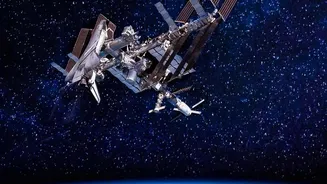
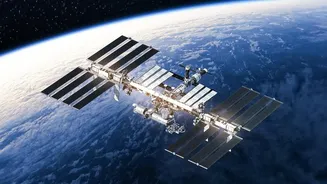
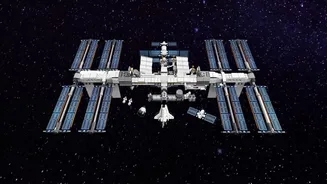
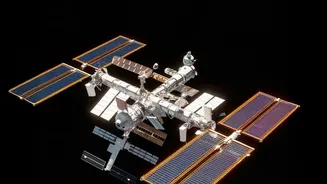
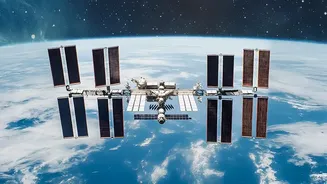
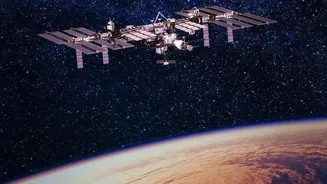
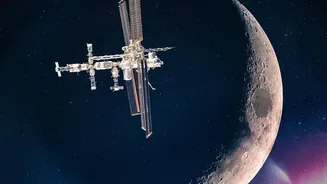
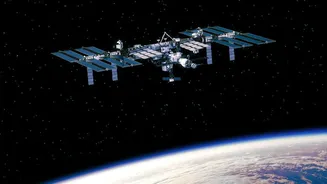
The International Space Station, a triumph of global cooperation, is aging. After more than 25 years of continuous human presence, rising maintenance costs and structural fatigue make its operation beyond 2030 unsustainable. NASA plans for the station
to make a controlled re-entry into a remote part of the Pacific Ocean around 2030-2031. However, this doesn't mark the end of our presence in low-Earth orbit (LEO). Instead, it signals a strategic handover. NASA is actively fostering a commercial marketplace in LEO, aiming to become just one of many customers for services provided by privately owned and operated space stations. Through its Commercial LEO Destinations (CLD) program, NASA is providing funding and technical support to several companies, ensuring there is no gap in America's ability to conduct research in space.
The Pioneers of a New Orbital Frontier
Several key players are vying to build the habitats of the future. Axiom Space has a unique approach, planning to first attach its commercial modules to the ISS starting as early as 2028. These modules will later detach to form a free-flying independent station before the ISS is decommissioned. Axiom has already flown multiple private astronaut missions to the ISS, building operational experience. Another major venture is Orbital Reef, a self-described "mixed-use business park" in space developed by a powerhouse partnership including Jeff Bezos' Blue Origin and Sierra Space. They envision a versatile hub for research, manufacturing, and tourism. Meanwhile, companies like Vast and the Starlab consortium (a joint venture of Voyager Space and Airbus) are also developing their own free-flying stations, each with unique designs and target launch dates in the late 2020s.
Unlocking a New Wave of Research
These next-generation stations promise to be more than just astronaut habitats; they are designed as state-of-the-art orbital laboratories. The persistent microgravity environment of space is a unique resource that allows for breakthroughs not possible on Earth. It enables the creation of superior crystals for drug development, the 3D printing of human organs without the need for structural supports, and the formulation of advanced materials and alloys that cannot be mixed under gravity's influence. Commercial stations will offer dedicated, and potentially more affordable, access for private companies, universities, and research institutions. This move from a single, multi-purpose government facility to a diverse ecosystem of specialized commercial platforms is expected to dramatically accelerate innovation in fields from biotechnology to materials science.
The Business Model of Orbit
The shift to commercial stations fundamentally changes the economics of space. No longer solely the domain of national space agencies, LEO is becoming a new economic frontier. These private stations will serve a wide range of customers. NASA and other space agencies will be anchor tenants, purchasing crew time and lab space for their own research. But the business model extends much further, including pharmaceutical and tech companies conducting proprietary R&D, nations seeking to establish a sovereign human spaceflight program without building their own infrastructure, and even space tourists. This multi-tenant model spreads the immense cost of operating a space station across many users, creating a sustainable business case that relies on a diverse market rather than a single government budget.