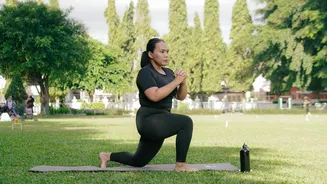








In a world of complicated workouts and expensive gym memberships, the walking lunge stands out. It's a simple, powerful, and equipment-free exercise that builds serious lower-body strength and can be done anywhere, making it perfect for the outdoors.
The Enduring Appeal of the Lunge
The walking lunge is a classic for a reason. It's a compound exercise, meaning it works multiple muscle groups at once. With every step, you're targeting your quadriceps (the front of your thighs), hamstrings (the back of your thighs), glutes, and calves. This makes it incredibly efficient for building comprehensive lower-body strength. But the benefits don't stop there. Because you are moving forward one leg at a time, the exercise constantly challenges your balance and coordination. Your core muscles—the abdominals and obliques—have to work hard to keep your torso upright and stable, turning a leg exercise into a full-body stability challenge. This functional strength translates directly into real-world activities, making everything from climbing stairs to carrying groceries feel easier.
Your Guide to Perfect Form
To get the most out of your walking lunges and avoid injury, proper form is key. Start by standing tall with your feet hip-width apart, keeping your chest up and your shoulders back. Engage your core by drawing your belly button in toward your spine. Take a controlled step forward with your right leg, about two feet or a comfortable stride length. As your right foot plants on the ground, lower your hips until both knees are bent at a 90-degree angle. Your front thigh should be parallel to the ground, and your front knee should be directly above your ankle, not pushed out past your toes. Your back knee should hover just above the ground without touching it. Pause for a moment, then press through your right heel to push your body forward. Bring your left foot forward to step into the next lunge, repeating the movement. Continue alternating legs as you 'walk' forward.
Sidestep These Common Mistakes
A few common errors can reduce the effectiveness of walking lunges and increase your risk of injury. One major mistake is letting your front knee collapse inward. This often points to weak glute muscles and can put stress on the knee joint. Focus on keeping your knee aligned with your second toe. Another issue is leaning your torso too far forward or rounding your back. This usually happens when your core is not engaged and it shifts the load to your lower back. To fix this, keep your eyes focused on a spot in the distance and maintain a tall, upright posture. Finally, avoid taking steps that are too long or too short. An overly long stride can strain your hip flexors, while a step that's too short puts unnecessary pressure on your front knee. Find a stride length that allows you to comfortably achieve the 90-degree angles in both knees.
The Perfect Outdoor Companion
While walking lunges are a great indoor exercise, they truly shine in an outdoor setting. Performing them in a park or on a walking track breaks the monotony of a gym and provides a more stimulating environment. Research shows that 'green exercise'—working out in nature—can boost your mood, reduce stress, and increase feelings of revitalization more than indoor workouts. The uneven terrain of a grassy field can further challenge your stabiliser muscles, enhancing the balance component of the exercise. Furthermore, being outside exposes you to sunlight, which helps your body produce Vitamin D, an essential nutrient for bone health and immune function. With no equipment needed, walking lunges offer a simple and effective way to combine the benefits of strength training with the mental and physical perks of being outdoors.