


Cosmic Lighthouses in the Dark
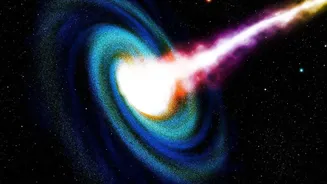
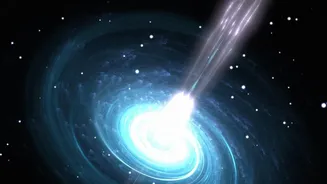
Before we dive into the latest discovery, let's talk about quasars. Short for 'quasi-stellar objects', they are among the most luminous and energetic things in the entire universe. A quasar is not a star, but the intensely bright center of a very active
galaxy. At its heart lies a supermassive black hole, millions or even billions of times the mass of our sun, that is furiously consuming surrounding gas and dust. As this material gets pulled in, it heats up and glows with unimaginable intensity, creating a beacon that can outshine all the stars in its host galaxy combined and be seen from across the universe. For astronomers, these cosmic lighthouses are invaluable tools for studying the deep past.
A Pair of Giants Emerge
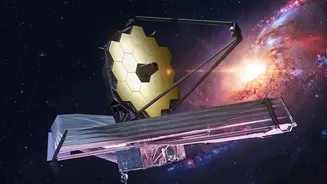
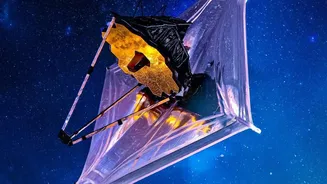
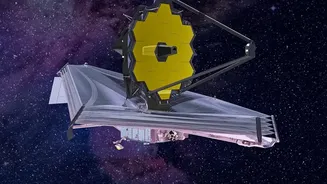
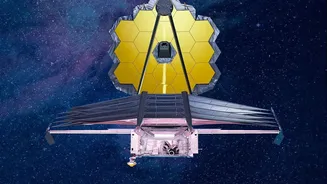
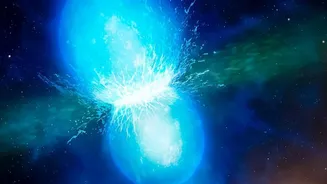
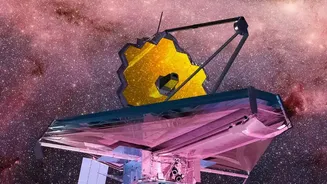
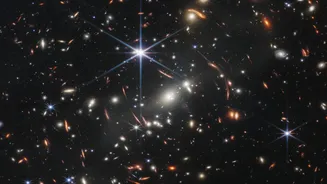
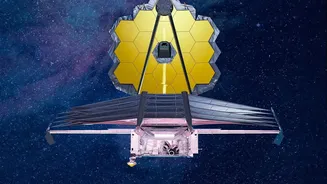
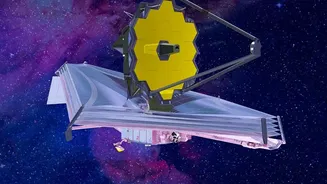
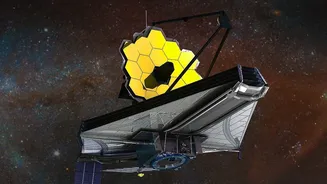
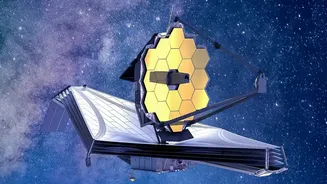
Recently, scientists using the James Webb Space Telescope (JWST) and the Gemini North telescope in Hawaiʻi made a stunning observation. They identified a system officially known as J1602+4228AB, seen as it was just 900 million years after the Big Bang. This isn't just one quasar, but a pair, given the Hawaiian nickname Nāpōwawāʻenakaulua. They are the oldest and most compact quasar pair ever found, separated by a mere 18,100 light-years—a distance that would fit comfortably inside our own Milky Way galaxy. One black hole is estimated to have a mass of 1.5 billion times that of our sun, while its companion weighs in at around 400 million solar masses. The discovery came from the Aether Survey, a JWST program cataloging early universe objects, when researchers noticed a faint companion next to a known quasar.
Challenging the Models
Finding such massive black holes so early in the universe's history is a puzzle in itself. Current theories suggest it should take at least a billion years for a black hole to grow that large through feeding and mergers. The JWST, however, has been consistently finding these giants far earlier than expected. Finding a pair of them this close together is even more baffling. As Dr. Silvia Onorato of NSF's NOIRLab put it, 'There is no definitive theoretical explanation for how a single one of these giant quasars exists so early in the age of our universe, much less two.' This discovery forces scientists to reconsider how quickly massive structures could form after the Big Bang.
The Smoking Gun for Galaxy Mergers
So why is finding a pair of quasars so important? Because it's direct evidence of galaxies in the process of merging. Scientists have long theorized that large galaxies are built by smaller ones colliding and combining over cosmic time. When two galaxies merge, their central supermassive black holes should eventually be drawn together. Finding two active quasars in such close proximity is like catching this process in the act. These pairs are a 'smoking gun' showing that the violent, chaotic dance of galactic mergers was a key driver of growth in the early universe, simultaneously fueling the rapid expansion of both galaxies and their central black holes. These observations suggest that merging was a primary way for black holes to grow rapidly, even at 'cosmic dawn'.
A New Era of Discovery
The discovery of J1602+4228AB is not an isolated incident. In May 2024, the JWST found another merging black hole system, ZS7, from just 740 million years after the Big Bang. And in August 2026, researchers analyzing JWST images identified multiple pairs of 'Little Red Dots', thought to be rapidly growing black holes in the early universe. Together, these findings paint a new picture of a young cosmos bustling with activity, where massive galaxies were crashing together far more frequently than previously thought. Each discovery serves as a unique laboratory for astronomers to test their ideas about how the very first massive galaxies and black holes assembled.