







An Expensive Graveyard in the Sky
Tens of thousands of kilometers above Earth, in a band of space called geosynchronous orbit (GEO), hundreds of high-value communications satellites circle the planet. These workhorses of the global economy, costing hundreds of millions of dollars each,
beam data, broadcast television, and connect the world. But they all share a common flaw: a finite fuel tank. For years, the industry standard was simple and wasteful. When a satellite's propellant ran low after about 15 years, its mission was over, even if its expensive electronics were perfectly healthy. Operators would use the last fumes to push the multi-million dollar asset into a higher, unused "graveyard orbit" to get it out of the way. This practice has not only resulted in significant financial losses but has also contributed to the growing problem of space debris, a cluttered environment that threatens future missions.
Roadside Assistance for Orbit
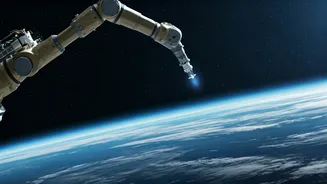
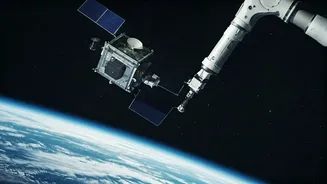
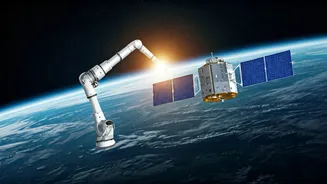
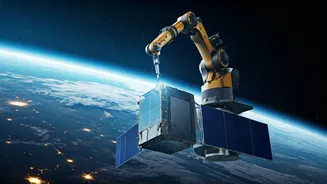
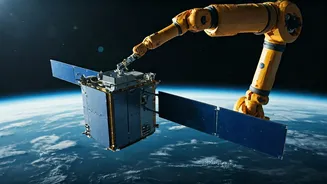
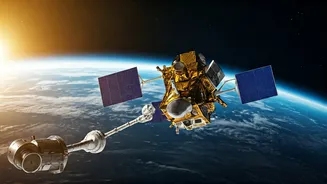
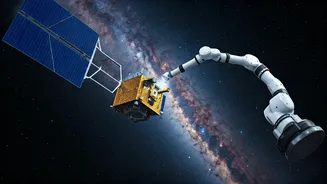
A new generation of space companies is commercializing a solution that sounds like science fiction: on-orbit servicing (OOS). Think of it as roadside assistance for space. These services involve sending robotic "mechanic" spacecraft to rendezvous with aging satellites to refuel, repair, or reposition them. The market for these services is growing rapidly, with projections expecting it to reach nearly $7 billion by 2030. The driving force is clear economics. Extending the life of a satellite for even a few years can generate enormous value and is far cheaper than building and launching a replacement. Companies like Northrop Grumman's subsidiary, SpaceLogistics, and startups like Astroscale and ClearSpace are pioneering this field.
The Robotic Rescuers in Action
The technology is already proven. Northrop Grumman's Mission Extension Vehicle (MEV) has performed historic missions. In 2020, MEV-1 successfully docked with Intelsat 901, a satellite that had been retired to a graveyard orbit. The MEV-1 clamped onto the older satellite's engine nozzle and effectively became its new engine and steering system, bringing it back into service for five more years. A second vehicle, MEV-2, later performed a similar feat, docking with an active satellite to extend its life without service interruptions. These missions proved that even satellites not designed to be serviced could be given a new lease on life. Following these successes, the company is now developing a Mission Robotic Vehicle (MRV) that can install jetpack-like Mission Extension Pods (MEPs) to provide propulsion for another six years of life.
Refuel, Repair, and Recycle
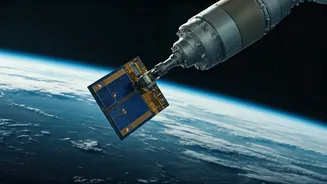
The vision for on-orbit servicing extends far beyond just providing a push. The next frontier is refueling. Several missions planned for 2026, backed by the U.S. Space Force, aim to demonstrate the ability to transfer hydrazine fuel to satellites directly in orbit. Companies like Astroscale are also tackling the problem from another angle: active debris removal. Its ELSA-d mission successfully demonstrated technologies for capturing and de-orbiting defunct satellites, using a magnetic system to latch onto replica debris. In the future, robotic servicers could perform complex repairs, replace failing components, upgrade hardware, or even assemble large structures in space that are too big to launch in one piece. This transforms satellites from disposable hardware into sustainable, upgradeable platforms.
The Dawn of a Circular Space Economy
The rise of on-orbit servicing marks a pivotal shift toward a sustainable, circular economy in space. For commercial satellite operators, it means maximizing the return on their massive investments and gaining flexibility in managing their fleets. For governments, it offers enhanced resilience for critical national security assets. And for everyone, it represents a crucial step in managing the orbital environment. By keeping functional satellites in service and actively removing junk, we can mitigate the growing threat of space debris. As companies continue to prove out the business case, the days of treating billion-dollar space infrastructure as disposable are quickly coming to an end. This new paradigm promises not only a more efficient and profitable space industry but a safer and more sustainable future for all orbital operations.