




Passing the Torch to Private Enterprise
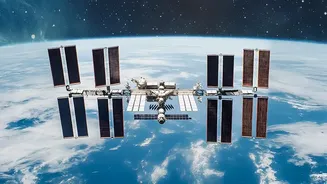
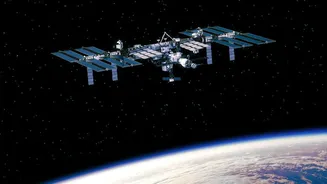
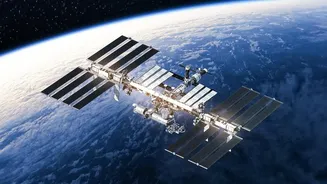
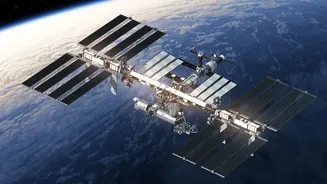
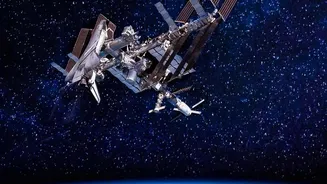
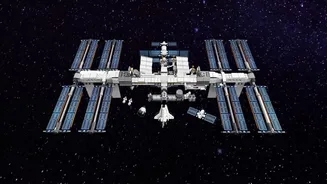
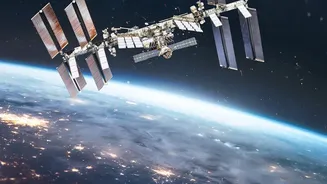
For decades, access to low-Earth orbit (LEO) has been the domain of national governments. The ISS, a triumph of international cooperation, costs NASA up to $4 billion annually to operate. To ensure a continuous human presence in orbit without bearing
the full cost, NASA has initiated the Commercial Low Earth Orbit Destinations (CLD) program. The strategy is simple: instead of owning and operating the next space station, NASA will become just one of many customers. This pivot is designed to foster a robust commercial space economy, where private companies own and operate orbital platforms, selling services to government agencies, foreign nations, private companies, and even tourists. This shift has ignited a race among several ambitious companies to build the successors to the ISS.
The Race to Build an Orbital Successor
Several key players have emerged, each with a unique approach to building the next generation of orbital habitats. Axiom Space has a head start, having already flown multiple private astronaut missions to the ISS. Their plan is to first attach their own modules to the existing station, with the first launch planned for the 2026-2027 timeframe. Once their multi-module segment is complete, it will detach and become a free-flying commercial station. Another major contender is Vast, which aims to launch Haven-1, a single-module station, as early as the first quarter of 2027. Other significant projects include Orbital Reef, a 'mixed-use business park' in space envisioned by Blue Origin and Sierra Space, and Starlab, a joint venture between Voyager Space and Airbus focused on creating a large, science-focused habitat.
More Than Just a Laboratory
These new stations are being designed for a much broader range of activities than the ISS. While cutting-edge science and research remain a core purpose, the business models for these private outposts are far more diverse. In-space manufacturing is a key target market, with the microgravity environment offering unique advantages for producing everything from flawless fiber-optic cables to complex bioprinted organs. Pharmaceutical research, advanced materials science, and technology demonstrations are also major components. Furthermore, these commercial stations will open the door to space tourism on a larger scale, offering private citizens the chance to live and work in orbit. The vision is not just to replace the ISS, but to create a thriving ecosystem of commerce and innovation 250 miles above the Earth.
Designing the Future of Living in Space
Innovation extends to the very design of these new habitats. Companies are moving beyond the traditional metallic cylinders that have defined space stations since the beginning. Sierra Space, a partner on Orbital Reef, is developing the Large Integrated Flexible Environment (LIFE) habitat, an inflatable module that can be launched in a compressed state and expand to a large volume in orbit. Starlab is also exploring a large inflatable habitat design for its station. These designs promise more spacious and comfortable living and working quarters for crew members. Axiom’s modules will feature luxury touches, including the largest window observatory ever constructed for a space station, offering breathtaking views of Earth. These advancements aim to create environments that are not only functional for science but also more sustainable and pleasant for long-duration human habitation.
Challenges on the Final Frontier
Despite the ambitious timelines, the path to a commercialized low-Earth orbit is not without significant hurdles. The most immediate challenge is financial. Building, launching, and operating a space station is an incredibly expensive endeavor, and companies are in a constant race to secure the necessary funding. Technical challenges also remain, as many of the core technologies are still in development and must be proven safe and reliable for human spaceflight. There have been some program shake-ups and timeline slips as companies navigate these complexities. In early 2026, NASA even briefly pivoted its strategy, expressing concern over the commercial business case before reaffirming its support for free-flying private stations after industry feedback. Ensuring there is no gap between the ISS retiring and the new commercial stations becoming operational is a critical goal for the U.S. to maintain its leadership in space.