







The Silent Crisis of Hidden Hunger
Hidden hunger, or micronutrient deficiency, is a widespread issue in India affecting millions of women and children. Despite having enough to eat in terms of calories, diets often lack essential vitamins and minerals like iron, zinc, and Vitamin A. This
silent crisis doesn't produce the visible signs of starvation but has severe long-term consequences, including impaired cognitive development in children, weakened immune systems, and lower productivity in adults. Studies suggest over 80% of India's population may suffer from at least one micronutrient deficiency, making it a critical public health challenge that undermines the nation's human potential.
The Promise of Single-Crop Solutions
One prominent approach to tackling this issue is through single-crop solutions, primarily biofortification. This scientific process involves breeding nutrients directly into staple food crops that people already consume in large quantities. For example, scientists have developed iron-biofortified pearl millet and zinc-biofortified wheat and rice to help combat deficiencies. The logic is straightforward: if people's diets are dominated by a few staples, enriching those staples is a cost-effective way to deliver missing nutrients without requiring major dietary changes. Proponents argue it is a powerful tool, particularly for low-income populations who may not have access to a diverse range of foods.
An Alternative Path: The Power of Diversity
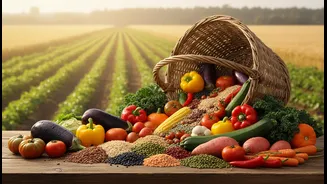
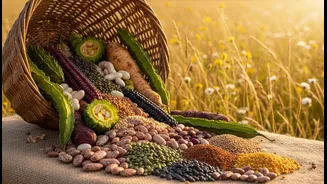
An alternative—or complementary—strategy focuses on crop diversity. This approach argues that the solution to a nutrient-deficient diet is not to fortify a single crop but to broaden the variety of foods we grow and eat. Historically, Indian agriculture was incredibly diverse, but this has diminished over time. A diet that includes a mix of millets, pulses, leafy greens, and local vegetables naturally provides a wider spectrum of essential micronutrients, creating a more holistic and resilient food system. Organizations like the M.S. Swaminathan Research Foundation (MSSRF) champion this approach, working with communities to revive neglected and underutilized crops that are often highly nutritious and climate-resilient.
How Agricultural Policy Shapes Our Plates
For decades, India's agricultural policies have been geared towards ensuring food security, primarily by guaranteeing production of staple grains like rice and wheat. The system of providing a Minimum Support Price (MSP) and procuring these grains for the Public Distribution System (PDS) has been highly effective in preventing famine but has also created unintended consequences. This focus has incentivized farmers to prioritize rice and wheat over more diverse crops like millets, pulses, and oilseeds, which often have lower water footprints and higher nutritional value. This policy-driven monoculture has, in effect, simplified the national diet and contributed to the very problem of hidden hunger it was meant to solve.
Can Policy Pave the Way for Diversity?
The key question is whether policy can pivot from a calorie-centric model to a nutrition-sensitive one. This would not mean abandoning single-crop solutions like biofortification, which can play a valuable role, but rather integrating them into a broader strategy that actively promotes diversity. Experts suggest several policy shifts, such as diversifying the food basket offered through the PDS to include millets and pulses. Supporting farmers to grow a wider range of crops through better incentives, market access, and community-led seed banks are other critical steps. By re-aligning agricultural policy with nutrition goals, India can move from simply feeding its population to truly nourishing it, creating a food system that is healthier for both people and the planet.