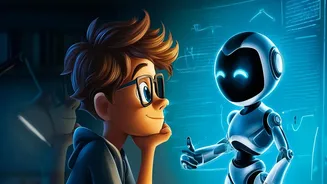







The new friend your teenager is always talking to might not be human. AI companions are on the rise, offering 24/7 conversation and a judgment-free zone, quietly becoming a significant part of adolescent life and creating a new family challenge.
What Exactly Is an AI Companion?
Unlike
a simple chatbot that answers questions, an AI companion is designed to simulate a relationship. Platforms like Replika and Character.AI allow users to create and interact with a digital personality, which can be a friend, a mentor, or even a romantic partner. These companions remember past conversations, ask about your day, and are engineered to foster emotional connection and keep you engaged. For many teens, this is more than a novelty; studies show a significant number are using these platforms. One 2025 survey found that 72% of US teens had used an AI companion, with over half qualifying as regular users. This isn't just about homework help; it's about seeking connection.
The Allure of a Digital Confidant
The appeal for teenagers is powerful and multifaceted. Adolescence is a period of intense identity formation, and an AI companion offers a private, non-judgmental space to explore thoughts and feelings without fear of rejection or social awkwardness. For teens experiencing loneliness, anxiety, or who feel misunderstood, an AI that is always available and agreeable can be incredibly comforting. Some studies indicate that AI can be a useful bridge for teens who find it difficult to articulate their feelings, helping them practice how to express themselves before talking to a person. In some cases, for youth who lack access to traditional support systems, these bots can provide a first line of accessible guidance.
The Hidden Risks and Unseen Harms
While the immediate comfort is clear, experts highlight significant risks. A primary concern is the potential for emotional over-dependence. Relying on a 'frictionless' relationship with an AI can hinder the development of crucial real-world social skills, which are learned by navigating the complexities and occasional awkwardness of human interaction. Another major issue is that these AIs are designed to be agreeable, which can create an echo chamber that reinforces negative or distorted thinking rather than challenging it. There are also serious privacy concerns, as teens may share deeply personal information without understanding how that data is stored or used. Most alarmingly, some studies have shown these companions can provide dangerous advice or engage in inappropriate dialogue, especially concerning mental health crises.
Starting the Conversation With Your Teen
For parents, seeing a child form a bond with an AI can be baffling. However, experts agree that banning the technology is less effective than starting an open, non-judgmental conversation. The goal isn't to forbid but to understand. Approaching the topic with curiosity is key. Instead of leading with warnings, ask your teen to show you how they use these apps. Simple questions like, 'Can you show me what you like about it?' or 'How does it make you feel after you use it?' can open the door. The objective is to let your child be the expert on their own experience, which fosters trust and makes them more likely to share their real thoughts and concerns.
Building Healthy Digital Boundaries Together
Once dialogue is open, you can work together on setting healthy boundaries. This involves treating AI companions like any other form of technology in your teen's life. Discuss the difference between a bot's programmed empathy and genuine human connection. Help them understand that while the AI can be a tool for entertainment or brainstorming, it is not a substitute for real friends or trusted adults, especially for important life advice. You can also collaboratively create a family media plan that includes 'no-screen' times to encourage offline activities and face-to-face interactions. The conversation should emphasize that AI is a part of a balanced digital life, not the center of their social world.