



What Is a 'Planet Parade'?
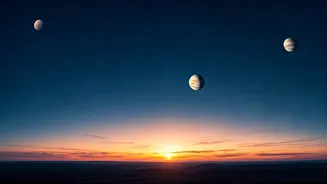
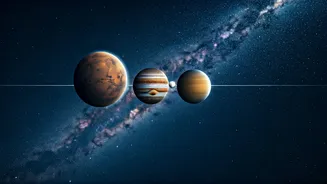
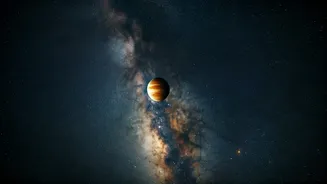
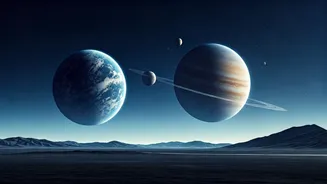
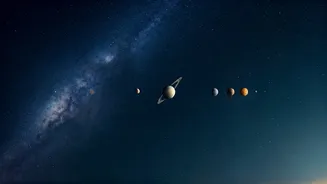
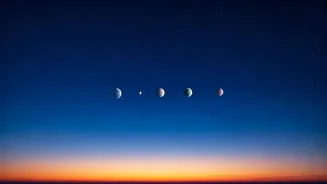
When you hear about a planetary 'gathering' or 'parade', it refers to a phenomenon where several planets appear close together in a small section of the sky from our vantage point on Earth. It’s not that the planets are physically close to each other—in
reality, they are millions of kilometres apart, following their own orbits. Instead, it's a beautiful line-of-sight illusion. As Earth orbits the Sun, our perspective changes, and occasionally, we get to see our planetary neighbours seemingly line up. These events, technically called planetary conjunctions or alignments, can involve anywhere from two to all seven other planets in our solar system.
The Stars of the Show
While alignments can include distant planets like Uranus and Neptune, the main attractions are usually the five 'naked-eye' planets that have been observed for millennia. These are the ones you can spot without any equipment. **Venus:** Often the brightest object in the sky after the Sun and Moon. It's known as the 'Morning Star' or 'Evening Star' because it’s typically visible just before sunrise or after sunset. **Jupiter:** The king of the planets is also the king of brightness. It shines with a brilliant, steady white light. **Saturn:** Famous for its rings, Saturn appears as a steady, yellowish-white point of light. While you need a telescope to see its rings clearly, its golden hue is distinctive. **Mars:** The Red Planet lives up to its name, appearing as a distinct reddish-orange dot in the sky. **Mercury:** The most elusive of the bunch. Because it’s so close to the Sun, it’s only visible for short periods in the twilight glow of sunrise or sunset.
When and Where to Look
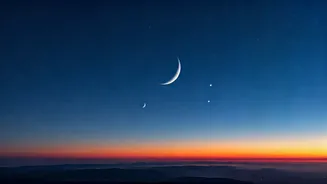
The key to catching a planetary alignment is timing and direction. The headline mentions 'West', which is perfect for evening viewing. Typically, you should look towards the western horizon about 30 to 60 minutes after sunset. This is the 'blue hour' when the sky is dark enough for planets to appear, but before they dip below the horizon. Alternatively, some alignments are best viewed in the eastern sky just before sunrise. The planets will generally follow the ecliptic—the path the Sun takes across the sky. So, look for them in an imaginary line arching upwards from where the sun has just set or is about to rise. Since the specific dates for major alignments change each year, the best strategy is to stay informed.
Your Stargazing Toolkit
The best part about planet-spotting is its accessibility. You don’t need expensive gear to start. Your most important tool is a clear view of the horizon, away from tall buildings and, if possible, city lights. Light pollution can wash out fainter planets like Mercury and Saturn, so finding a darker spot like a park or the city outskirts will dramatically improve your experience. While not essential, a pair of binoculars can enhance the view, potentially revealing Jupiter’s four largest moons or the faint glow of Saturn’s rings. Most importantly, use a stargazing app. Apps like Stellarium, SkyView, or Star Walk are game-changers. Just point your phone at the sky, and they will identify the planets, stars, and constellations for you in real-time.
More Than Just a Pretty Sight
For centuries, planetary alignments have captivated human imagination. Ancient civilisations saw these events as powerful omens, and they played a huge role in the development of both astronomy and astrology. Watching these distant worlds align connects us to a tradition of sky-watching that is as old as humanity itself. It’s a humbling reminder of our small place in a vast, dynamic solar system. It’s not just about seeing dots of light; it’s about witnessing the cosmic clockwork in motion and feeling a sense of wonder that transcends time and culture.