




Finding the time, space, or right weather for a daily walk can be a challenge. But what if you could get your steps in without leaving your living room? Walking on the spot is a simple, free, and surprisingly effective way to stay active.
Why Walking in Place Counts
Walking on the
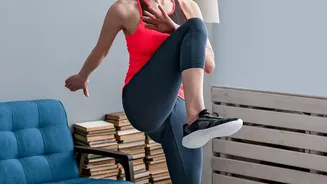
spot, also known as marching in place, is a low-impact cardiovascular exercise that involves lifting your knees and swinging your arms without moving forward. It might feel different from a traditional walk, but it is a real form of exercise. Anything that gets you moving is beneficial, and by walking in place, you raise your heart rate, which signals your body to pump more blood and oxygen to your muscles. This process helps burn calories and improves your overall fitness, making it an excellent choice for anyone, from fitness beginners to busy professionals squeezing in movement between meetings.
The Undeniable Health Benefits
The perks of this simple movement are significant. Regularly walking in place supports heart health by improving circulation and strengthening the heart muscle. It aids in weight management by burning calories; one study found an hour of marching in place burns roughly 258 calories. Because it's a low-impact activity, it’s gentle on your joints, making it a great option for those who find jogging too strenuous. The exercise also strengthens muscles in your legs, core, and hips and can help preserve bone density. Beyond the physical, it boosts mood, can help reduce stress, and even contributes to better sleep.
Mastering the Proper Form
To get the most out of your indoor walk, focus on your form. Stand tall with your chest up and your feet about hip-width apart. Begin by lifting one knee at a time, aiming for a height about halfway to your hip. As you lift your right knee, swing your left arm forward, and vice-versa, keeping your elbows bent at a 90-degree angle. Land softly on the balls of your feet to keep the movement quiet and low-impact. Avoid slouching or leaning back as you lift your knees. For a moderate pace, aim for about 100 to 120 steps per minute.
Indoor vs. Outdoor Walking
While walking in place is highly effective, it's not identical to walking outdoors. Outdoor walks engage more stabiliser muscles due to varied terrain and provide the mental health benefits of fresh air and nature. However, walking on the spot has its own clear advantages. It's incredibly convenient, requiring no special equipment, and can be done anytime, regardless of weather, safety concerns, or a busy schedule. While studies show treadmill walking may burn slightly more calories (around 304 per hour compared to 258 for walking in place), the best exercise is the one you do consistently. For many, the accessibility of an indoor walk makes it the more reliable option.
Once you're comfortable with the basic movement, there are many ways to make walking in place more challenging. Incorporate intervals by alternating between a moderate pace and a 30 second burst of high intensity marching. Lifting your knees higher, toward your chest, significantly increases the calorie burn. You can also add light hand weights or wrist weights and incorporate arm movements like bicep curls or shoulder presses. Another option is to mix in other movements, such as doing a few push ups or bodyweight squats between five minute walking intervals.
Building a Daily Habit
Integrating walking on the spot into your daily life is simple. You don't need to block out an entire hour. The American College of Sports Medicine notes that even short, 10 minute bouts of exercise deliver health benefits. Start with five to ten minutes a few times a day. You can do it while watching TV, listening to a podcast, talking on the phone, or even while waiting for your food to cook. In one study, people who walked in place during TV commercials added over 2,000 steps to their day in just 25 minutes. Consistency is more important than duration, so find moments throughout the day to get moving.