
The Ambitious Gaganyaan Mission
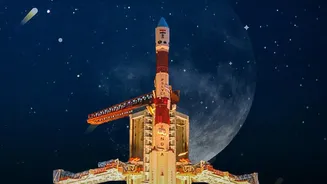
The Gaganyaan programme is India's first human spaceflight mission, an endeavor that will place the nation in an elite club alongside the United States, Russia, and China. The core objective is to launch a crew of three astronauts into a Low Earth Orbit
of 400 kilometres for a three-day mission and bring them back safely to Earth with a splashdown in Indian waters. The mission is not just a technological demonstration; it's a statement of India's growing self-reliance and scientific prowess on the global stage. Overseen by ISRO, the project involves meticulous planning and a safety-first approach, as human lives are at stake.
Putting the Crew Module to the Test
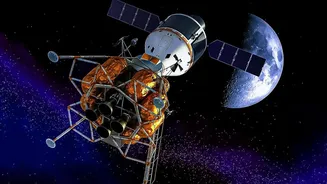
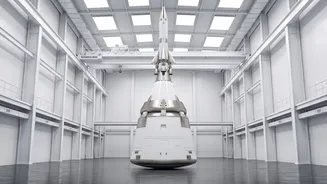
The heart of the Gaganyaan mission is the Crew Module, the pressurised capsule where the astronauts will live and work. Ensuring this module can protect its occupants from the harsh environment of space and the violent process of re-entry is paramount. ISRO has recently been conducting a battery of qualification tests to validate every system. These aren't just simple checks; they are trials where systems are deliberately pushed beyond the limits they would face in an actual flight to ensure they have robust safety margins. In July 2026, ISRO announced the completion of three such critical tests.
Ensuring a Safe Splashdown
One of the most recent tests focused on the Crew Module Uprighting System (CMUS). After descending under parachutes, the module will land in the sea. However, ocean waves could tip it over, creating a dangerous situation for the crew and complicating recovery efforts. The CMUS is a gas-based flotation system designed to automatically inflate bags that turn the capsule back to an upright position. Successful tests confirmed that this system deploys reliably, a crucial feature for the final moments of the mission.
Separating for a Fiery Re-entry
Another successful test validated the separation of the Crew Module from its Service Module. The Service Module provides power and propulsion during orbit but must be cleanly jettisoned before the crew capsule begins its fiery descent through Earth's atmosphere. The test confirmed that the umbilical connections disconnect without issue, ensuring a clean break that doesn't damage the capsule. A third recent test confirmed the module's structural strength when the apex cover is jettisoned. This cover protects the parachutes until they are needed, and its separation must not compromise the capsule's integrity.
The Parachute System: A Deceleration Lifeline
Prior to these tests, ISRO and DRDO also successfully qualified the drogue parachutes, a key part of the module's complex deceleration system. When the capsule re-enters the atmosphere, it needs to slow down drastically. The drogue parachutes are the first to deploy, designed to stabilize the module and reduce its velocity before the main parachutes open. These tests were conducted at the Rail Track Rocket Sled (RTRS) facility in Chandigarh, simulating the extreme conditions of re-entry to confirm the parachutes' robustness. The entire deceleration system consists of ten parachutes of different types, all working in sequence to ensure a safe landing speed.
The Road Ahead to Launch
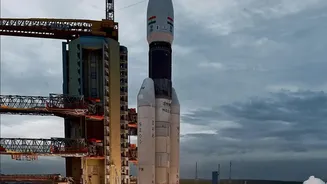
With these safety systems validated, ISRO is moving into the final stages of preparation. The path forward involves a series of uncrewed test flights before any astronaut, or 'Gaganyatri', boards the capsule. The first uncrewed flight, G1, is expected in late 2026 and will feature 'Vyommitra', a humanoid robot, to simulate astronaut conditions and test life-support systems. Following successful uncrewed missions, the first crewed flight is anticipated in 2027, marking a historic moment for India. These methodical, step-by-step validations underscore ISRO's unwavering commitment to astronaut safety.