




The Unprecedented Solar Surge
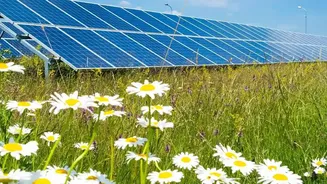
India's growth in solar power has been nothing short of explosive. In the first half of 2026 alone, the country added a record 27 GW of solar capacity, a 50% jump from the previous year. By mid-2026, India's total installed solar capacity reached a massive
165 GW. This boom is driven by large-scale solar farms and ambitious government programs like the Pradhan Mantri Suryodaya Yojana, which aims to put rooftop solar on one crore households. On paper, this is a huge win for clean energy and reducing dependence on fossil fuels. However, integrating this massive, fluctuating power source into a grid designed for the last century presents a complex national challenge.
The Grid’s Big Timing Problem
The fundamental challenge with solar power is its intermittent nature—it's only generated when the sun is shining. This creates a major headache for grid operators. During the day, a flood of solar energy pours into the system. But in the evening, just as household demand for electricity often peaks, solar generation drops to zero. This mismatch forces the grid to perform a delicate balancing act. Coal and gas power plants, which can't be switched on and off instantly, have to rapidly ramp down during the sunny afternoon and then quickly ramp back up as sunset approaches. This strain is becoming more apparent; between May and December 2025, India had to curtail, or waste, over 2.3 terawatt-hours of solar power because the grid simply couldn't absorb it all during midday.
A Traffic Jam on the Power Highway
Another part of the problem is geography. Many of India's largest solar parks are located in remote, sun-drenched regions like Rajasthan and Gujarat, far from the major population centers where the electricity is needed most. This requires a robust network of high-voltage transmission lines to act as a 'power highway'. Unfortunately, building this infrastructure is slow and expensive, and the existing network is often congested. This congestion means that even when solar power is being generated, it can't always reach the consumer. This leads to situations where clean energy is deliberately curtailed in one part of the country while another experiences power shortages.
What This Means For Your Home
For the average consumer, these grid-level challenges have real-world consequences. The push for rooftop solar, under schemes like the PM Suryodaya Yojana, promises lower electricity bills and even the chance to earn money by selling excess power back to the grid. However, the success of this depends on local electricity distribution companies (Discoms) being financially healthy and technically capable of managing thousands of mini-power plants on their network. For many households, challenges remain, including high upfront costs, complex loan procedures, and a lack of awareness about financing options. Grid instability can also, in extreme cases, affect the reliability of your power supply, especially during evening peak hours when the system is under the most stress.
The Path Forward: Storage and Smarter Grids
The solution isn't to slow down the solar boom, but to modernize the grid that supports it. The most critical piece of the puzzle is energy storage. Large-scale battery systems can soak up excess solar power during the day and release it during the evening peak, smoothing out the supply and demand curve. Recognizing this, the government is taking steps to mandate energy storage for new renewable projects starting from 2027. Another key solution is building a 'smarter' grid with technologies like advanced inverters that help maintain stability. For consumers, this transition will eventually mean a more reliable, cleaner, and ultimately more affordable electricity supply, but it requires significant investment and careful planning to get there.